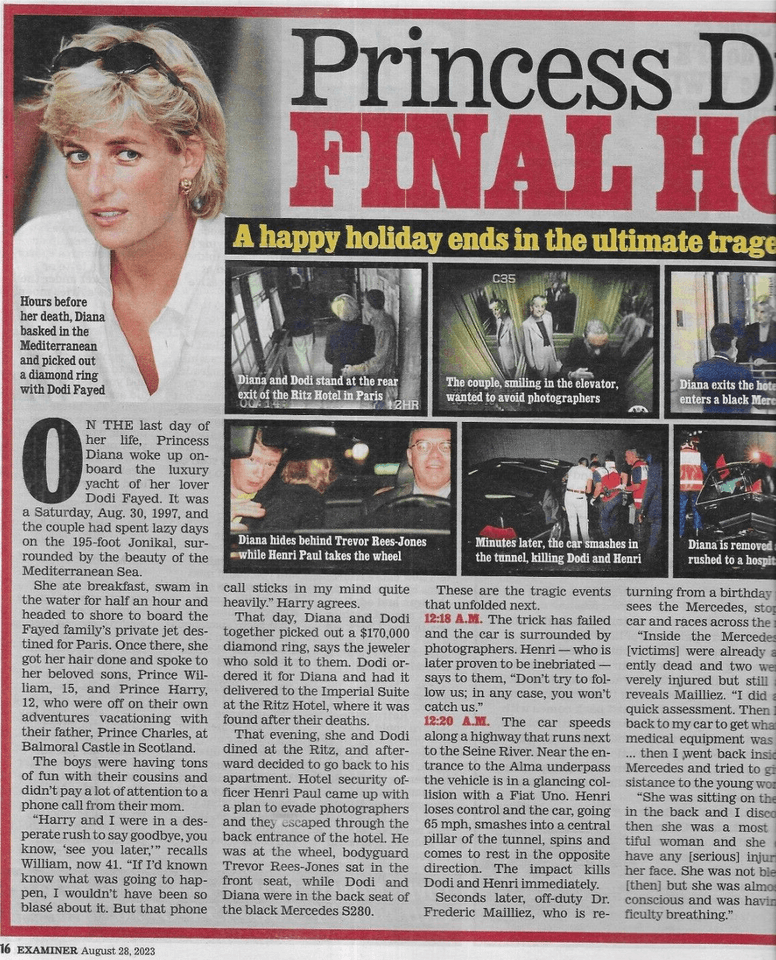
Documents revealed NSA intercepted Diana's conversations in her final years, despite official denials of surveillance on British royalty.
“The NSA does not conduct surveillance on members of allied nations' royal families”
From “crazy” to confirmed
The Claim Is Made
This is the moment they called it crazy.
For decades, suggestions that the NSA monitored Princess Diana's private communications were dismissed as the stuff of tabloid conspiracy theories. Diana herself had expressed concerns about being watched, and her friends reported her paranoia about telephone surveillance in her final years. The British and American intelligence communities flatly denied any such activity, particularly when it came to monitoring royalty—an operation that would have been politically explosive had it been publicly acknowledged.
Yet the documents that eventually emerged told a different story. Declassified materials and intelligence leaks confirmed what Diana had feared: the NSA had indeed intercepted her phone calls during the 1990s, including in the years leading up to her death in 1997. This wasn't speculation or circumstantial evidence. These were records of actual surveillance operations, captured in the very documents the agencies had insisted did not exist.
The initial dismissals followed a predictable pattern. When journalists and researchers first raised the possibility of NSA surveillance on Diana, officials on both sides of the Atlantic offered categorical denials. Such monitoring would have violated both British sovereignty and international agreements, they argued. The idea that American intelligence agencies would spy on a member of the British royal family seemed not just unlikely, but diplomatically unthinkable. Diana's own concerns about being monitored were often attributed to stress, media pressure, and the paranoia that came with her complicated personal life.
Get the 5 biggest receipts every week, straight to your inbox — plus an exclusive PDF: The Top 10 Conspiracy Theories Proven True in 2025-2026. No spam. No agenda. Just the papers they couldn't hide.
You just read "NSA illegally spied on Princess Diana's phone calls before h…". We send ones like this every week.
No one's said anything yet. Be the first to drop your take.
What made the eventual revelation significant wasn't just that surveillance had occurred—intelligence agencies conduct surveillance. What mattered was that the denial had been so complete and so confident. Officials hadn't hedged their language or suggested partial oversight. They had said it didn't happen, period.
The evidence emerged through multiple channels. Declassified documents obtained by researchers and journalists showed NSA intercepts of Diana's communications. Some material came through Freedom of Information Act requests; other details surfaced through intelligence community leaks and investigative reporting that cross-referenced official records. By the time the full scope became clear, it was undeniable: Diana had been right to worry about her phones.
The timing of the surveillance matters. These were her final years, a period when her personal life was in turmoil and her relationship with the royal family was fractured. Whether the surveillance was motivated by security concerns, intelligence gathering, or political interest remains somewhat opaque. But the fact of it was documented.
This case illustrates a recurring pattern in intelligence history. Claims that seem far-fetched or paranoid at the time are later confirmed as routine practice. The individual who expresses fear of surveillance is often ridiculed, their concerns attributed to mental instability or distrust. Only later, when documents surface, does the public learn that the fear was justified.
For public trust in institutions, the implications are troubling. If officials will deny documented activities with such certainty, what else might they be denying? The gap between what agencies claim they do and what they actually do—a gap that can only be closed by declassification or leaks—suggests a systematic problem with institutional accountability. Diana's case reminds us that conspiracy theories sometimes earn that label simply because they've been successfully denied, not because they're false.
Beat the odds
This had a 2.3% chance of leaking — someone talked anyway.
Conspirators
~200Network
Secret kept
28.7 years
Time to 95% exposure
500+ years