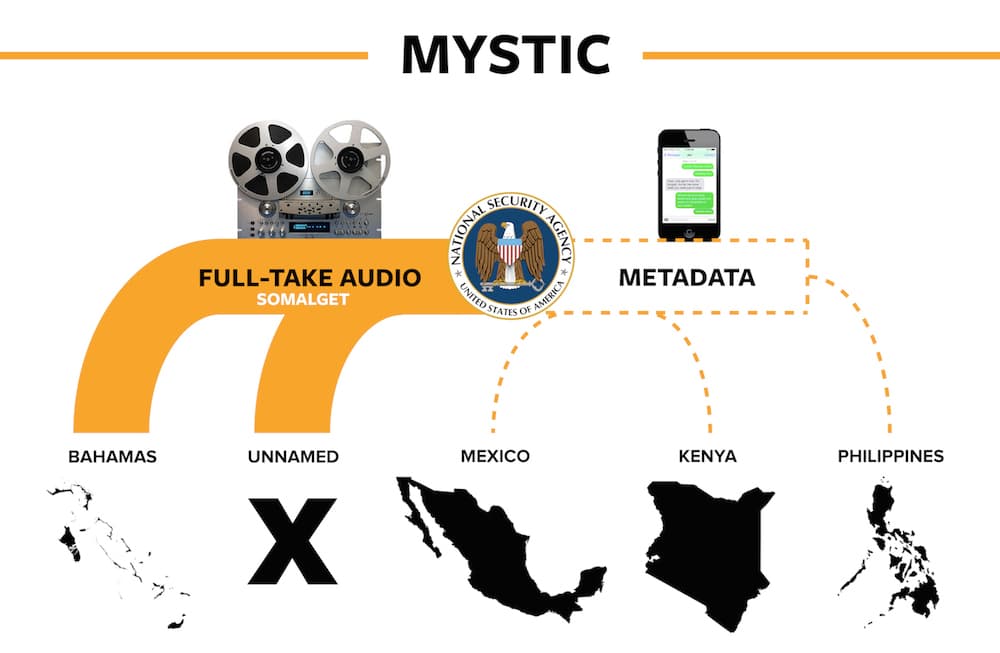
Edward Snowden's leaks revealed the NSA's MYSTIC program could record 100% of a foreign country's telephone calls for 30-day rolling periods through its RETRO tool. The Washington Post confirmed the program captured actual voice content, not just metadata as officials had claimed. The program operated in at least five countries. This went far beyond the 'just metadata' assurances given to Congress and the public.
“The NSA is recording everything — not just metadata but actual phone calls, emails, and internet activity of millions of people.”
What they said vs. what the evidence shows
“We are not collecting everything. We are collecting metadata — phone numbers, duration of calls — not the content of communications.”
— NSA Director Keith Alexander · Jun 2013
SourceFrom “crazy” to confirmed
The Claim Is Made
This is the moment they called it crazy.
When Edward Snowden began releasing classified documents in 2013, U.S. intelligence officials drew a clear line in the sand. They insisted the NSA collected only metadata—phone numbers, call duration, timestamps—not the actual conversations themselves. This distinction mattered enormously because metadata collection sounded clinical and narrow, while recording voice content sounded like something from an authoritarian state. Congress accepted these assurances. The public largely moved on.
Then in December 2013, The Washington Post published details about a classified NSA program called MYSTIC, along with its associated tool, RETRO. The reporting revealed something officials had not disclosed: the NSA wasn't just collecting metadata in certain foreign countries. It was recording the complete contents of virtually every phone call made within entire nations.
The scale was staggering. MYSTIC could capture 100 percent of a country's telephone communications and store them for 30-day rolling periods through RETRO—essentially creating a searchable archive of an entire nation's phone calls. The program operated in at least five countries, though the Post was restricted from naming all of them. Officials had compartmentalized this capability so thoroughly that even some members of Congress with oversight responsibilities didn't know about it.
What made this verification particularly damning was the specificity of the documentation. The Intercept's subsequent reporting, also drawing from Snowden's materials, confirmed the technical architecture and operational scope. These weren't vague allegations or circumstantial evidence. The leaked showed exactly how the system worked and what it collected.
Get the 5 biggest receipts every week, straight to your inbox — plus an exclusive PDF: The Top 10 Conspiracy Theories Proven True in 2025-2026. No spam. No agenda. Just the papers they couldn't hide.
You just read "The NSA's MYSTIC program recorded every phone call in entire…". We send ones like this every week.
No one's said anything yet. Be the first to drop your take.
Confirmed: They Were Right
The truth comes out. Officially documented.
Confirmed: They Were Right
The truth comes out. Officially documented.
The discrepancy between what officials said and what they actually did was profound. When questioned about NSA surveillance in 2013, Director of National Intelligence James Clapper famously told Congress the agency did not "wittingly" collect data on Americans. Even granting that MYSTIC targeted foreign countries, Clapper's broader testimony about the nature of NSA collection was misleading. The agency was conducting industrial-scale voice recording operations—not merely scooping up routing information.
What's particularly relevant is that MYSTIC wasn't some rogue operation. It was budgeted, approved, and integrated into the NSA's official intelligence infrastructure. The program had existed since at least 2009, meaning it was operating for years while officials publicly characterized NSA surveillance in far narrower terms.
The metadata-versus-content distinction turned out to be central to how intelligence agencies framed their activities to an unsuspecting public and legislature. By emphasizing what they weren't doing—recording actual calls—they obscured what they were doing. It was a form of technically accurate deception.
This case matters because it demonstrates how institutional secrecy can enable the misrepresentation of a program's true scope. Citizens and their representatives cannot consent to surveillance they don't know exists or understand. The MYSTIC revelations shattered whatever remaining trust existed between the intelligence community and the public regarding the truthfulness of their surveillance disclosures.
Fifteen years later, the lesson remains relevant: when powerful institutions control information and face no consequences for incomplete truths, they have little incentive to volunteer the full picture. MYSTIC proved that the metadata distinction—so carefully maintained in official statements—masked the most invasive surveillance capability many citizens never knew existed.
Beat the odds
This had a 0.1% chance of leaking — someone talked anyway.
Conspirators
~200Network
Secret kept
0.8 years
Time to 95% exposure
500+ years