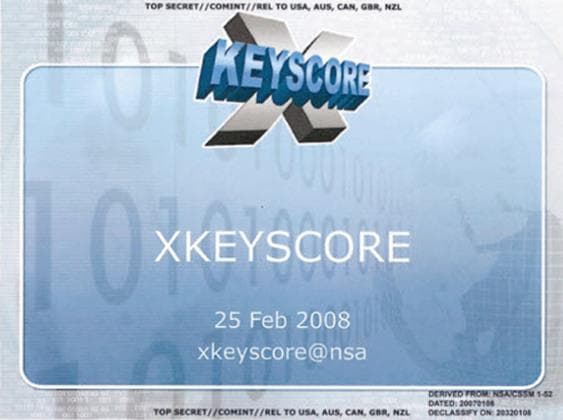
Snowden's 2013 revelations exposed XKeyscore, an NSA system enabling analysts to search virtually anyone's internet activity — emails, browsing history, social media, chats — using just a name, email address, phone number, or even keywords, all without prior judicial authorization. Training materials described it as the 'widest-reaching' system for searching through internet data. The NSA collected over 20 billion communication events per day worldwide.
“I, sitting at my desk, could wiretap anyone, from you or your accountant, to a federal judge or even the president, if I had a personal email.”
From “crazy” to confirmed
The Claim Is Made
This is the moment they called it crazy.
When Edward Snowden walked into a Hong Kong hotel room in May 2013 with thousands of classified NSA documents, he carried with him proof of a surveillance capability so expansive that it would fundamentally reshape public understanding of what "privacy" meant in the digital age. Among those documents was evidence of a program called XKeyscore—a system that allowed NSA analysts to search the internet activities of virtually anyone on Earth using nothing more than a name, email address, phone number, or a keyword.
The claim itself seemed almost too broad to be credible. The idea that American intelligence analysts could access your emails, browsing history, social media messages, and chat conversations without a warrant or judicial approval struck many as technologically implausible, if not impossible. How could any system be that permissive? How could it operate without oversight?
Government officials and NSA representatives initially dismissed the revelations as overblown. They suggested that safeguards existed, that training and procedures prevented abuse, that the system was designed specifically to target foreign threats. The framing became one of technical capability versus responsible stewardship—yes, the tools might exist, but they were being used appropriately. This narrative persisted in official statements and congressional briefings.
But the documents Snowden provided to journalists at The Guardian told a different story. XKeyscore training materials explicitly described the system as the "widest-reaching" collection program for searching through internet data. The slides showed analysts how to query the system with minimal constraints. There was no requirement for a warrant. There was no judicial authorization process. An analyst needed only to identify a selector—a phone number, email address, or username—and the system would return vast amounts of data about that person's online activity.
Get the 5 biggest receipts every week, straight to your inbox — plus an exclusive PDF: The Top 10 Conspiracy Theories Proven True in 2025-2026. No spam. No agenda. Just the papers they couldn't hide.
You just read "NSA's XKeyscore lets analysts search anyone's internet activ…". We send ones like this every week.
No one's said anything yet. Be the first to drop your take.
Confirmed: They Were Right
The truth comes out. Officially documented.
Confirmed: They Were Right
The truth comes out. Officially documented.
The scale was staggering. NSA collection infrastructure was processing over 20 billion communication events per day worldwide. This wasn't surveillance of suspects or confirmed targets. This was infrastructure designed to search nearly everyone's digital footprint, with the search capability distributed across analysts who operated under minimal restrictions.
What made this particularly significant was the infrastructure itself. XKeyscore wasn't a specialized tool for counterterrorism or foreign intelligence—it was presented as a standard NSA system available to analysts across the agency. The training materials were matter-of-fact, even casual, in describing capabilities that fundamentally contradicted public representations about how the NSA operated.
The evidence didn't prove the government was actively searching every American's data constantly. But it proved something arguably more important: the capability existed, it was operational, and the authorization processes were so permissive that whether abuse occurred was essentially a question of integrity rather than technical limitation.
This matters because it fundamentally altered the relationship between citizens and their government. For decades, NSA surveillance was discussed in abstract terms—"signals intelligence," "foreign collection." XKeyscore made it concrete. It showed that the theoretical possibility of total digital surveillance had become technical reality. Trust, once lost, doesn't simply return. It requires a complete reimagining of institutional oversight and public accountability.
Beat the odds
This had a 0% chance of leaking — someone talked anyway.
Conspirators
~150Network
Secret kept
0.5 years
Time to 95% exposure
500+ years