Bush administration claimed all surveillance was legal, but whistleblowers revealed NSA collected domestic communications without warrants from 2001-2006.
“All NSA surveillance activities are conducted within the law and with proper oversight”
From “crazy” to confirmed
The Claim Is Made
This is the moment they called it crazy.
When the Bush administration defended its post-9/11 surveillance programs, officials insisted every wiretap had been legally authorized. They were not telling the truth. Between 2001 and 2006, the National Security Agency collected vast quantities of domestic communications without obtaining the warrants required by the Fourth Amendment—a fact that would only come to light through the courage of intelligence community whistleblowers.
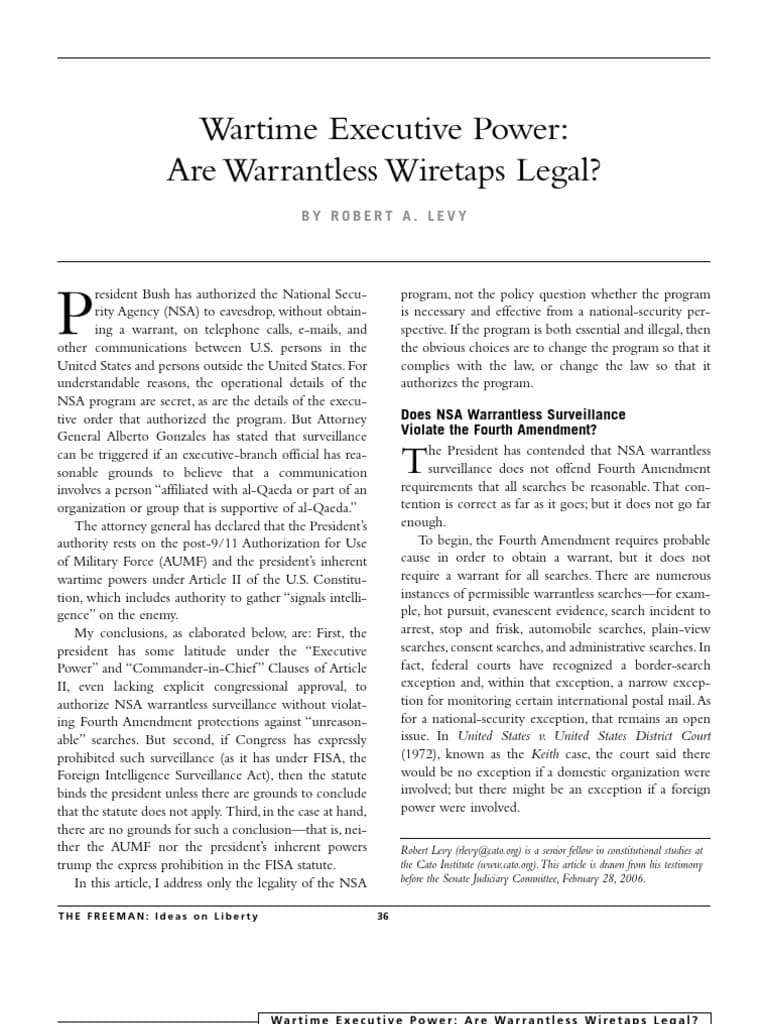
In the months following the September 11 attacks, the NSA launched a classified surveillance initiative that would eventually touch millions of Americans. The program, later known as the Terrorist Surveillance Program, operated under the theory that the president's wartime powers superseded the Foreign Intelligence Surveillance Act of 1978, which had established a special court specifically to approve surveillance requests. The administration's legal argument was straightforward: in matters of national security, the Executive Branch possessed inherent constitutional authority to conduct surveillance without judicial oversight.
Officials defended this position publicly and privately. When pressed about surveillance activities, representatives from the Justice Department and intelligence agencies maintained that all operations complied with applicable law. Attorney General John Ashcroft and later Alberto Gonzales testified before Congress that proper legal authority undergirded the program. The message was consistent and unwavering: there were no illegal wiretaps, no unconstitutional surveillance, no constitutional violations.
Get the 5 biggest receipts every week, straight to your inbox — plus an exclusive PDF: The Top 10 Conspiracy Theories Proven True in 2025-2026. No spam. No agenda. Just the papers they couldn't hide.
You just read "NSA's warrantless wiretapping program violated Fourth Amendm…". We send ones like this every week.
No one's said anything yet. Be the first to drop your take.
The official narrative fractured in December 2005. James Risen and Eric Lichtblau of the New York Times published an investigation revealing that the NSA had been conducting a warrantless wiretapping program for years. Their reporting, based on interviews with current and former intelligence officials, exposed what the government had denied: the agency was systematically monitoring Americans' phone calls and emails without seeking approval from the Foreign Intelligence Surveillance Court.
What followed was confirmation from whistleblowers within the intelligence community who provided documentary evidence of the program's scope and methods. The most prominent was Thomas Drake, an NSA official who became deeply troubled by what he witnessed. Drake and others demonstrated that the surveillance had extended far beyond the narrow counterterrorism operations the administration claimed were occurring. The NSA had collected the communications of ordinary citizens with no connection to terrorism or foreign threats.
Congressional investigations and later declassified documents confirmed that between 2001 and 2006, the NSA violated the Fourth Amendment systematically and repeatedly. The scale was extraordinary. The agency had monitored thousands of Americans without judicial approval or even reasonable suspicion of criminal activity. Some estimates suggest hundreds of thousands of communications were collected.
The program was eventually discontinued in 2007, though the revelations continued for years afterward. What had been dismissed as conspiracy theory—the idea that the government was conducting mass surveillance of its own citizens—became established historical fact.
This case matters because it demonstrates how official denials, delivered with confidence and authority, can obscure constitutional violations. It shows that transparency mechanisms designed to prevent abuse can be circumvented when political pressure is sufficient. Most importantly, it illustrates why whistleblowers matter. Without individuals willing to risk their careers and freedom, the public would never have learned the truth. The Fourth Amendment might have remained violated indefinitely.
Beat the odds
This had a 1.6% chance of leaking — someone talked anyway.
Conspirators
~200Network
Secret kept
20.4 years
Time to 95% exposure
500+ years