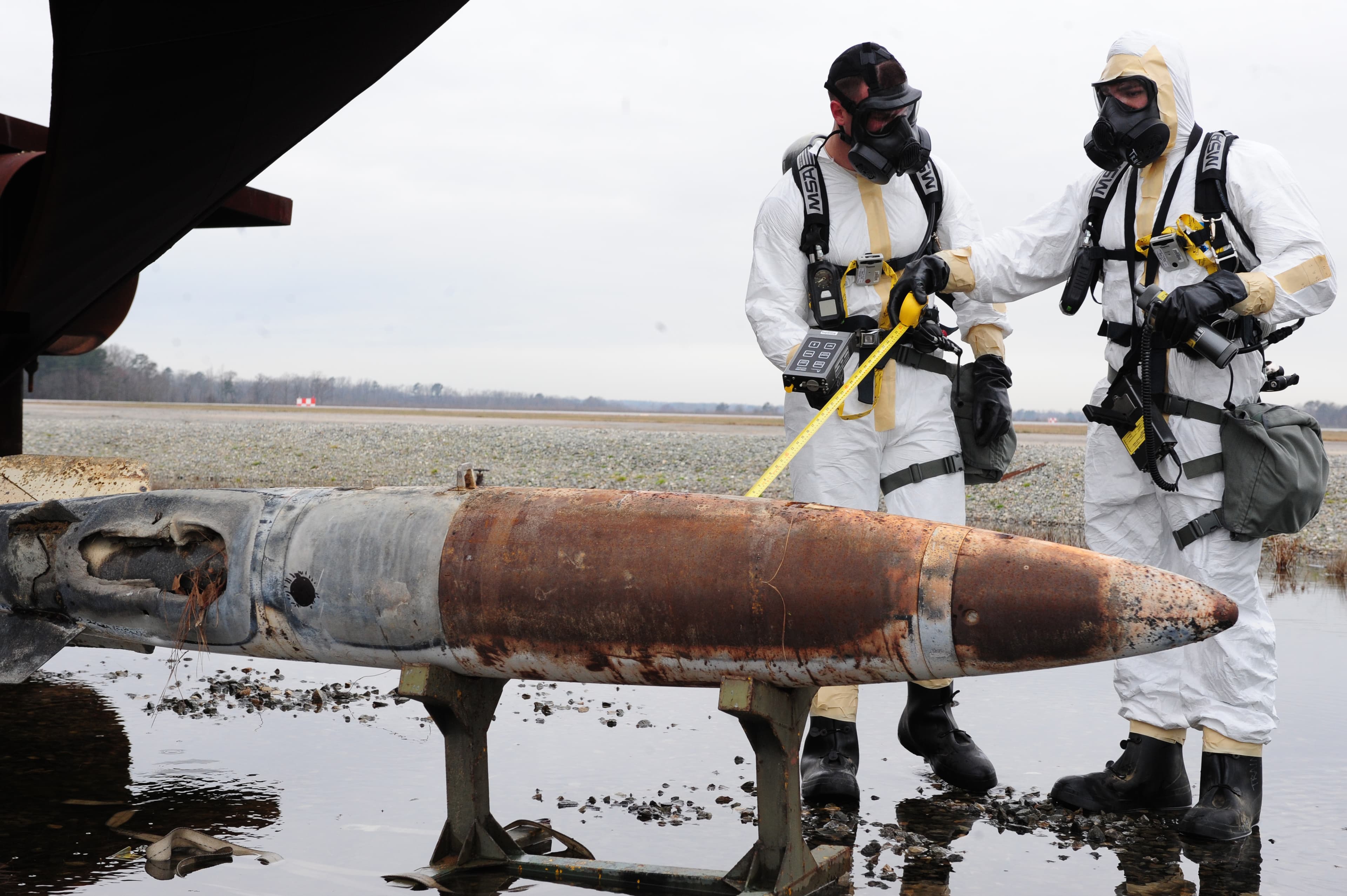
Pentagon hid 32 broken arrow incidents involving nuclear weapons from 1950-1980. Military claimed perfect safety record while bombs were lost, dropped, or nearly detonated accidentally.
“US nuclear weapons have never been involved in any accidents or incidents”
From “crazy” to confirmed
The Claim Is Made
This is the moment they called it crazy.
For three decades, the Pentagon maintained a public facade of absolute nuclear safety. Military officials told Congress, the press, and the American people that their nuclear arsenal operated with flawless precision, that safeguards were impenetrable, and that the risk of accidental detonation was essentially zero. Meanwhile, between 1950 and 1980, the military classified 32 separate incidents involving lost, damaged, or dangerously mishandled nuclear weapons—incidents the public would not learn about for years.
These weren't minor malfunctions or theoretical concerns. They were "broken arrow" incidents, the military's own classified term for accidents involving nuclear weapons. Some involved bombers crashing with live nuclear payloads. Others involved weapons dropped over populated areas or left in wreckage for hours. One incident saw a nuclear bomb lodged in a B-47 bomber for over a year while the military searched for it. Another involved a nuclear warhead that fell through the bomb bay doors of an aircraft and was only recovered after extensive underwater salvage operations.
The military's official position was consistent: these incidents either didn't happen, or if they did occur, they posed no public danger. When pressed by journalists or congressional investigators, defense officials claimed that multiple redundant safety systems made accidental detonation virtually impossible. The phrase "safety record" became standard language in military communications about nuclear weapons handling. The public had no reason to distrust these assurances—after all, who would lie about something so consequential?
What changed was documentation. Military incident reports that had been classified became available to researchers and historians. The Department of Defense's own terminology and incident logs, originally intended only for internal use, eventually entered the public record. These weren't leaked documents or accounts, though those existed too. These were 's own administrative records, which revealed that the safety claims were systematically false.
Get the 5 biggest receipts every week, straight to your inbox — plus an exclusive PDF: The Top 10 Conspiracy Theories Proven True in 2025-2026. No spam. No agenda. Just the papers they couldn't hide.
You just read "Nuclear Weapons Accidents Concealed from Public for Decades". We send ones like this every week.
No one's said anything yet. Be the first to drop your take.
The scope became undeniable once the full picture emerged. Thirty-two incidents over thirty years meant that broken arrow events were occurring roughly once per year during peak nuclear operations. Some weapons were never recovered. Some incidents occurred near population centers. Some involved fuel fires that damaged or contaminated the warheads themselves. The redundant safety systems that officials had praised publicly had clearly failed multiple times.
This matters because it reveals a deliberate gap between what officials said publicly and what they knew privately. This wasn't a case of incomplete information or honest uncertainty. The Pentagon had detailed records of these incidents. They briefed military leadership on them. They conducted investigations and filed reports. Yet they simultaneously assured the public that no such problems existed.
The implications extend beyond nuclear weapons policy. The broken arrow coverup demonstrates how institutions can maintain public credibility while concealing operational failures of extraordinary magnitude. It shows that official assurances about safety, when contradicted by internal documentation, should prompt scrutiny rather than acceptance. And it suggests that other classified programs—programs we cannot yet evaluate—may have similar gaps between public claims and classified reality.
The public was never asked to weigh the actual risks of nuclear weapons accidents. They were simply told those risks didn't exist. That distinction—between informed consent and managed deception—remains relevant to how we evaluate institutional trustworthiness today.
Unlikely leak
Only 16.8% chance this would come out. It did.
Conspirators
~1,000Large op
Secret kept
46 years
Time to 95% exposure
500+ years