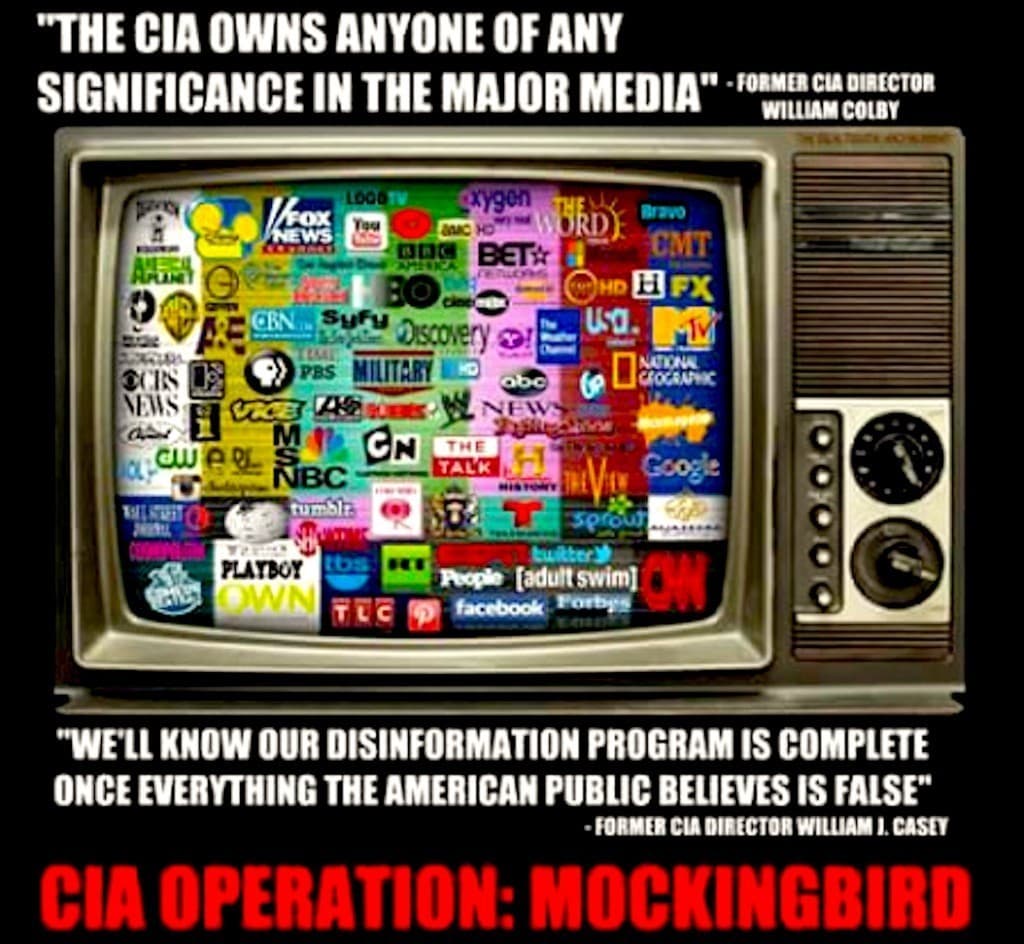
CIA recruited journalists and editors at major outlets to plant stories and shape public opinion. Church Committee revealed program began in 1950s with assets at Washington Post, CBS, Time, and other major media companies spreading agency narratives.
“The CIA has no relationships with American news organizations or journalists”
From “crazy” to confirmed
The Claim Is Made
This is the moment they called it crazy.
The relationship between American intelligence agencies and the press has always been complicated. But few arrangements between government and media have been as systematic and far-reaching as Operation Mockingbird, the CIA program that embedded agency assets directly into newsrooms across the country.
The claim itself emerged gradually over decades. Journalists and researchers began connecting dots in the 1970s, pointing to suspiciously coordinated coverage of certain stories and questioning why major outlets seemed to echo government narratives on sensitive national security matters. The full scope of what had happened wasn't widely understood until the Church Committee investigations began in 1975, when Senator Frank Church's committee examined abuses by American intelligence agencies.
For years, the CIA dismissed these accusations as conspiracy theory fodder. The agency maintained that any relationships between its officers and journalists were informal, limited, and had ended by the early 1970s. Officials suggested that critics were exaggerating isolated incidents into a grand conspiracy. The mainstream media, perhaps unsurprisingly given their own entanglement with the agency, gave limited coverage to these revelations. Many outlets treated the story as a relic of Cold War paranoia rather than documented fact.
Get the 5 biggest receipts every week, straight to your inbox — plus an exclusive PDF: The Top 10 Conspiracy Theories Proven True in 2025-2026. No spam. No agenda. Just the papers they couldn't hide.
You just read "Operation Mockingbird embedded CIA assets in major news orga…". We send ones like this every week.
No one's said anything yet. Be the first to drop your take.
The evidence, however, painted a different picture. The Church Committee's final report, released in 1976, documented that the CIA had recruited journalists and editors at major news organizations beginning in the 1950s. The Washington Post, CBS, Time magazine, and other influential outlets had CIA assets on staff or on retainer. These weren't passive informants. They actively planted stories, shaped editorial decisions, and suppressed information that conflicted with agency interests. The program wasn't a handful of rogue operations—it was systematic, well-funded, and deeply embedded in American media institutions.
Declassified documents showed that by 1953, the CIA had relationships with at least 25 major news organizations. The figure grew throughout the decade. These weren't conspiracy theories whispered in dark corners. They were official CIA programs with code names, budgets, and documented objectives. The agency even had a formal division dedicated to media manipulation, which would eventually be exposed through congressional documents and Freedom of Information Act requests.
What makes Operation Mockingbird significant isn't just that it happened. It's that it revealed something fundamental about how American institutions can become corrupted from within when power remains unchecked. For decades, major news organizations allowed themselves to become extensions of government propaganda operations. The public consuming their coverage had no way of knowing that stories were being planted by intelligence handlers or that editorial decisions were being influenced by CIA assets.
The implications are sobering. If the CIA could infiltrate newsrooms then, what prevents similar arrangements now? The Church Committee recommendations led to some reforms and oversight mechanisms, but structural vulnerabilities remain. The program demonstrates that institutional trust—whether in government or media—cannot be assumed. It must be earned through transparency and accountability.
Operation Mockingbird matters because it shows that the press can be compromised not through crude censorship but through quiet cooperation. It reminds us why investigative journalism, adversarial questioning of power, and institutional skepticism remain essential. Democracy requires an informed citizenry, and that depends on a media willing to challenge rather than amplify official narratives. When that relationship breaks down, the consequences extend far beyond newsrooms.
Unlikely leak
Only 14.2% chance this would come out. It did.
Conspirators
~500Large op
Secret kept
76.4 years
Time to 95% exposure
500+ years