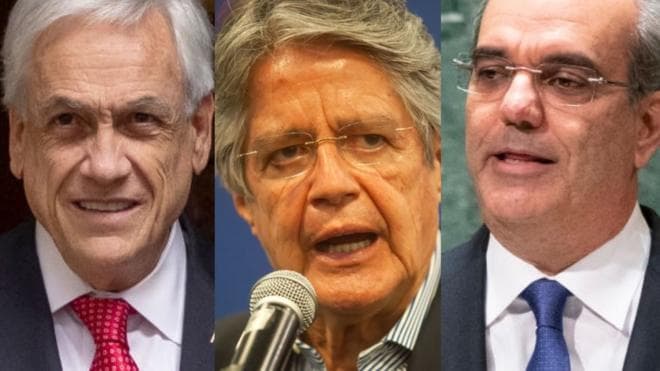
The Panama Papers (2016) and Pandora Papers (2021) — the largest data leaks in history — exposed how heads of state, billionaires, and celebrities used shell companies and offshore accounts to hide wealth and evade taxes. The leaks implicated 35 current and former world leaders, over 300 public officials, and revealed $11.3 trillion held offshore. Iceland's PM resigned, Pakistan's PM was removed, and hundreds of investigations were launched worldwide.
“The world's richest and most powerful people are hiding their money in offshore shell companies to avoid paying taxes. The system is rigged for the elite.”
What they said vs. what the evidence shows
“We are a law firm that provides legitimate corporate services. We do not tolerate illegal activities and fully comply with anti-money laundering laws.”
— Various named individuals / Mossack Fonseca · Apr 2016
SourceFrom “crazy” to confirmed
The Claim Is Made
This is the moment they called it crazy.
For decades, critics of global financial systems made a simple accusation: the world's richest and most powerful people hide trillions of dollars in offshore accounts to dodge taxes and scrutiny. Mainstream institutions dismissed this as conspiracy thinking. Then, in 2016, 11.5 million leaked documents proved they were right.
The Panama Papers emerged from a single source—an anonymous leak of internal files from Mossack Fonseca, a Panamanian law firm specializing in shell companies and offshore structures. The International Consortium of Investigative Journalists (ICIJ) spent months analyzing the documents alongside hundreds of journalists worldwide. What they found wasn't fringe speculation. It was a systematic architecture of wealth concealment involving the world's most prominent figures.
The numbers were staggering. The leaked files revealed $11.3 trillion held offshore—roughly 15 percent of global GDP sitting in jurisdictions specifically designed to obscure ownership and avoid taxation. But the real story wasn't the scale of the operation. It was who participated. The Panama Papers implicated 35 current and former heads of state, over 300 public officials, and numerous billionaires and celebrities. These weren't anonymous investors or minor players. They were the people making and enforcing the rules.
When the documents dropped, government and financial institutions largely shrugged. Some expressed vague concern about "tax avoidance" while insisting the structures were technically legal. Defenders of the offshore system argued that wealthy individuals had every right to minimize their tax burden and that using shell companies was standard practice. The message was clear: this wasn't corruption. It was just how the game worked at the highest levels.
Get the 5 biggest receipts every week, straight to your inbox — plus an exclusive PDF: The Top 10 Conspiracy Theories Proven True in 2025-2026. No spam. No agenda. Just the papers they couldn't hide.
You just read "World leaders and elites hide trillions in offshore accounts…". We send ones like this every week.
No one's said anything yet. Be the first to drop your take.
Confirmed: They Were Right
The truth comes out. Officially documented.
Confirmed: They Were Right
The truth comes out. Officially documented.
Then came the concrete consequences. Iceland's Prime Minister Sigmundur Davíð Gunnlaugsson resigned within days of being implicated in the leaks. Pakistan's Prime Minister Nawaz Sharif was removed from office following the scandal. Hundreds of investigations launched across multiple countries. The ICIJ's follow-up reporting in 2021, the Pandora Papers, exposed another massive trove showing the system hadn't stopped—it had merely continued while the world was watching.
The significance here extends beyond tax evasion statistics. The Panama Papers and Pandora Papers confirmed that a shadow financial system operates parallel to the economy that ordinary citizens participate in. The people who shape economic policy, set tax rates, and lecture the public about fiscal responsibility were simultaneously using sophisticated legal mechanisms to avoid those very obligations.
This matters because it fundamentally undermines claims about meritocracy and fairness. When leaders speak about equality under the law or shared sacrifice during economic downturns, their credibility rests on a certain presumption of integrity. The leaks shattered that presumption. They proved that for decades, citizens were told one thing while their leaders practiced another.
The offshore account system hasn't disappeared. But the Panama Papers and Pandora Papers did something the system's architects never expected: they made the invisible visible. What was once labeled conspiracy theory became documented fact. That transformation tells us something important about who controls the narrative—and what it takes to break through.
Beat the odds
This had a 1.1% chance of leaking — someone talked anyway.
Conspirators
~500Large op
Secret kept
5.5 years
Time to 95% exposure
500+ years