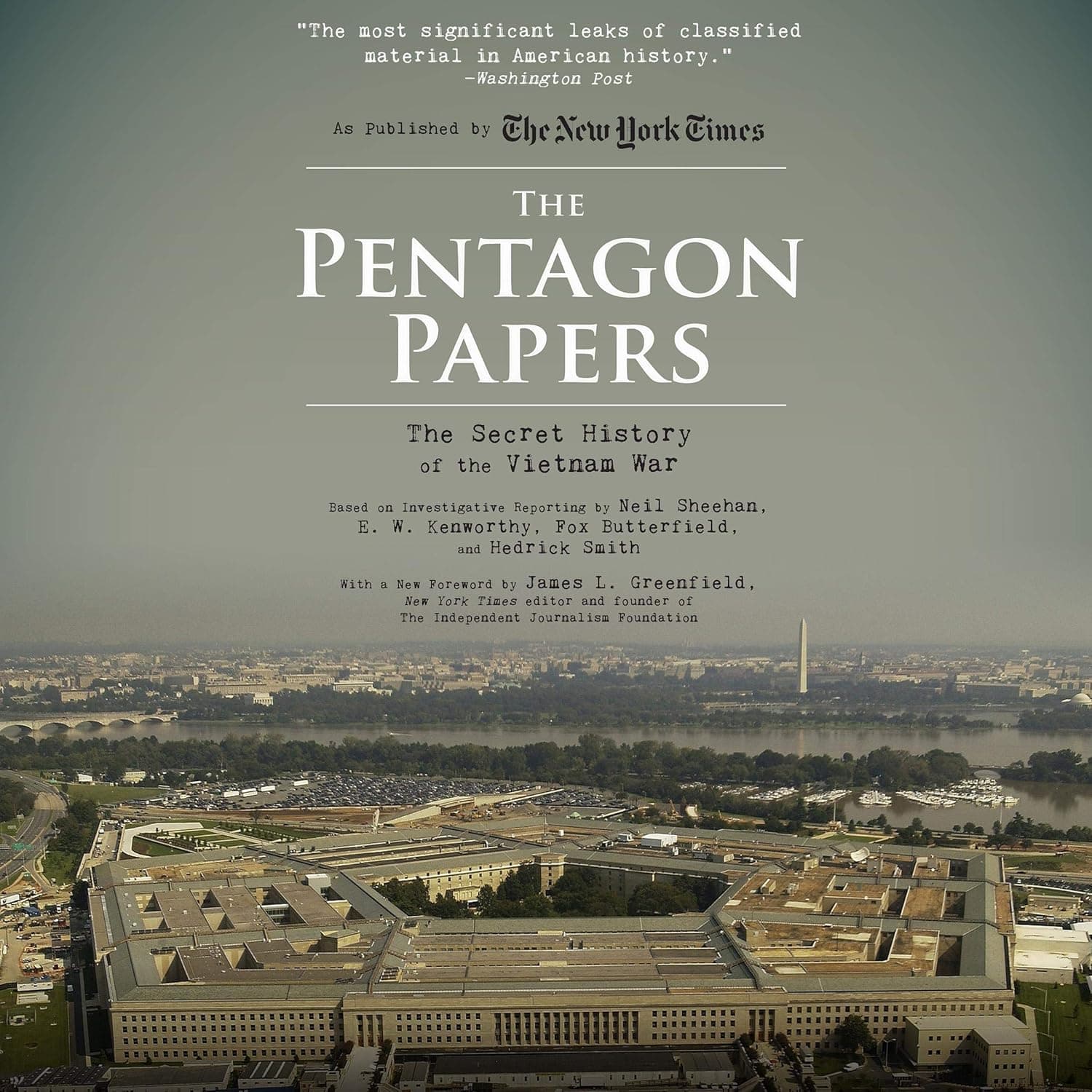
Daniel Ellsberg leaked classified documents showing the government knew the Vietnam War was unwinnable while publicly claiming progress. The papers exposed decades of deliberate deception about military strategy and casualties.
“The war effort is making significant progress and victory is achievable”
From “crazy” to confirmed
The Claim Is Made
This is the moment they called it crazy.
When Daniel Ellsberg walked into the New York Times offices in 1971 with a stack of classified documents, he carried something that would fundamentally shake public confidence in government institutions: proof of systematic, deliberate deception about the Vietnam War. What he had wasn't speculation or leaked gossip—it was the Pentagon's own internal record of what officials knew versus what they told the American people.
The official narrative during the 1960s was remarkably consistent. Military leadership and political figures assured the country that progress was being made in Vietnam. Secretary of Defense Robert McNamara presented statistics showing enemy casualties were mounting and pacification efforts were succeeding. Presidents Johnson and Kennedy spoke of light at the end of the tunnel. The American public, their elected representatives, and the soldiers fighting the war itself were operating on this version of events.
But the Pentagon Papers—formally titled "United States-Vietnam Relations, 1945-1967"—revealed something starkly different. The classified study showed that Pentagon officials had known for years that the war was likely unwinnable. Internal memoranda documented the understanding that North Vietnam would not surrender, that the bombing campaigns weren't achieving their stated objectives, and that the public messaging diverged dramatically from private assessments. Successive administrations weren't just optimistic; they were knowingly presenting a false picture.
When the Times began publishing excerpts in June 1971, the government's response was immediate and forceful. The Nixon administration obtained an injunction to stop publication, claiming would be compromised. The case reached the Supreme Court within two weeks. Officials argued that releasing decades-old classified material would endanger ongoing diplomatic efforts and military operations. The implication was clear: anyone suggesting the government had lied was either naive or reckless.
Get the 5 biggest receipts every week, straight to your inbox — plus an exclusive PDF: The Top 10 Conspiracy Theories Proven True in 2025-2026. No spam. No agenda. Just the papers they couldn't hide.
You just read "Pentagon Papers revealed systematic government lies about Vi…". We send ones like this every week.
No one's said anything yet. Be the first to drop your take.
Yet the papers themselves provided the evidence. The National Archives eventually made the full Pentagon Papers available to historians and the public. What emerged was undeniable documentation of the deception. The study showed that officials had understood casualty figures were being manipulated, that optimistic assessments were contradicted by classified reports, and that multiple administrations had made deliberate choices to present misleading information to Congress and the public.
The impact rippled far beyond Vietnam policy. The Pentagon Papers demonstrated that the government didn't just make errors in judgment—it institutionalized dishonesty. The deception wasn't the work of a few rogue officials but rather a systematic pattern maintained across administrations of both parties. Soldiers were sent into a war that leadership privately considered unwinnable. Young men were drafted and died while the truth was compartmentalized in classified files.
This matters because it addresses something fundamental about governance: the relationship between citizens and the institutions they fund and empower. When that relationship is built on deliberate falsehoods, it corrodes something essential. The Pentagon Papers showed that skepticism toward official narratives isn't paranoia—sometimes it's justified. Trust, once broken, takes decades to rebuild. The consequences of that broken trust became visible in the decades that followed, as Americans grew increasingly cynical about government institutions and official explanations. Ellsberg's leak didn't create that cynicism; it simply revealed why it was warranted.
Unlikely leak
Only 10.4% chance this would come out. It did.
Conspirators
~500Large op
Secret kept
54.9 years
Time to 95% exposure
500+ years