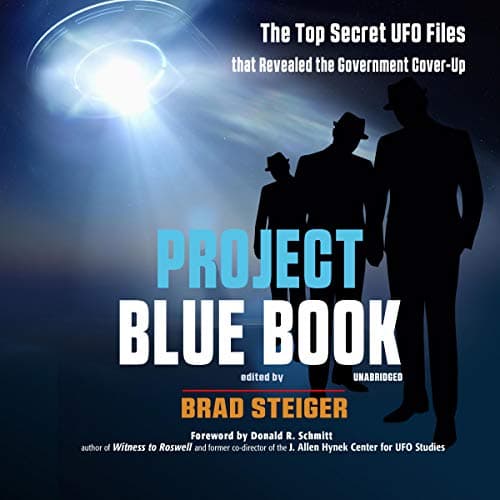
Project Blue Book (1952-1969) was the Air Force's official UFO investigation program, but its lead scientist Dr. J. Allen Hynek later revealed it was primarily a public relations exercise designed to explain away sightings. The 1953 Robertson Panel, declassified in 1975, explicitly recommended that the government debunk UFO sightings to reduce public interest. Project Sign, Blue Book's predecessor, had actually recommended the extraterrestrial hypothesis in its 1948 'Estimate of the Situation,' but this was rejected and the document ordered destroyed by Air Force Chief of Staff General Vandenberg. Hynek became a prominent UFO researcher after leaving the project.
“As a scientist, I was obligated to report the truth. But the Air Force was not interested in the truth — they wanted explanations, any explanations, to make the UFO problem go away. Project Blue Book was a public relations exercise.”
What they said vs. what the evidence shows
“Project Blue Book has been conducted objectively. Our conclusion: no UFO reported, investigated, and evaluated has ever given any indication of threat to our national security.”
— US Air Force · Dec 1969
SourceFrom “crazy” to confirmed
The Claim Is Made
This is the moment they called it crazy.
For seventeen years, the United States Air Force insisted it was seriously investigating UFO sightings. Project Blue Book, launched in 1952, was presented to the public as a rigorous scientific effort to determine whether unidentified flying objects posed a threat to national security. What emerged decades later told a very different story.
Dr. J. Allen Hynek, the astronomer who served as the project's scientific consultant for its entire run, eventually became one of its harshest critics. After leaving the program in 1969, Hynek publicly stated that Project Blue Book had functioned primarily as a public relations operation designed to reduce public concern about UFO sightings—not to genuinely investigate them. Coming from the person who had helped run the program, this was damning testimony.
The evidence supporting Hynek's claim came from declassified government documents that revealed the true intent from the beginning. The 1953 Robertson Panel, a classified advisory group tasked with assessing the UFO phenomenon, explicitly recommended that the government actively debunk UFO reports to discourage public interest in the subject. This wasn't a side effect of the investigation. It was the objective. The panel's findings remained classified until their release in 1975, but they made clear that managing public perception, not scientific truth-seeking, was the priority.
The deeper the history went, the more troubling the picture became. Before Project Blue Book existed, there was Project Sign (1948-1952). Sign's analysts had actually reviewed the evidence and reached a striking conclusion: the extraterrestrial hypothesis might explain some sightings. This assessment, known as the "Estimate of the Situation," represented serious scientific work by Air Force investigators. But when Air Force Chief of Staff General Hoyt Vandenberg reviewed it, he rejected the extraterrestrial conclusion and ordered the document destroyed. The official investigation that would follow was built on the foundation of rejecting what its predecessor had considered possible.
Get the 5 biggest receipts every week, straight to your inbox — plus an exclusive PDF: The Top 10 Conspiracy Theories Proven True in 2025-2026. No spam. No agenda. Just the papers they couldn't hide.
You just read "Project Blue Book was designed to debunk UFOs, not investiga…". We send ones like this every week.
No one's said anything yet. Be the first to drop your take.
Confirmed: They Were Right
The truth comes out. Officially documented.
Confirmed: They Were Right
The truth comes out. Officially documented.
Project Blue Book investigated over 12,000 UFO reports between 1952 and 1969, officially classifying 701 as "unidentified." Yet the program's actual methodology—as Hynek and later researchers would document—was often designed to fit sightings into conventional explanations rather than genuinely evaluate them. Weather balloons, swamp gas, and misidentifications of aircraft became the default answers, regardless of the specifics of individual cases.
This wasn't a matter of scientific disagreement where reasonable people might differ. It was an institutional commitment to a predetermined conclusion. The government had decided what the answer should be before the investigation began, then structured the investigation to reach that answer.
What makes this case historically significant is not merely that officials were wrong about UFOs. It's that they deliberately constructed a system to mislead the public about their own findings. Citizens were told their government was seriously investigating a phenomenon when officials had already decided the investigation would serve a public management function rather than a truth-seeking one.
The revelation raises fundamental questions about institutional transparency and public trust. When government agencies can design investigations specifically to reach predetermined conclusions while presenting them as objective scientific inquiry, it becomes difficult to know what official investigations can be trusted. The Project Blue Book case isn't just about UFOs. It's about how institutions handle information the public deserves to have.
See also: [Named Three Mountains Antarctica 2016: What the State Department Records Reveal](/blog/named-three-mountains-antarctica-2016-operation) — our deeper breakdown of this topic.
Beat the odds
This had a 0.6% chance of leaking — someone talked anyway.
Conspirators
~500Large op
Secret kept
3 years
Time to 95% exposure
500+ years