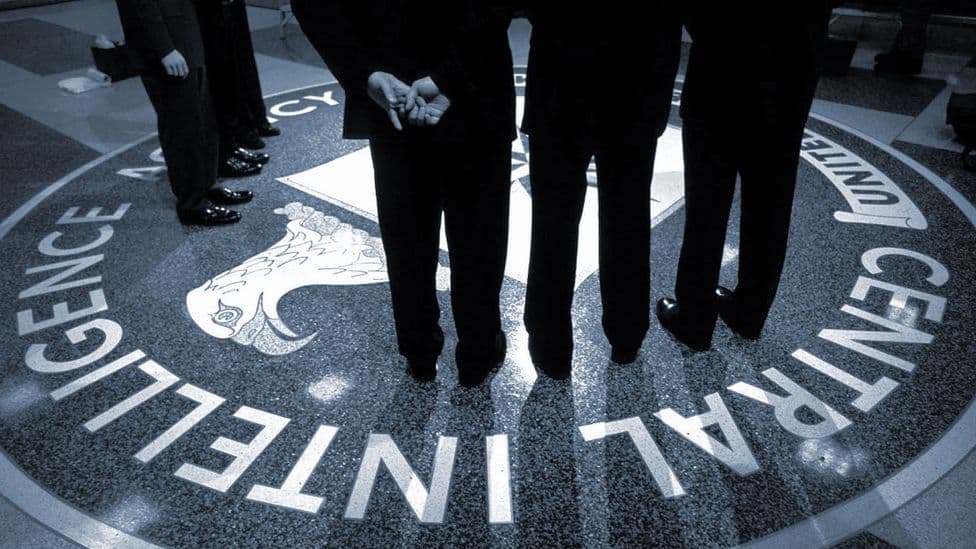
The CIA conducted domestic surveillance operations against American citizens, including journalists covering anti-war protests. Church Committee investigations revealed thousands of files on U.S. reporters and activists.
“CIA operations are limited to foreign intelligence gathering”
From “crazy” to confirmed
The Claim Is Made
This is the moment they called it crazy.
For years, American journalists and anti-war activists in the 1960s and early 1970s reported harassment, mysterious break-ins, and suspicious surveillance. They weren't paranoid. They were being watched by the Central Intelligence Agency, an organization legally prohibited from conducting domestic operations.
The claims seemed radical at the time. How could the nation's foreign intelligence service justify monitoring American citizens exercising their constitutional rights? The CIA's official response was categorical denial. The agency maintained strict compartmentalization, insisting that its mandate ended at the nation's borders and that domestic surveillance was the exclusive domain of the FBI and local law enforcement.
Then came the Church Committee. In 1975, Senator Frank Church led a comprehensive investigation into intelligence agency abuses that fundamentally altered public understanding of American government overreach. The committee's revelations about Project CHAOS, the code name for the CIA's domestic surveillance operation, proved the activists had been right all along.
Between 1967 and 1973, the CIA systematically collected intelligence on thousands of American citizens engaged in anti-war activity. The operation maintained files on at least 7,000 U.S. citizens, with particular focus on journalists, reporters, and activists covering or participating in anti-Vietnam War protests. The agency intercepted mail, conducted break-ins, and embedded informants within activist groups. Journalists' phone records were monitored, their movements tracked, their sources threatened.
Get the 5 biggest receipts every week, straight to your inbox — plus an exclusive PDF: The Top 10 Conspiracy Theories Proven True in 2025-2026. No spam. No agenda. Just the papers they couldn't hide.
You just read "Project CHAOS: CIA illegally monitored American journalists …". We send ones like this every week.
No one's said anything yet. Be the first to drop your take.
The scope was breathtaking. One journalist investigating CIA activities later discovered his own file, which detailed his personal life, his sources, and his movements—all collected without warrant or legal justification. The Church Committee found that these surveillance operations violated both the First Amendment and the Fourth Amendment, yet continued for years with minimal oversight.
What made the scandal worse was the institutional deception. CIA leadership knew the operation violated their legal charter. Internal memos showed awareness that Project CHAOS operated beyond their authority. Yet the agency continued the program and concealed it from Congress and the public. When questioned, officials provided misleading testimony about the scope and nature of the operations.
The Church Committee documented everything. Their final reports included specific cases, timelines, and the actual surveillance records themselves. The evidence was irrefutable—not because activists had always suspected wrongdoing, but because the government's own files proved what had been dismissed as conspiracy theories.
This matters profoundly for public trust. When citizens are told their concerns are baseless, when they're characterized as paranoid for suspecting government overreach, the credibility of official denials erodes completely once the truth emerges. Journalists and activists who raised alarms weren't conspiracy theorists; they were describing reality that powerful institutions worked to conceal.
The Project CHAOS revelations established that unchecked intelligence agencies pose a genuine threat to democratic freedoms. It proved that institutional denial isn't always covering legitimate secrets—sometimes it's concealing abuse. Most importantly, it showed why skepticism of official narratives, paired with rigorous investigation, remains essential to maintaining accountability in democracies where transparency is theoretically guaranteed but practically requires constant vigilance.
Beat the odds
This had a 2% chance of leaking — someone talked anyway.
Conspirators
~100Network
Secret kept
51.4 years
Time to 95% exposure
500+ years