2005: NSA historian Hanyok confirmed Aug 4, 1964 attack fabricated. Intel distorted. 58K Americans, 2-3M Vietnamese dead.
“NSA's own historian confirmed the attack was fabricated to start Vietnam.”
What they said vs. what the evidence shows
“Unprovoked acts of aggression.”
— LBJ (1964) · Aug 1964
SourceFrom “crazy” to confirmed
The Claim Is Made
This is the moment they called it crazy.
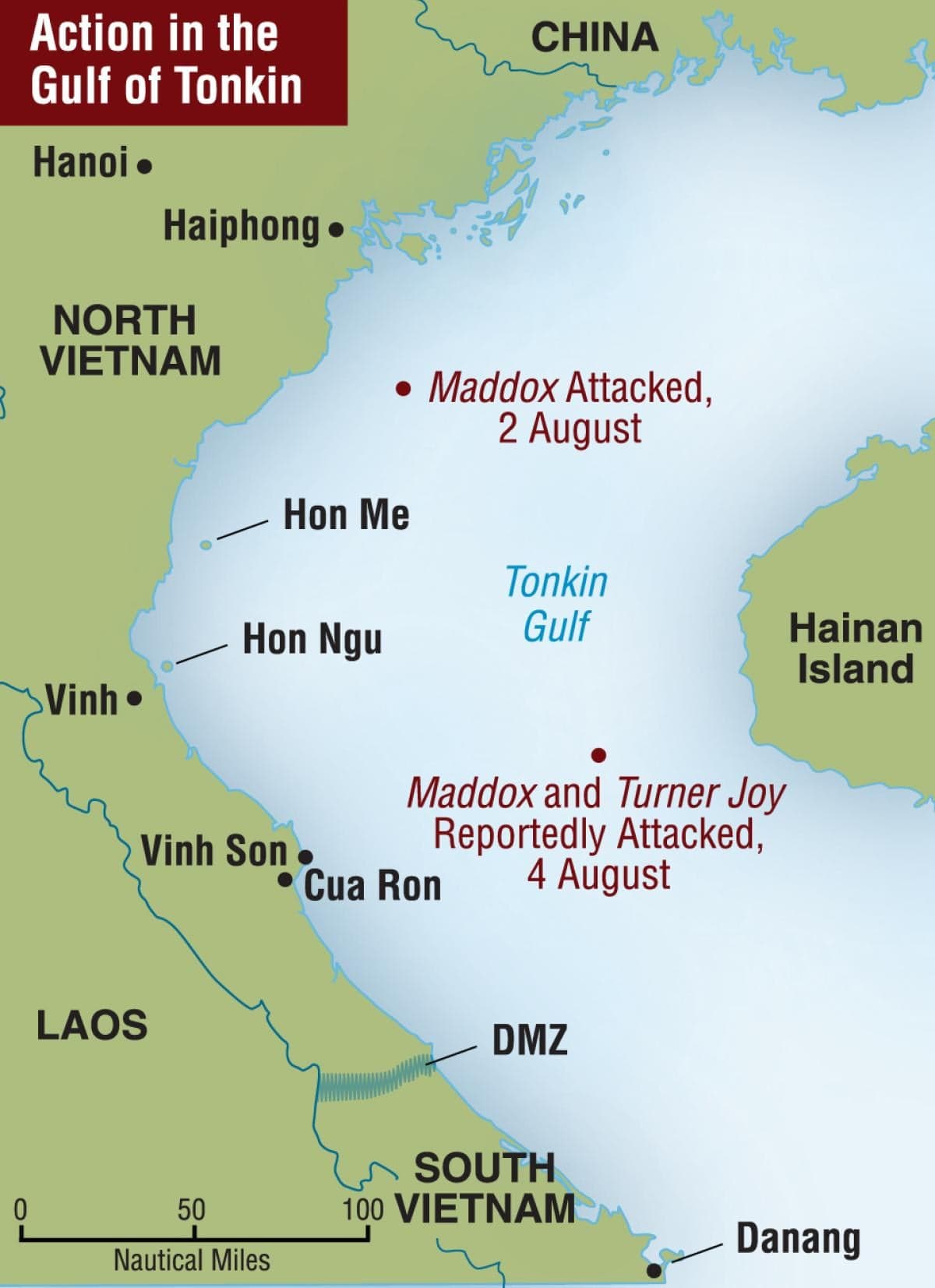
The United States military reported being attacked twice in the Gulf of Tonkin in August 1964. The second attack, on August 4th, never happened. This fabricated incident became the justification for the Gulf of Tonkin Resolution, which gave President Lyndon B. Johnson a blank check to wage war in Vietnam. Over the next decade, that war would claim roughly 58,000 American lives and between 2 and 3 million Vietnamese lives.
At the time, the narrative was straightforward. American destroyers had been fired upon by North Vietnamese torpedo boats. The first attack on August 2nd had evidence behind it. The second attack, however, existed primarily in the fog of war and the anxieties of commanders aboard the USS C. Turner Joy. Sonarmen heard what they believed were incoming torpedoes. The ship's captain reported the attack up the chain of command. Within hours, the incident was being used to justify American military escalation.
The official response from the military and government was consistent: two attacks had occurred, and the U.S. was justified in responding. The Tonkin incident became the foundation for the resolution that Congress passed just days later, essentially authorizing the President to conduct war without a formal declaration. Skeptics questioned the evidence even at the time, but their concerns were marginalized or dismissed as unpatriotic.
For decades, the dominant narrative held. History textbooks taught the two-attack version. Veterans spoke of retaliatory strikes. The political decision had been made and institutionalized.
In 2005, NSA historian Shirely Hanyok completed a declassified study examining the signals intelligence around the incident. Hanyok's research was definitive: the August 4th attack did not occur. More troubling than the phantom attack itself was how the intelligence had been handled. Signals were distorted. Intercepts were misinterpreted or selectively presented. Officers aware of the problematic intelligence failed to correct the record. What emerged was a portrait of institutional machinery grinding forward with faulty information—or grinding forward deliberately despite knowing the information was faulty.
Get the 5 biggest receipts every week, straight to your inbox — plus an exclusive PDF: The Top 10 Conspiracy Theories Proven True in 2025-2026. No spam. No agenda. Just the papers they couldn't hide.
You just read "NSA historian confirmed Gulf of Tonkin second attack never h…". We send ones like this every week.
No one's said anything yet. Be the first to drop your take.
Source: NSA historian confirmed Gulf of Tonkin second attack never happened - started Vi
Confirmed: They Were Right
The truth comes out. Officially documented.
Confirmed: They Were Right
The truth comes out. Officially documented.
The evidence showed that sonarmen aboard the destroyers had been reporting unclear signals in bad weather. These were interpreted as hostile fire. When analysts reviewed the raw intelligence, they found reasons to be skeptical. Some questioned whether the signals even existed. Rather than halt the narrative, officials moved forward. Hanyok's declassified study showed this wasn't merely a case of wartime confusion. It was a failure of institutional integrity.
The impact of this revelation cannot be overstated. A war that killed millions of people was initiated based on an event that never occurred. The intelligence community had the tools to know better and, in some cases, did know better. The American public was not presented with facts; it was presented with a version of events shaped to support predetermined policy goals.
What the Gulf of Tonkin case demonstrates is how easily official narratives can become detached from reality. Institutions that hold the power to wage war also hold the power to frame the justifications for doing so. The declassification of Hanyok's findings came decades too late to matter for the hundreds of thousands who died based on false pretenses. It serves as a reminder that when governments and militaries ask citizens to trust their accounts of foreign crises, that trust must be earned through transparency, not granted through authority.
Beat the odds
This had a 0.2% chance of leaking — someone talked anyway.
Conspirators
~1,000Large op
Secret kept
0.5 years
Time to 95% exposure
500+ years