Uber had an internal surveillance tool called 'God View' that tracked the real-time location of all Uber vehicles and customers. In November 2014, Uber's NYC general manager Josh Mohrer tracked BuzzFeed reporter Johana Bhuiyan without permission, greeting her with 'I was tracking you.' In 2011, a venture capitalist's live Uber trip was displayed on a big screen at an Uber launch party in Chicago without his knowledge. Executive Emil Michael suggested investigating journalists critical of Uber. God View was available to corporate employees company-wide. The NY Attorney General fined Uber $20,000.
“Uber employees can track any rider's location in real time using an internal tool called 'God View.' They're using it to spy on journalists, politicians, and ex-partners.”
From “crazy” to confirmed
The Claim Is Made
This is the moment they called it crazy.
Imagine an app company knowing exactly where you are at every moment—and using that knowledge to surprise you on the street. For Uber users, this wasn't hypothetical. It was Uber's reality, built into the company's infrastructure and available to hundreds of employees who had access to a tool the company called "God View."
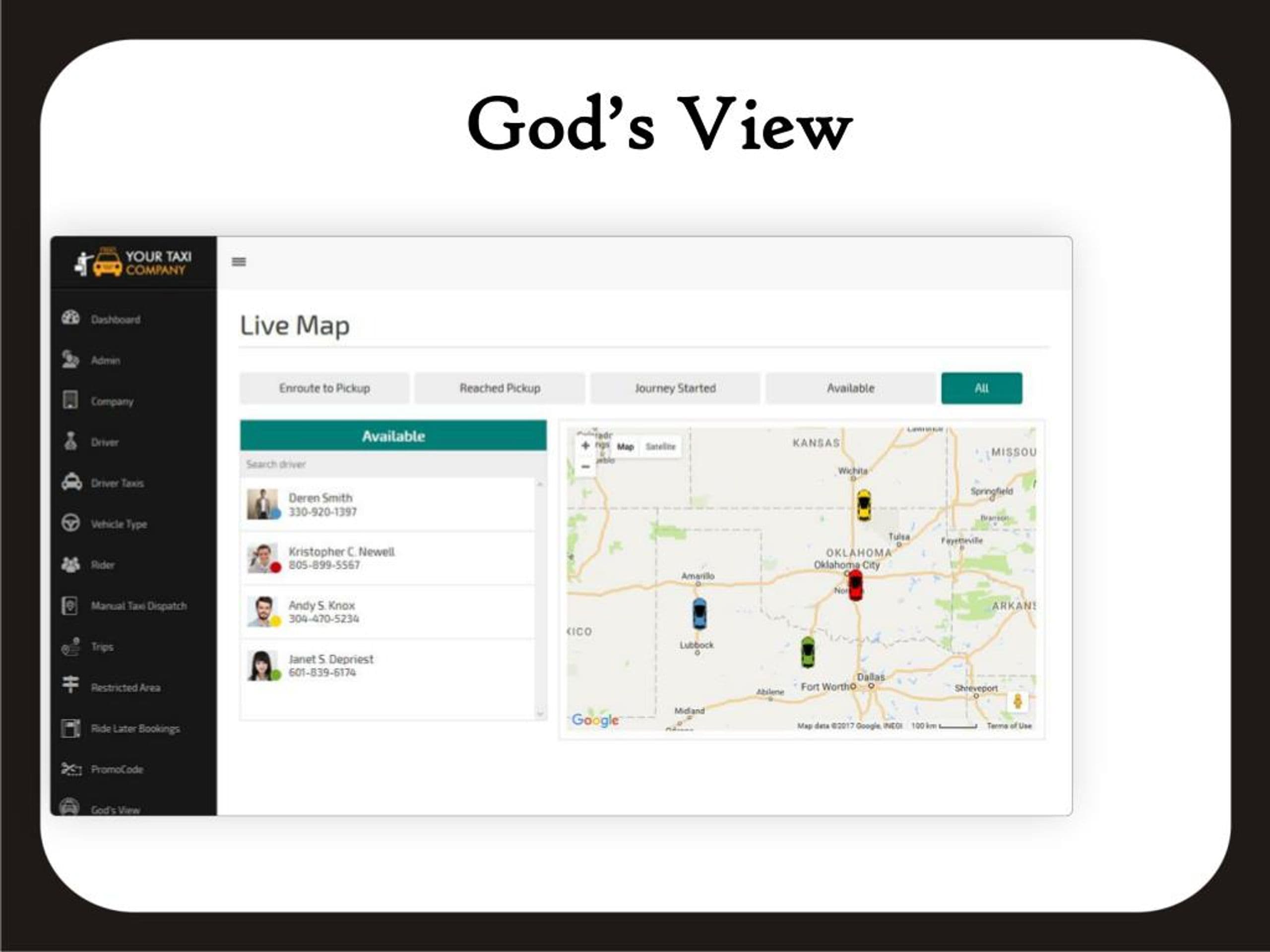
God View was an internal monitoring system that displayed the real-time location of every Uber vehicle and rider on a map. The tool served legitimate operational purposes: dispatchers used it to manage ride assignments, and support staff consulted it to help lost drivers. But like many powerful technologies, it became a tool for something else entirely.
The allegations emerged in November 2014 when BuzzFeed reporter Johana Bhuiyan published her account of being tracked by Uber's New York general manager, Josh Mohrer. According to Bhuiyan, Mohrer had monitored her location as she used Uber and then confronted her in person, saying "I was tracking you." He did this without her knowledge or permission. The incident was not an isolated misuse—it was symptomatic of a broader culture of surveillance enabled by unrestricted access to God View.
Other examples surfaced. In 2011, a venture capitalist's live Uber trip was displayed on a large screen at a company launch party in Chicago. The passenger had no idea his location was being broadcast to partygoers. More troubling still were internal communications suggesting that executives viewed critical journalists as targets. Emil Michael, Uber's senior vice president, had proposed using God View and other company resources to investigate critics, including journalists who reported negatively on the company.
Uber's initial response was defensive. The company acknowledged that misuse had occurred but framed it as isolated incidents by individual employees. Company representatives suggested the tracking was an unfortunate side effect of necessary operational tools. However, this explanation rang hollow given the breadth of access: God View was available company-wide to corporate employees, not just to the operational staff who genuinely needed it.
Get the 5 biggest receipts every week, straight to your inbox — plus an exclusive PDF: The Top 10 Conspiracy Theories Proven True in 2025-2026. No spam. No agenda. Just the papers they couldn't hide.
You just read "Uber's 'God View' tool let employees track any user's real-t…". We send ones like this every week.
No one's said anything yet. Be the first to drop your take.
Confirmed: They Were Right
The truth comes out. Officially documented.
Confirmed: They Were Right
The truth comes out. Officially documented.
The New York Attorney General's office investigated and reached a settlement with Uber in 2015. The company paid a $20,000 fine—a sum that barely registered for a company valued in the billions. More significantly, Uber agreed to restrict access to God View and implement stronger privacy controls. The company also agreed to delete historical tracking data and provide transparency reports about how often the tool was accessed.
What makes this case instructive isn't just that it happened. It's what it reveals about the relationship between technological capability and corporate restraint. Uber built a tool with immense surveillance potential, distributed access broadly, and relied entirely on employee self-regulation to prevent abuse. When abuse inevitably occurred, the company treated it as a PR problem rather than a systemic failure.
The episode raised a question that remains relevant today: When companies possess the technical ability to monitor users in real time, what prevents them from doing so? The honest answer, as Uber's God View saga demonstrated, is often very little. Trust in tech companies, it turns out, is not a sufficient safeguard. Only accountability mechanisms—legal oversight, fines, and changed practices—provide actual protection. Uber knew it had built a surveillance tool. The question wasn't whether it could be misused. The question was when.
Beat the odds
This had a 0% chance of leaking — someone talked anyway.
Conspirators
~100Network
Secret kept
1.1 years
Time to 95% exposure
500+ years