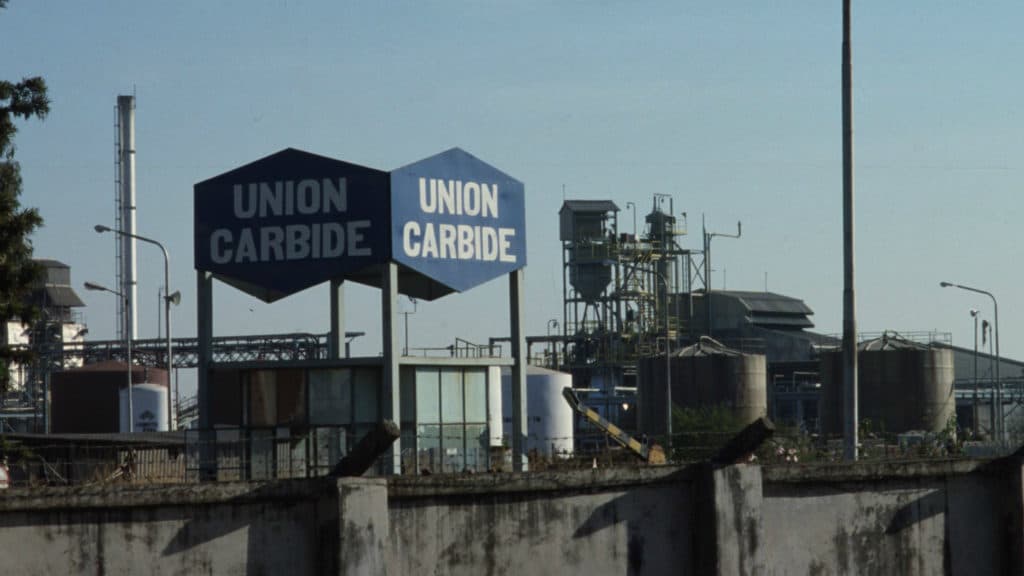
Internal Union Carbide documents showed executives knew the Bhopal plant had major safety defects and cost-cutting measures increased risks. The company ignored engineer warnings before the 1984 disaster killed 3,800+ people.
“The Bhopal plant met all safety standards and the accident was caused by sabotage”
From “crazy” to confirmed
The Claim Is Made
This is the moment they called it crazy.
On the night of December 3rd, 1984, a cloud of lethal methyl isocyanate gas rolled through the streets of Bhopal, India. By morning, thousands were dead or dying. For years, the official story was that this was a tragic accident—an unpredictable industrial failure that no one could have foreseen.
The reality was far different.
Internal Union Carbide documents that emerged during litigation revealed what the company's own engineers had known all along: the Bhopal plant was a disaster waiting to happen. Safety systems were dangerously inadequate. Critical equipment was in poor condition. And cost-cutting measures had systematically eroded the safeguards meant to prevent exactly this kind of catastrophe.
The initial claim came not from conspiracy theorists, but from the victims themselves and investigative journalists who obtained company documents. They argued that Union Carbide's executives had ignored repeated warnings about safety defects at the facility. The company dismissed these allegations. Union Carbide maintained that the disaster resulted from a freak accident—specifically, that water had somehow entered a tank containing methyl isocyanate, triggering a runaway chemical reaction that no amount of precaution could have stopped. This was presented as one of those unfortunate industrial mishaps that no reasonable company could predict or prevent.
But the documents told a different story. Engineers had raised concerns about the refrigeration system that was supposed to cool the chemical tanks—cooling that would have prevented or slowed the reaction. They'd flagged problems with pipes, valves, and safety procedures. Reports documented that the plant was operating with multiple backup safety systems either broken or disabled. Maintenance records showed a pattern of deferred repairs and insufficient staffing to properly monitor the facility.
Most damning was the evidence of deliberate cost-cutting. Union Carbide had reduced safety investments at the Bhopal plant even as engineers warned that risks were increasing. Training for emergency response was minimal. The neighboring community had not been properly informed about the hazardous chemicals stored near their homes. These weren't oversights—they were documented decisions made by people who understood the trade-off between safety and profit.
Get the 5 biggest receipts every week, straight to your inbox — plus an exclusive PDF: The Top 10 Conspiracy Theories Proven True in 2025-2026. No spam. No agenda. Just the papers they couldn't hide.
You just read "Union Carbide ignored safety warnings before Bhopal gas leak…". We send ones like this every week.
No one's said anything yet. Be the first to drop your take.
The death toll was staggering: over 3,800 people killed in the immediate aftermath, with thousands more dying from complications in the years that followed. Hundreds of thousands suffered permanent injuries and disabilities. Yet for a considerable time, the dominant narrative remained that Union Carbide bore no real responsibility for a tragedy born of unforeseeable circumstance.
The significance of this case extends far beyond one company's misconduct decades ago. The Bhopal disaster demonstrated that when internal corporate documents are finally exposed—whether through litigation, whistleblowers, or determined investigation—they often reveal that institutional knowledge of danger precedes tragedy. Companies knew. They chose their profit margins over lives.
This pattern has repeated itself throughout industrial history, from tobacco companies to automobile manufacturers to chemical producers. Bhopal was among the largest industrial disasters in human history, yet it took years for the public to understand that it was preventable. That gap between what companies knew and what they admitted remains a crucial reminder about why transparency matters, why employee warnings deserve serious attention, and why public trust requires accountability.