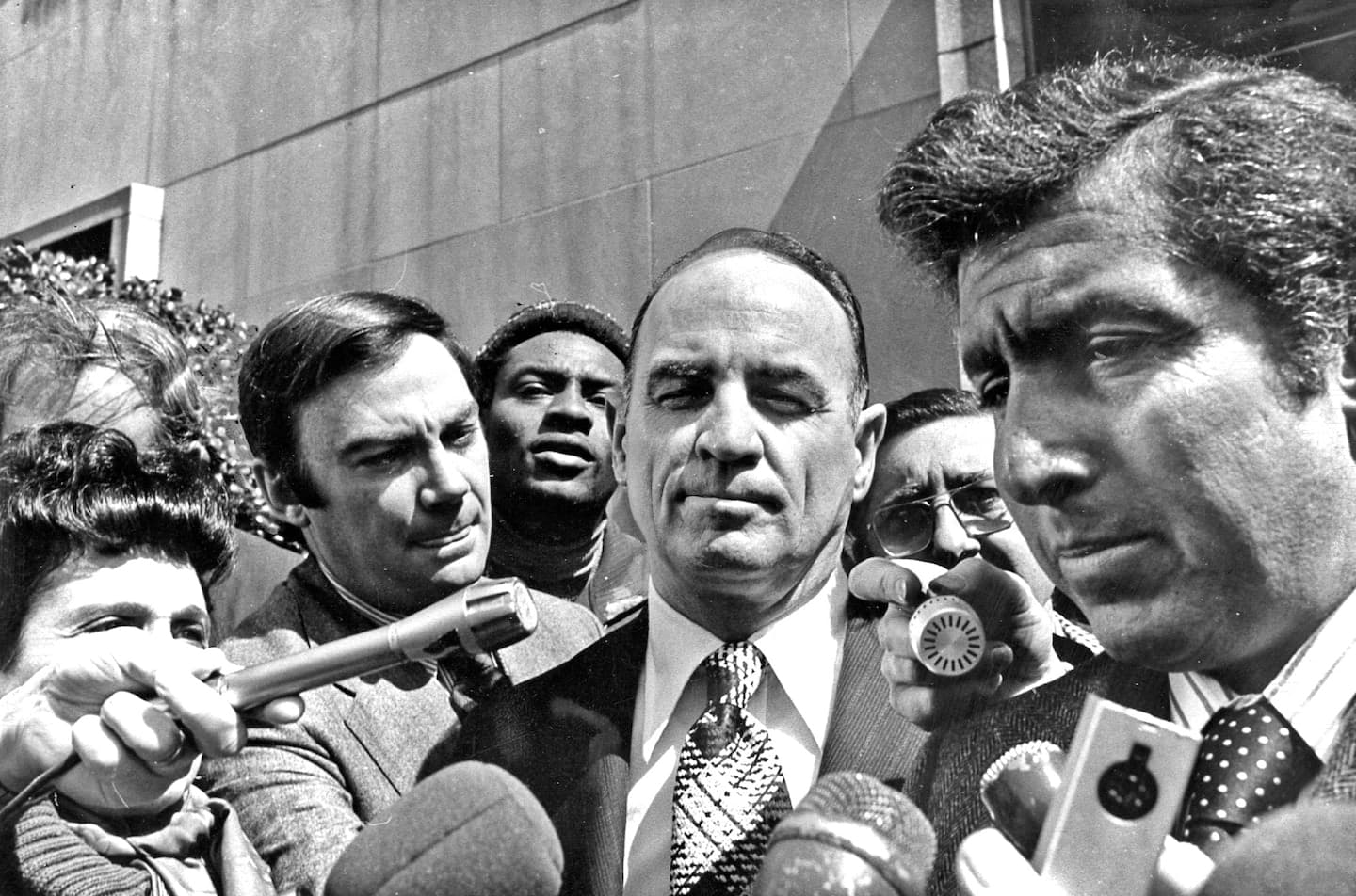
Senate investigations revealed multiple Watergate burglars were former CIA operatives with ongoing agency connections. The CIA initially denied any involvement while possessing detailed knowledge of the operation and participants.
“The CIA had no involvement in or prior knowledge of the Watergate break-in activities”
From “crazy” to confirmed
The Claim Is Made
This is the moment they called it crazy.
When five men broke into Democratic National Committee headquarters on June 17, 1972, the initial assumption was straightforward: burglars working for President Nixon's reelection campaign. What emerged over the following years through Senate investigations was far more complicated. Several of these burglars possessed backgrounds that connected them directly to the Central Intelligence Agency, a detail that raised immediate questions about institutional knowledge and official accountability.
The men arrested at the Watergate complex that night included Bernard Barker, Virgilio Gonzalez, and Eugenio Martinez. What distinguishes them from common criminals is that all three had worked for the CIA during the Bay of Pigs operation and maintained connections to the agency afterward. James McCord, another burglar and security coordinator for Nixon's campaign committee, had himself been a CIA officer. These weren't distant historical ties or minor consulting roles—they represented active operational backgrounds in covert action.
At the time, the CIA issued categorical denials of involvement. The agency insisted it had no foreknowledge of the break-in and no ongoing relationship with the burglars who worked there. Director Richard Helms and other agency officials maintained this position publicly and in congressional testimony. The narrative that dominated news coverage presented Watergate as a rogue political operation, compartmentalized from intelligence community structures.
Get the 5 biggest receipts every week, straight to your inbox — plus an exclusive PDF: The Top 10 Conspiracy Theories Proven True in 2025-2026. No spam. No agenda. Just the papers they couldn't hide.
You just read "Watergate Burglars Had Extensive CIA Connections Hidden from…". We send ones like this every week.
No one's said anything yet. Be the first to drop your take.
Senate investigators, particularly those working with the Church Committee in the mid-1970s, uncovered a different picture. The CIA had indeed maintained extensive files on the burglars and their activities. Agency records showed detailed knowledge of these men's identities, capabilities, and histories. More significantly, the agency had connections to the Miami-based anti-Castro Cuban exile network from which several burglars were drawn. These networks, funded and trained by the CIA for years, represented institutional relationships that extended well beyond casual acquaintance.
The evidence mounted through declassified documents and testimony. The CIA's initial denials contradicted what sat in agency files. The question shifted from whether the CIA knew about these men to what the agency actually knew and when it knew it. The distinction between institutional foreknowledge and operational involvement remained murkier than the public narrative suggested.
This matters because institutions derive legitimacy from transparency and accountability. When government agencies deny involvement in significant events and later evidence contradicts those denials, public trust fractures. Watergate occurred during an era when intelligence agencies already faced scrutiny for operations abroad. Discovering that the CIA had misrepresented its knowledge of domestic political crimes—however tangential—reinforced legitimate concerns about institutional honesty.
The Watergate burglars' CIA connections represent something beyond a footnote to history. They demonstrate how information compartmentalization and official denials can obscure institutional realities from public view. Even in cases that received intense media scrutiny and congressional investigation, key facts remained obscured for years.
Today, this history serves as a reminder that when multiple government agencies are involved in a significant event, the official narrative released immediately may not reflect what institutions actually knew. Verification requires sustained investigation, declassified documents, and willingness to question initial denials. The public can reasonably expect direct answers about institutional involvement in major incidents, not stonewalling followed by gradual revelation of contradictory evidence.
Beat the odds
This had a 2.1% chance of leaking — someone talked anyway.
Conspirators
~100Network
Secret kept
53 years
Time to 95% exposure
500+ years