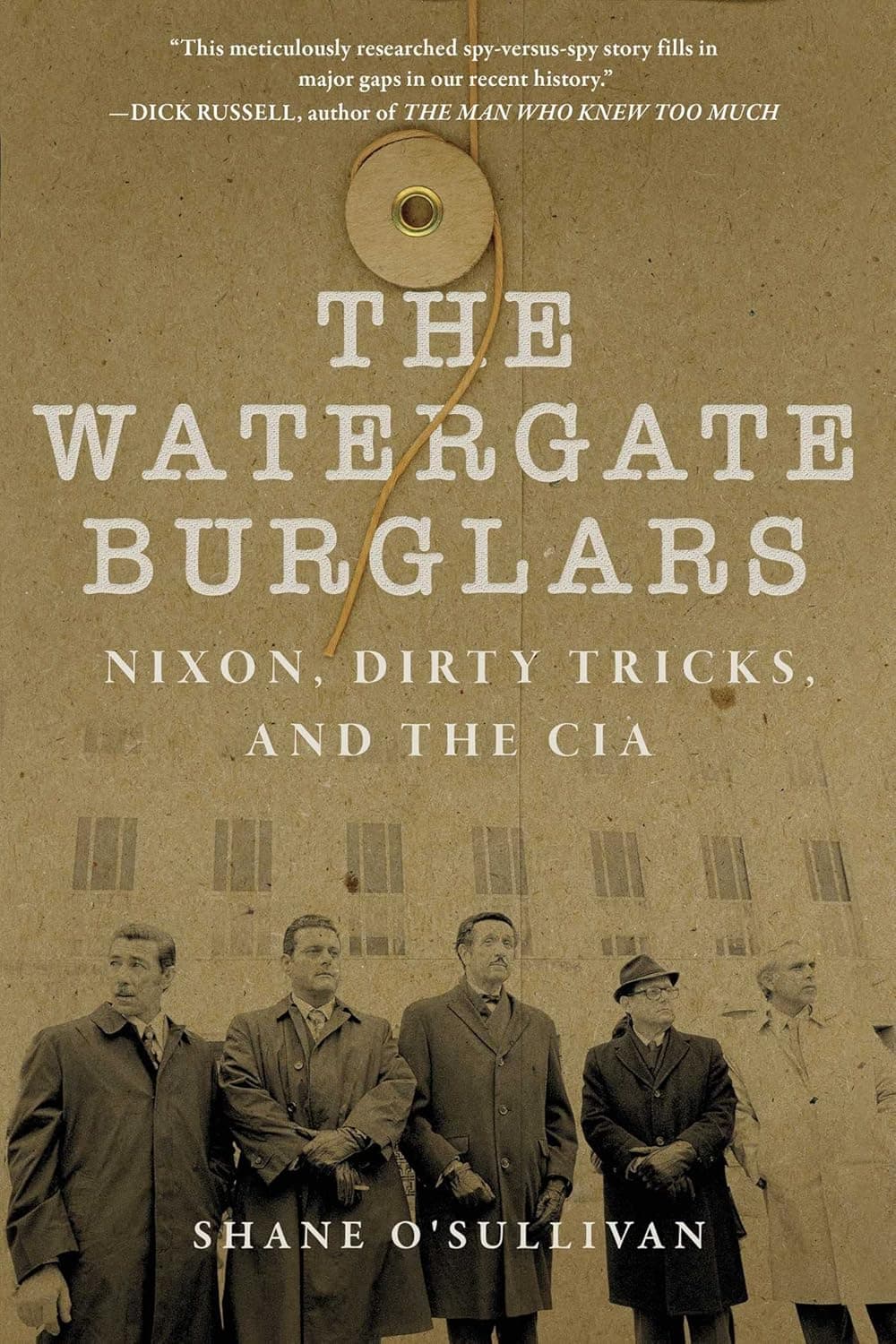
The Watergate break-in was far deeper than a simple burglary. Every participant had CIA connections - Howard Hunt was a former CIA officer, James McCord was ex-CIA, and the Cuban operatives were all CIA-connected. The CIA provided Hunt with disguises and equipment. On June 19, 1972, CIA agent Lee Pennington Jr. destroyed incriminating material at McCord's home. The FBI initially believed it was a CIA operation.
“McCord and the Cubans are all ex-CIA people. Practically everyone who went in there was connected to the agency.”
From “crazy” to confirmed
The Claim Is Made
This is the moment they called it crazy.
When five men were arrested inside the Democratic National Committee headquarters on June 17, 1972, investigators initially treated it as a straightforward burglary. But within 48 hours, federal agents recognized something far more unusual: nearly every person involved had ties to America's intelligence apparatus. This wasn't just a break-in. It was an operation that would eventually unravel the Nixon presidency and expose the extent to which the CIA had embedded itself in domestic politics.
The official narrative for years painted Watergate as a rogue operation run by ambitious operatives within the Nixon administration. The CIA, according to this story, was merely tangential to the scandal. President Nixon himself would later claim executive privilege to shield conversations, but the broader institutional narrative from intelligence officials was one of distance and surprise at the burglars' connections to their agency.
Yet the documented record tells a different story entirely. Howard Hunt, the operation's principal architect, wasn't some freelance operative. He was a former CIA officer with decades of intelligence experience, including operations in Guatemala and the Bay of Pigs invasion. James McCord, the security coordinator for the Committee to Re-elect the President and another key burglar, had worked for the CIA before joining Nixon's team. The four Cuban operatives arrested alongside them—Eugenio Martinez, Virgilio Gonzalez, and others—had all participated in CIA-sponsored operations against Castro's Cuba. Their backgrounds weren't incidental. They were central to why these men were available and trusted for such an assignment.
Get the 5 biggest receipts every week, straight to your inbox — plus an exclusive PDF: The Top 10 Conspiracy Theories Proven True in 2025-2026. No spam. No agenda. Just the papers they couldn't hide.
You just read "Every Watergate burglar had CIA ties, CIA equipment was used…". We send ones like this every week.
No one's said anything yet. Be the first to drop your take.
Confirmed: They Were Right
The truth comes out. Officially documented.
Confirmed: They Were Right
The truth comes out. Officially documented.
The equipment used during the break-in further strengthens the connection. Hunt had access to CIA disguises, surveillance gear, and other materials that went well beyond what a standard political operative could obtain. These weren't supplies purchased from hardware stores or spy shops. These were the tools of a professional intelligence operation.
Perhaps most significantly, the destruction of evidence at McCord's home points to institutional involvement. On June 19, 1972—just two days after the arrest—a CIA agent named Lee Pennington Jr. visited McCord's residence and removed incriminating material. This wasn't a coincidence. The FBI's initial assessment of the break-in was that it resembled a CIA operation, which is precisely what it was. The fact that a CIA operative would return to clean up after the burglars suggests something beyond the official narrative of surprise and distance.
The partial verification of this claim matters because it challenges the compartmentalization we're often asked to accept about government institutions. We're told that different agencies operate independently, that their interests don't overlap, that checks and balances prevent abuse. Yet Watergate demonstrates how those institutions can become so intertwined that distinguishing where one ends and another begins becomes nearly impossible.
For public trust, the implications are troubling. If the nation's premier law enforcement body and its intelligence agency were this deeply connected to the scandal that toppled a president, what does that say about how such institutions handle accountability? The willingness to destroy evidence and obscure the full scope of an operation suggests that institutional self-preservation can override transparency, even in moments of national crisis.
Nearly fifty years later, the full extent of CIA involvement in Watergate remains partially obscured. But enough documentation exists to confirm that this wasn't simply a burglary gone wrong. It was intelligence work, conducted on American soil, against American citizens, with consequences that shook the republic.
Beat the odds
This had a 0.4% chance of leaking — someone talked anyway.
Conspirators
~500Large op
Secret kept
2.1 years
Time to 95% exposure
500+ years