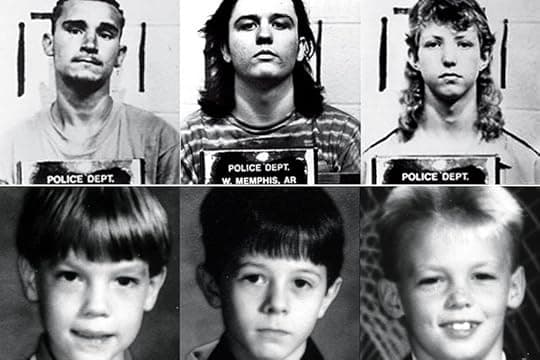
Arkansas prosecutors convicted three teens for child murders based on a coerced confession and dubious occult evidence. Years later, DNA evidence pointed to different suspects.
“The physical evidence and confession clearly establish the defendants' guilt in these murders”
From “crazy” to confirmed
The Claim Is Made
This is the moment they called it crazy.
Three teenagers spent nearly two decades in prison for murders they almost certainly did not commit. The West Memphis Three case stands as one of the most troubling examples of how confirmation bias, coerced confession, and pseudoscientific evidence can send innocent people to death row.
In May 1993, three eight-year-old boys were murdered in West Memphis, Arkansas. The crime horrified the community and sparked an intense investigation. Within weeks, police had arrested three teenagers: Damien Echols, Jason Baldwin, and Jessie Misskelley Jr. All three were convicted by 1994, with Echols receiving a death sentence. The case seemed closed.
But the evidence against them was thin and troubling. Jessie Misskelley Jr., a 17-year-old with an IQ of 72, had allegedly confessed after 12 hours of police interrogation without proper legal representation. A detective later admitted the confession was coerced. More damning was the prosecution's reliance on "satanic ritual abuse" theory—a widespread moral panic of the 1980s and 90s with no scientific basis. Expert witnesses spoke of occult symbols and ritualistic killings, playing directly into fears that had no connection to actual evidence.
The official response from Arkansas authorities was defensive and dismissive. Prosecutors stood by their convictions, framing skeptics as naive or agenda-driven. The state had won its case in court, and appellate judges initially showed little interest in revisiting it. For nearly 20 years, the system refused to seriously examine what had actually happened that night in West Memphis.
DNA evidence eventually became the tool that would unravel the prosecution's case. In 2007, advanced DNA testing identified fibers and biological material that linked to another suspect—not one of the three convicted teenagers. When Echols, Baldwin, and Misskelley were allowed to access newly tested evidence through improved forensic techniques, the results contradicted the original investigation at nearly every turn. The DNA evidence pointed toward different individuals with actual connections to the crime scene.
Get the 5 biggest receipts every week, straight to your inbox — plus an exclusive PDF: The Top 10 Conspiracy Theories Proven True in 2025-2026. No spam. No agenda. Just the papers they couldn't hide.
You just read "West Memphis Three Case Built on Coerced Confessions and Fla…". We send ones like this every week.
No one's said anything yet. Be the first to drop your take.
By 2011, the West Memphis Three walked free. The state allowed them to enter Alford pleas, a legal mechanism that permitted their release while technically preserving the convictions. The Arkansas authorities never formally acknowledged the wrongful conviction, a legal technicality that prevented the men from receiving compensation for their stolen years. Damien Echols had spent 18 years on death row.
This case matters because it reveals how institutional pressure and cultural hysteria can overwhelm actual investigation. The satanic panic that gripped the nation in the 1980s and 90s created a lens through which police viewed every piece of evidence—not as objective facts, but as confirmation of a predetermined narrative. A vulnerable teenage boy's coerced confession became the cornerstone of convictions that withstood initial appeals.
The West Memphis Three case demonstrates why public trust in the justice system depends on accountability and humility. When evidence fails, when confessions are coerced, and when pseudoscience is presented as fact, innocent people pay with their freedom and their lives. Years later, the system did produce justice—but only because of outside pressure and advanced technology, not because of internal corrections. That should trouble anyone who believes in equal justice under law.
Beat the odds
This had a 0.6% chance of leaking — someone talked anyway.
Conspirators
~50Network
Secret kept
32.1 years
Time to 95% exposure
500+ years