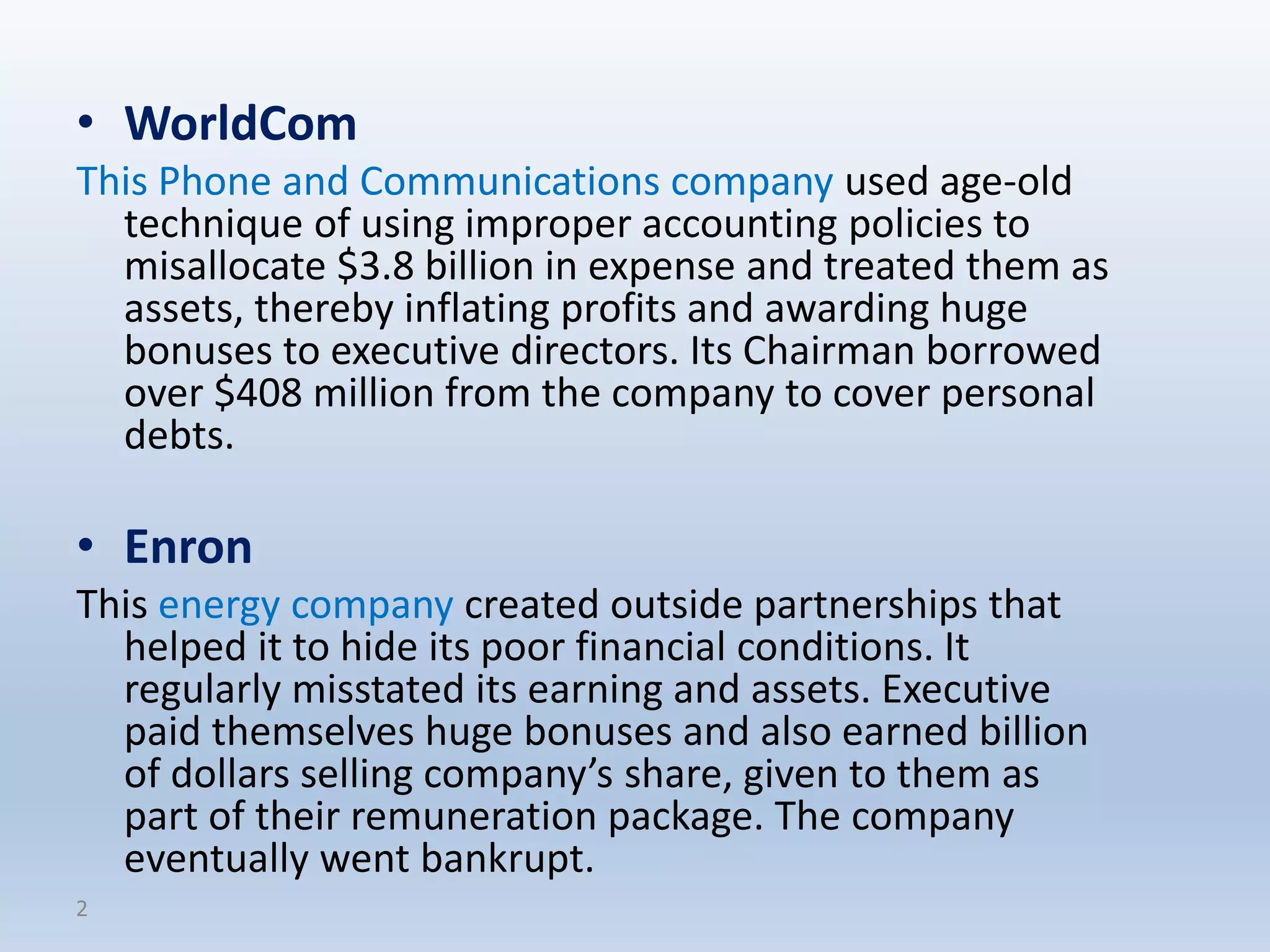
WorldCom CEO Bernie Ebbers directed CFO Scott Sullivan to fraudulently reclassify $3.8 billion in operating expenses as capital expenditures to inflate earnings from 2001 to 2002. Internal auditor Cynthia Cooper discovered the fraud by starting her capital expenditure audit early. Despite knowing the company was failing, Ebbers told Congress 'I do not believe I have anything to hide.' WorldCom filed for the largest bankruptcy in US history (at the time) on July 21, 2002. Ebbers was convicted on all charges and sentenced to 25 years in prison.
“WorldCom's financials don't add up. They're booking operating costs as capital expenditures to make their numbers look better. This is massive fraud.”
From “crazy” to confirmed
The Claim Is Made
This is the moment they called it crazy.
When Bernie Ebbers, the charismatic CEO of WorldCom, testified before Congress in July 2002, he looked directly at lawmakers and declared: "I do not believe I have anything to hide." Within days, his company filed for bankruptcy. Within months, federal agents would prove he had everything to hide.
WorldCom was one of the telecom industry's darlings during the late 1990s. The company grew rapidly through acquisitions, and Ebbers became a celebrated business figure. When whispers started circulating that the numbers didn't quite add up—that growth seemed suspiciously consistent quarter after quarter during an industry downturn—the company's leadership had a simple response: trust us. Wall Street analysts largely did. Investors certainly did, right up until they lost everything.
The fraud itself was straightforward, if audacious. Starting in 2001, CFO Scott Sullivan, operating under Ebbers' direction, systematically reclassified operating expenses as capital expenditures. In accounting terms, this is the difference between spending money on immediate operations versus investments that build long-term value. By moving billions into the capital column, WorldCom artificially inflated its earnings and made the company appear far healthier than it actually was. Over roughly eighteen months, $3.8 billion in fraudulent entries masked the company's deteriorating financial condition.
What unraveled the scheme wasn't sophisticated forensic accounting by external auditors or regulatory vigilance. It was an internal auditor named Cynthia Cooper who decided to start a capital expenditure audit ahead of schedule. When she began asking questions about the entries, she found something didn't fit. The documentation was thin. The justifications didn't hold up. What Cooper had discovered would become one of the largest accounting frauds in American business history at that time.
Get the 5 biggest receipts every week, straight to your inbox — plus an exclusive PDF: The Top 10 Conspiracy Theories Proven True in 2025-2026. No spam. No agenda. Just the papers they couldn't hide.
You just read "WorldCom committed $3.8 billion in accounting fraud, the lar…". We send ones like this every week.
No one's said anything yet. Be the first to drop your take.
Confirmed: They Were Right
The truth comes out. Officially documented.
Confirmed: They Were Right
The truth comes out. Officially documented.
On July 21, 2002, WorldCom filed for bankruptcy with $11 billion in assets—the largest bankruptcy filing in US history. The revelation triggered a congressional reckoning with corporate accountability. Ebbers' testimony about having nothing to hide became a symbol of corporate deception. He was eventually convicted on all charges and sentenced to 25 years in prison, a remarkably stiff sentence that reflected both the fraud's magnitude and the public anger it generated.
The WorldCom scandal matters because it exposed how thoroughly a major corporation could deceive markets, investors, and regulators. It happened not in some shadowy corner but at a Fortune 500 company with prestigious auditors and corporate oversight structures. The fraud persisted because people in positions of authority—from the board to external auditors—either didn't look closely enough or chose not to. Meanwhile, ordinary investors and employees lost life savings and retirement accounts.
What followed was regulatory reform, including the Sarbanes-Oxley Act, designed to prevent similar deceptions. Yet the scandal remains instructive precisely because it demonstrated that safeguards are only as effective as the people willing to enforce them. Cooper's discovery reminds us that institutional checks matter far less than individuals willing to ask uncomfortable questions. The lesson isn't that fraud is impossible to commit. It's that fraud succeeds when everyone—from boardrooms to regulators—decides not to look too carefully at the numbers.
Beat the odds
This had a 0.1% chance of leaking — someone talked anyway.
Conspirators
~100Network
Secret kept
2.9 years
Time to 95% exposure
500+ years