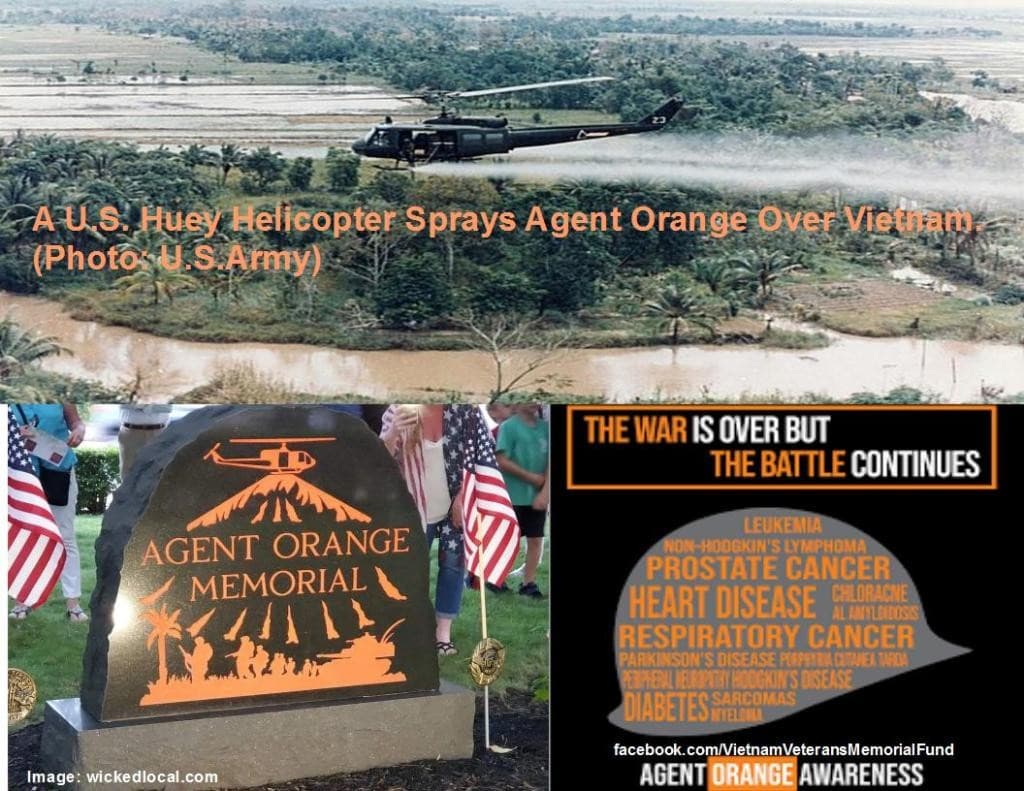
Between 1962-1971, the US military sprayed 20 million gallons of Agent Orange (containing dioxin TCDD) over Vietnam. Manufacturers Dow Chemical and Monsanto knew dioxin was highly toxic. Veterans reporting cancers, birth defects in children, and other illnesses were told their conditions were unrelated. It took until 1991 for Congress to pass the Agent Orange Act, and the VA did not fully recognize presumptive conditions until decades later.
“Agent Orange is causing cancer and birth defects in our children. The government and chemical companies knew it was toxic and are covering it up.”
What they said vs. what the evidence shows
“There is no definitive evidence linking Agent Orange exposure to the health conditions reported by veterans. More research is needed.”
— Department of Defense / VA · Jan 1980
SourceFrom “crazy” to confirmed
The Claim Is Made
This is the moment they called it crazy.
For nearly three decades, thousands of American veterans returned from Vietnam with symptoms that would destroy their lives: aggressive cancers, neurological damage, and children born with severe birth defects. When they sought answers, the U.S. military and the Department of Veterans Affairs gave them the same response: there was no proof that their illnesses were connected to their service. These men and women were essentially told they were imagining connections that didn't exist.
What made this denial particularly damaging was that it wasn't accidental ignorance. The chemical companies knew.
Between 1962 and 1971, the U.S. military sprayed approximately 20 million gallons of Agent Orange across Vietnam—a herbicide used to strip vegetation from the landscape and deny cover to enemy forces. The chemical contained dioxin TCDD, one of the most toxic compounds ever created. Dow Chemical and Monsanto, the primary manufacturers, had internal documentation showing they understood dioxin's severe health risks. Yet as veterans started reporting clusters of rare cancers, soft-tissue sarcomas, and a condition called chloracne, the official position remained unchanged: no causal link could be established.
Veterans were left in a bureaucratic void. The VA refused to recognize their conditions as service-connected illnesses, which meant no disability benefits, no healthcare coverage for their symptoms, and no official acknowledgment of their suffering. Worse, their children were being born with spina bifida, cleft palates, and other serious birth defects at elevated rates. Families were fractured by illness and financial hardship while institutions insisted nothing was wrong.
The shift finally came in 1991, nearly two decades after the war's end, when Congress passed the Agent Orange Act. This legislation established presumptive conditions—illnesses officially recognized as likely caused by Agent Orange exposure. But even this victory came with delays and limitations. The VA's initial list of presumptive conditions was narrow. It took additional decades of pressure and evolving scientific evidence before the department expanded its list to include more illnesses veterans were experiencing.
Get the 5 biggest receipts every week, straight to your inbox — plus an exclusive PDF: The Top 10 Conspiracy Theories Proven True in 2025-2026. No spam. No agenda. Just the papers they couldn't hide.
You just read "The US military denied Agent Orange caused health problems i…". We send ones like this every week.
No one's said anything yet. Be the first to drop your take.
Confirmed: They Were Right
The truth comes out. Officially documented.
Confirmed: They Were Right
The truth comes out. Officially documented.
What makes this case significant isn't just that the government was eventually forced to admit wrongdoing. It's that the denial was conscious. The manufacturers had data. Military officials made decisions about spraying operations knowing the substance's dangers. The VA had access to mounting evidence that something was seriously wrong, yet institutional inertia and liability concerns kept the official response locked in denial.
The human cost of this delay was immense. Thousands of veterans died before receiving benefits or recognition. Children grew up with disabilities while their parents fought for acknowledgment that those disabilities were real and connected to service. The trust between the government and those who served it was fractured in a way that persists today.
This case demonstrates how institutional denial can persist even when evidence exists within those same institutions. It shows that "we don't have proof yet" can become a convenient shelter for avoiding responsibility, even when internal records suggest otherwise. For veterans and their families, the truth arrived too late for many. For the rest of us, the lesson is simpler: when powerful institutions claim ignorance about dangers people are experiencing, it's worth asking what they actually knew and when they knew it.
Unlikely leak
Only 8.1% chance this would come out. It did.
Conspirators
~1,000Large op
Secret kept
21.1 years
Time to 95% exposure
500+ years