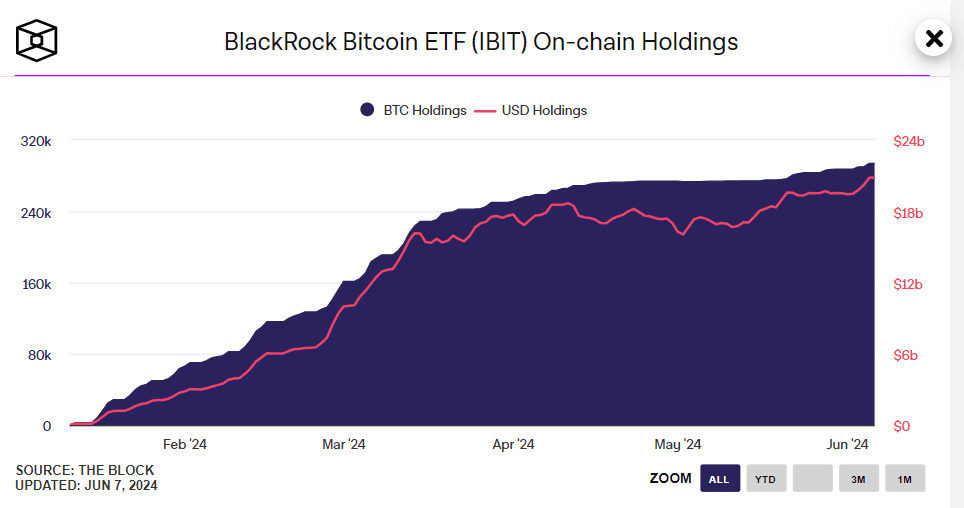
BlackRock's iShares Bitcoin Trust (IBIT) launched in January 2024 and within one year accumulated over $86 billion in assets, capturing 56% of the spot Bitcoin ETF market. This gave a single traditional finance company enormous influence over cryptocurrency markets — the very markets that were designed to be decentralized and free from institutional control. Critics note BlackRock can now influence Bitcoin's price through its massive holdings, lending practices, and market-making activities. The company also manages $10 trillion in total assets and is the largest shareholder in most S&P 500 companies.
“$86 billion in Bitcoin held by the company that owns everything else. They took control of the one asset class designed to be free from institutional control.”
From “crazy” to confirmed
The Claim Is Made
This is the moment they called it crazy.
When Bitcoin launched in 2009, its founding promise was radical: a financial system free from centralized control, where no single entity could dictate the rules. Fifteen years later, that vision faced an unexpected challenge—not from government regulation, but from Wall Street itself.
The claim seemed almost too convenient for skeptics to ignore: BlackRock, the world's largest asset manager with $10 trillion under management, would use its new Bitcoin ETF to accumulate such massive holdings that it could dominate crypto markets. Critics who raised these concerns in late 2023 weren't taken seriously by mainstream finance observers. Institutional investors entering crypto was supposed to be healthy for the market, they argued. More liquidity, more stability, more legitimacy. The idea that a single company could amass problematic influence was dismissed as conspiracy thinking.
Then the numbers arrived.
BlackRock's iShares Bitcoin Trust (IBIT) launched on January 11, 2024. Within twelve months, it accumulated over $86 billion in assets under management. More striking than the absolute figure was the market concentration: BlackRock's Bitcoin ETF captured 56% of the entire U.S. spot Bitcoin ETF market. No competitor came close. For context, this single product now holds more Bitcoin than many nations' central banks.
What made this significant wasn't just the size—it was what the size enabled. Bloomberg's analysis confirmed that BlackRock's position gave the firm unprecedented influence over Bitcoin's price movements through multiple mechanisms: its massive holdings directly affecting market sentiment, its lending practices potentially influencing Bitcoin's availability in markets, and its market-making activities shaping trading dynamics. CoinDesk's reporting highlighted a critical tension: an asset created specifically to decentralize finance had become significantly concentrated in the hands of a traditional finance giant.
Get the 5 biggest receipts every week, straight to your inbox — plus an exclusive PDF: The Top 10 Conspiracy Theories Proven True in 2025-2026. No spam. No agenda. Just the papers they couldn't hide.
You just read "BlackRock's Bitcoin ETF accumulated $86 billion and 56% mark…". We send ones like this every week.
No one's said anything yet. Be the first to drop your take.
The counterargument from BlackRock and its supporters was straightforward: institutional adoption strengthens cryptocurrency. The company simply met market demand. They weren't doing anything illegal or improper. Investors chose IBIT because BlackRock offers superior custody, lower fees, and institutional-grade infrastructure.
This argument wasn't wrong, exactly. But it missed the point entirely.
The uncomfortable truth that the data confirmed is that good intentions and free market mechanics don't prevent concentration of power. BlackRock didn't need to conspire to dominate the market—it just needed to be the most sophisticated and well-capitalized player entering the space. The company's dominance is the natural outcome of a system meeting capitalism's gravitational laws.
What makes this worth tracking isn't whether BlackRock executives are secretly manipulating Bitcoin prices. It's that the original claim—that a single traditional finance company could gain unprecedented influence over cryptocurrency markets—turned out to be empirically accurate. And it happened not through conspiracy, but through transparent, legal market competition.
This matters because it reveals something uncomfortable about trust. Those who warned about institutional concentration in crypto weren't paranoid. They were simply reading market incentives correctly. The question now isn't whether it happened, but what happens next—and whether decentralized systems can remain meaningfully decentralized once centralized capital discovers them.
Beat the odds
This had a 0.1% chance of leaking — someone talked anyway.
Conspirators
~100Network
Secret kept
2.3 years
Time to 95% exposure
500+ years