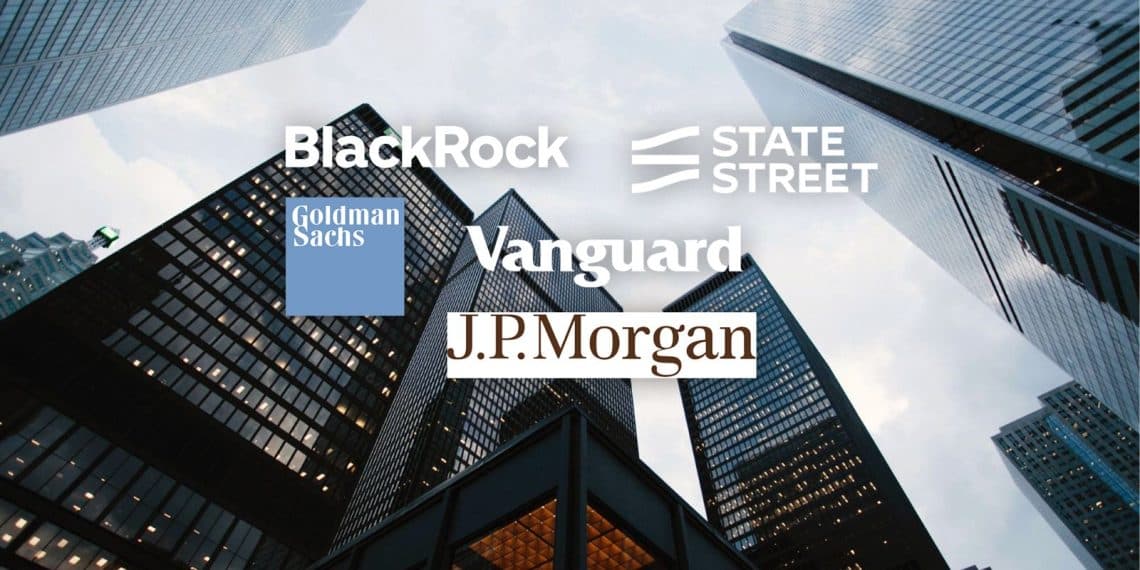
The 'Big Three' asset managers -- BlackRock, Vanguard, and State Street -- collectively own an average of 20%+ of every S&P 500 company and control 74% of the equity ETF market. One of them is the single largest shareholder in 88% of S&P 500 firms. Their combined $20+ trillion in assets could buy every company on the London Stock Exchange three times over. Critics warn this represents the greatest concentration of corporate ownership since the Gilded Age, with enormous voting power over corporate governance.
“Three asset management firms effectively control corporate America through passive index fund ownership, wielding unprecedented power over the economy without democratic accountability.”
From “crazy” to confirmed
The Claim Is Made
This is the moment they called it crazy.
Three investment firms control more corporate power than most national governments. BlackRock, Vanguard, and State Street—collectively managing over $20 trillion in assets—are the largest shareholder in 88% of S&P 500 companies. What once sounded like fringe concern about financial consolidation has become documented reality.
The claim itself emerged gradually, whispered among critics of financial concentration before gaining serious attention. Observers noted that these "Big Three" asset managers weren't traditional hostile acquirers or industrial titans buying up companies to run them. Instead, they accumulated stakes through the passive investment boom—managing index funds and exchange-traded funds that mechanically track market benchmarks. Few noticed the quiet revolution happening inside their portfolios.
When critics first raised alarms about this concentration, mainstream financial institutions dismissed the concern. The standard response was simple: these are just passive managers following indices. They don't make corporate decisions. The firms themselves argued that their voting power, while substantial, represented their clients' beneficial ownership—pension funds, retirement accounts, ordinary people saving for the future. The implication was clear: there's nothing to worry about here.
But the evidence accumulated. Academic research from Cambridge and reporting from outlets like Jacobin documented what these three firms actually controlled. They own an average of 20% of every S&P 500 company combined. They manage 74% of the entire equity ETF market. Their voting power at shareholder meetings now determines outcomes across virtually every major American corporation. A single one of these firms is frequently the largest shareholder—the 88% figure reflects how often that's true.
The scale becomes incomprehensible only when you try to understand it. These firms control more wealth than the gross domestic product of any nation except the United States and China. Jacobin's calculation that their assets could purchase the entire London Stock Exchange three times over wasn't metaphorical exaggeration—it was basic arithmetic.
What makes this partially verified rather than fully verified is an important distinction. The core claim is documented fact. The ownership percentages are real. The voting control is real. What remains contested is the implications. Do three passive managers following indices actually represent problematic concentration? Or are they merely custodians of widely dispersed beneficial ownership? The answer likely depends on whether you trust that passive management truly removes human judgment from capital allocation—a question the evidence increasingly challenges.
This matters because the story we tell ourselves about who controls corporate America affects everything from antitrust policy to climate action to executive compensation. If Americans believe their retirement funds collectively control major companies, they might demand those funds vote differently. If they believe three firms secretly control the country, conspiracy theories flourish. Neither extreme is accurate, but the middle ground—that three firms have extraordinary concentrated voting power despite not intending to exercise direct control—has proven harder to dismiss than anyone expected.
The claim wasn't crazy. The evidence proved it was substantially true. And most people still don't know.
See also: [How the 'Big Three' Control the S&P 500](/blog/big-three-shareholders-sp500-blackrock-vanguard-state-street) — our deeper breakdown of this topic.
Get the 5 biggest receipts every week, straight to your inbox — plus an exclusive PDF: The Top 10 Conspiracy Theories Proven True in 2025-2026. No spam. No agenda. Just the papers they couldn't hide.
You just read "BlackRock, Vanguard, and State Street are the largest shareh…". We send ones like this every week.
No one's said anything yet. Be the first to drop your take.