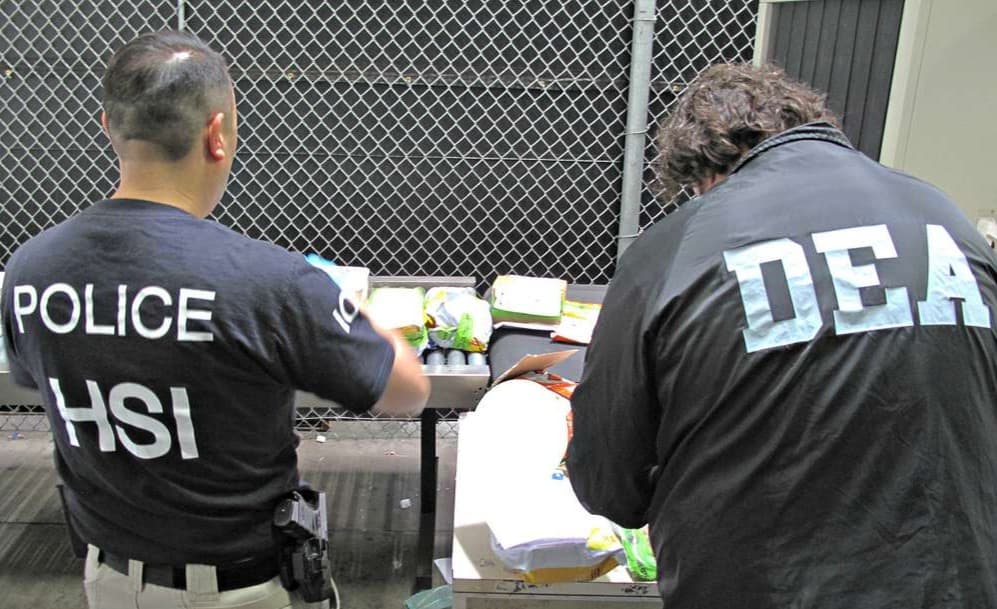
The DEA's Special Operations Division used NSA surveillance to build drug cases but instructed agents to create false evidence trails. This 'parallel construction' violated due process rights.
“All DEA investigations follow proper procedures and legal evidence gathering methods”
From “crazy” to confirmed
The Claim Is Made
This is the moment they called it crazy.
Federal drug agents were building cases against suspects using some of the most advanced surveillance tools available to the U.S. government—but the suspects, their lawyers, and even judges didn't know it. The intelligence came from the National Security Agency, the same agency that monitors international terrorism and foreign threats. What made this arrangement extraordinary wasn't just the secrecy; it was what agents were allegedly told to do next.
The DEA's Special Operations Division, a unit housed at the El Paso Intelligence Center, received tips and intelligence leads derived from NSA surveillance programs. But instead of presenting this evidence straightforwardly in court, federal prosecutors instructed DEA agents to construct alternate explanations for how they'd obtained their information. They were told to build false evidence trails. A police officer might claim they spotted a car weaving suspiciously, when in reality an NSA program had flagged that vehicle. A drug bust might be attributed to a confidential informant, when surveillance data was the actual source.
This practice became known as "parallel construction," and it was justified as necessary to protect classified intelligence methods. Officials argued that revealing NSA surveillance techniques in court would compromise national security. Law enforcement agencies acknowledged that parallel construction was happening, but they framed it as a routine and lawful procedure. They insisted it didn't violate defendants' constitutional rights because the evidence itself—the drugs found, the money seized—was real. The source just had to stay hidden.
Get the 5 biggest receipts every week, straight to your inbox — plus an exclusive PDF: The Top 10 Conspiracy Theories Proven True in 2025-2026. No spam. No agenda. Just the papers they couldn't hide.
You just read "DEA Used NSA Intelligence in Drug Cases While Hiding the Sou…". We send ones like this every week.
No one's said anything yet. Be the first to drop your take.
Civil rights advocates and defense attorneys argued otherwise. They said parallel construction fundamentally violated due process. If a defendant couldn't know how police found them, they couldn't effectively challenge the investigation. They couldn't examine whether an informant was reliable or whether surveillance was conducted legally. The entire foundation of their defense was built on incomplete information. Legal experts warned that hiding evidence sources created a two-tiered justice system where certain defendants faced hidden accusers and invisible investigation methods.
For years, this remained largely obscured from public view. Then, in 2013, Reuters reporters obtained documents showing the extent of the program. Their reporting revealed that DEA leadership had explicitly instructed agents in field offices to conceal the NSA connection and to recreate investigative steps to justify arrests. The documents showed awareness at the highest levels of the Drug Enforcement Administration that this practice was happening systematically, not as isolated incidents.
The disclosures created a reckoning. Some cases were reopened. Questions were raised about how many convictions might have been secured through this hidden methodology. Congress demanded answers. Law enforcement agencies defended their actions while acknowledging they had to rethink procedures. The Supreme Court and lower courts began wrestling with the constitutional implications of parallel construction in various cases.
What makes this case significant isn't just that a controversial practice existed—it's that government agencies involved knew about it and directed its use while the system designed to protect defendants' rights remained unaware. It revealed a gap between what the law says should happen in courtrooms and what was actually happening in federal investigations. For anyone who believes that justice requires transparency and that defendants deserve to confront the evidence against them, this documented practice represented something darker: a shadow system operating within the official one, visible only to those in power.
Beat the odds
This had a 0.3% chance of leaking — someone talked anyway.
Conspirators
~50Network
Secret kept
12.8 years
Time to 95% exposure
500+ years