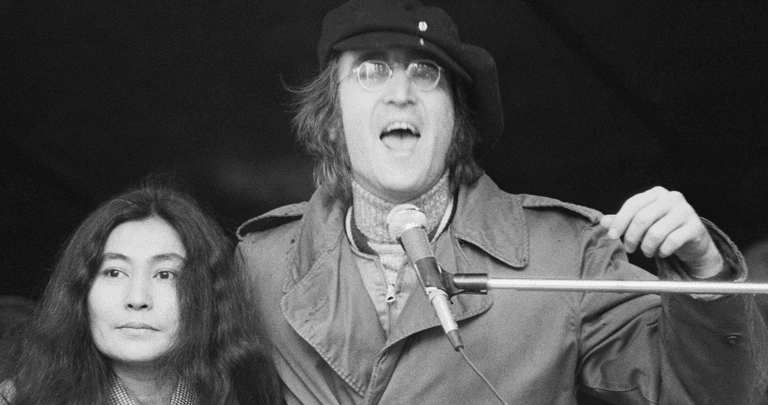
FBI maintained extensive surveillance file on Beatles musician due to his anti-Vietnam War activities. Documents show attempts to deport Lennon and disrupt his concerts and protests.
“FBI surveillance focuses on criminal activity, not political beliefs or activism”
From “crazy” to confirmed
The Claim Is Made
This is the moment they called it crazy.
When John Lennon moved to New York in 1971, he wasn't just another celebrity seeking a fresh start. He was an activist with a massive platform, and the FBI was watching. For years, the Bureau maintained he was simply a rock star living out his famous fantasy. The truth, as declassified documents now show, was far more calculated.
Lennon's critics during the early 1970s dismissed concerns about government surveillance as paranoia. Here was a Beatle turned peace activist, speaking out against the Vietnam War and organizing concerts to raise funds for anti-war causes. Surely, officials argued, the FBI had better things to do than monitor a musician. When Lennon himself claimed the government was tracking him, mainstream outlets largely ignored or ridiculed the assertion. It fit too neatly into the caricature of a celebrity with an inflated sense of self-importance.
What the FBI's own files reveal, however, is something altogether different. The Bureau didn't just passively observe Lennon's activities—they actively worked to undermine them. Documents show the FBI attempted to have him deported, viewing his anti-war activism as a genuine threat to national security. Agents were instructed to examine whether they could exploit immigration violations to remove him from the country. The surveillance wasn't incidental; it was the centerpiece of a coordinated effort to silence a prominent voice of dissent.
The scale of the operation is striking. The FBI's file on Lennon eventually grew to over 17,000 pages. Agents monitored his public appearances, tracked his associates, and documented his statements to journalists. They analyzed the lyrics to songs like "Give Peace a Chance" and "Instant Karma" as though they were intelligence briefings. The Bureau even coordinated with the Immigration and Naturalization Service in hopes of finding grounds for deportation based on a 1968 drug conviction in England.
Get the 5 biggest receipts every week, straight to your inbox — plus an exclusive PDF: The Top 10 Conspiracy Theories Proven True in 2025-2026. No spam. No agenda. Just the papers they couldn't hide.
You just read "FBI surveilled John Lennon to prevent anti-war activism duri…". We send ones like this every week.
No one's said anything yet. Be the first to drop your take.
This wasn't a rogue agent's hobby project. The surveillance was authorized at high levels, with officials citing national security concerns about Lennon's influence over anti-war protesters. The Nixon administration, in particular, saw Lennon as a threat to its political agenda. Declassified files confirm that the White House was in communication with the FBI about the investigation, making this not merely a law enforcement matter but a political one.
The implications cut deep. If the government could surveil and attempt to deport a famous musician for his political speech, what about less prominent activists? The Lennon case wasn't an isolated incident—it was part of a broader pattern of government overreach during the Cold War era, including programs like COINTELPRO that targeted civil rights leaders and other dissenters.
Decades later, when documents finally confirmed what Lennon had long claimed, the official response was muted. There were no major investigations into the practices that enabled such surveillance. No policy reforms addressed how easily political activism could be repackaged as a national security threat. The incident faded from public memory almost as quickly as it was verified.
What matters now is recognizing a fundamental truth: governments have abused surveillance powers against political opponents before, and the legal and institutional frameworks that permitted it were never substantially dismantled. The Lennon files aren't historical curiosities—they're blueprints showing how surveillance can be weaponized against dissent. Understanding this history isn't about vindicating a deceased rock star. It's about maintaining vigilance over the systems that continue to exist today.
See also: [Tonkin Gulf Incident: The False Flag That Started a War](/blog/tonkin-gulf-incident-false-flag-declassified) — our deeper breakdown of this topic.
See also: [Conflicts of Interest: Declassified Cases Proving Regulatory Capture](/blog/conflicts-of-interest-proven-government-corporate) — our deeper breakdown of this topic.
Unlikely leak
Only 10.3% chance this would come out. It did.
Conspirators
~500Large op
Secret kept
54.3 years
Time to 95% exposure
500+ years