NSA documents revealed the second Gulf of Tonkin attack never occurred. Johnson administration used false reports of North Vietnamese attacks to obtain congressional authorization for massive military escalation in Vietnam.
“North Vietnamese forces launched unprovoked attacks on U.S. naval vessels in international waters”
From “crazy” to confirmed
The Claim Is Made
This is the moment they called it crazy.
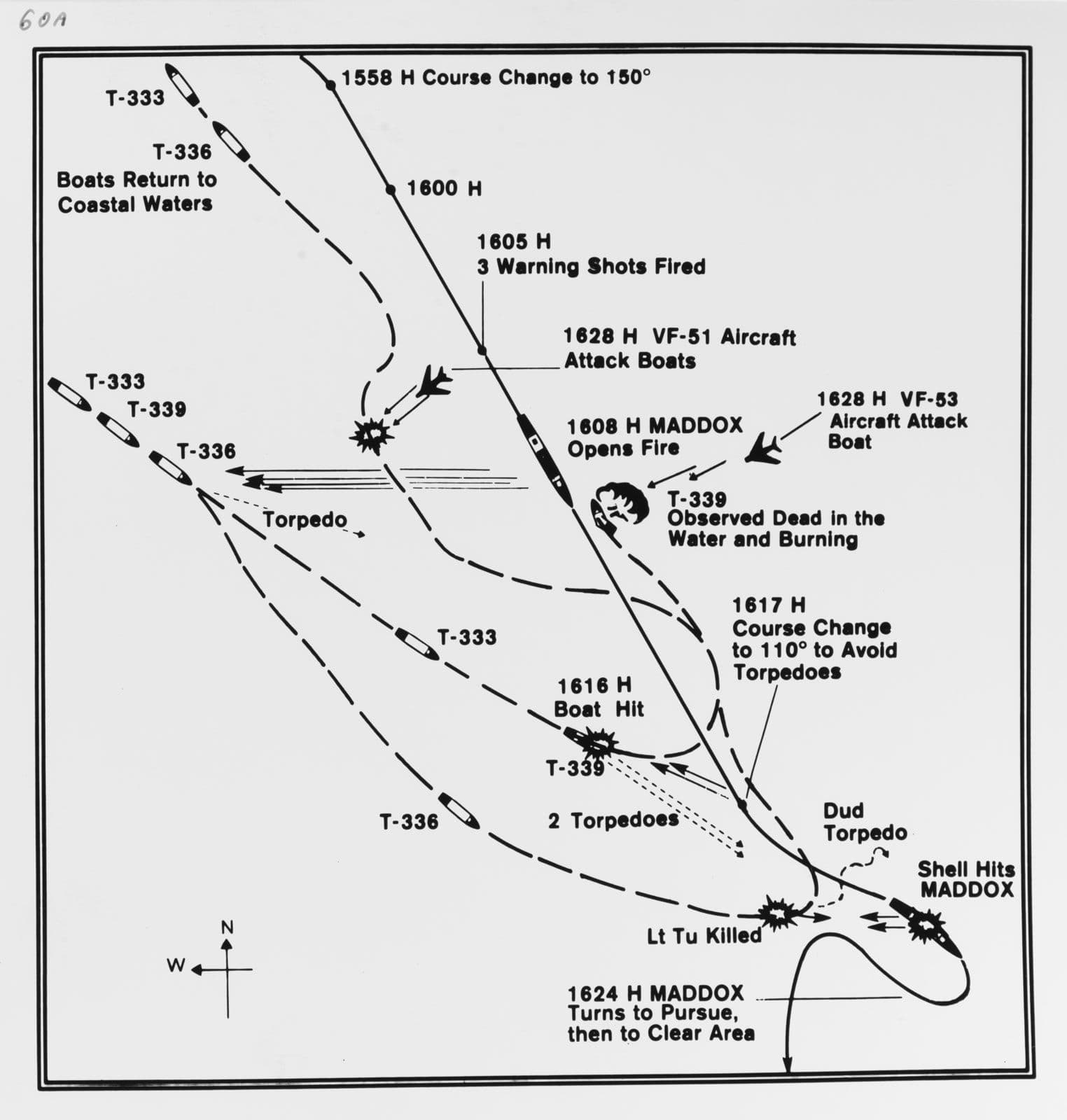
The morning of August 4, 1964, the USS Maddox reported being attacked by North Vietnamese torpedo boats in the Gulf of Tonkin. The following day, President Lyndon B. Johnson addressed Congress with news of a second attack. Within 72 hours, Congress passed the Gulf of Tonkin Resolution, which gave the President a blank check to wage war in Vietnam without a formal declaration.
For decades, this narrative held. Textbooks taught it. Policymakers cited it. The American public accepted it as justification for a conflict that would ultimately claim 58,000 American lives and millions more Vietnamese casualties.
But the attacks were not what they seemed.
At the time, skeptics questioned the second incident. The weather was poor that night. Radar signals were ambiguous. Some Navy officers expressed doubt about what they had actually detected. However, these concerns were largely buried beneath the momentum of Cold War politics and military escalation. The Johnson administration needed justification for Operation Rolling Thunder, a sustained bombing campaign it had already begun planning. The incident provided the pretext.
The official response to doubters was consistent: the attacks were real, the threat was genuine, and the military response was justified. Military leaders and administration officials stood by the reports. There was no reason to believe otherwise, they insisted. The president himself expressed absolute confidence in the intelligence. Questions from skeptical journalists or senators were deflected with appeals to national security.
For nearly 40 years, this remained the historical record. Then the Agency that told a different story.
Get the 5 biggest receipts every week, straight to your inbox — plus an exclusive PDF: The Top 10 Conspiracy Theories Proven True in 2025-2026. No spam. No agenda. Just the papers they couldn't hide.
You just read "Gulf of Tonkin incident fabricated to justify Vietnam War es…". We send ones like this every week.
No one's said anything yet. Be the first to drop your take.
The NSA documents revealed that the first attack on August 2 did occur—the Maddox was genuinely attacked by North Vietnamese boats. But the second attack, the one that triggered the congressional resolution, never happened. What the destroyers detected on radar and interpreted as enemy vessels were actually false signals, weather effects, and operator error. The North Vietnamese had never launched a second assault.
Senior NSA analysts at the time had actually raised these concerns internally. But their doubts were not communicated up the chain of command in a way that reached decision-makers. By the time the declassified documents surfaced in the 2000s, the damage was done. The war had already escalated far beyond what the first incident alone might have justified.
What makes this case significant is not merely that officials made a mistake. Intelligence failures happen. What matters is that the Johnson administration moved forward with a major military escalation based on intelligence it either did not verify sufficiently or, according to some historical accounts, ignored warnings about. The incident became a textbook example of how governments can use national security claims to expand war powers.
The Gulf of Tonkin incident transformed public understanding of institutional credibility. It became a reference point for skepticism about official narratives during future conflicts. When government officials made claims about weapons of mass destruction or threats abroad, a generation of Americans remembered the Tonkin incident. The declassified documents did not just correct the historical record—they fundamentally altered how Americans evaluate government claims about military necessity.
That loss of institutional trust carried consequences far beyond Vietnam.
Unlikely leak
Only 11.6% chance this would come out. It did.
Conspirators
~500Large op
Secret kept
61.8 years
Time to 95% exposure
500+ years