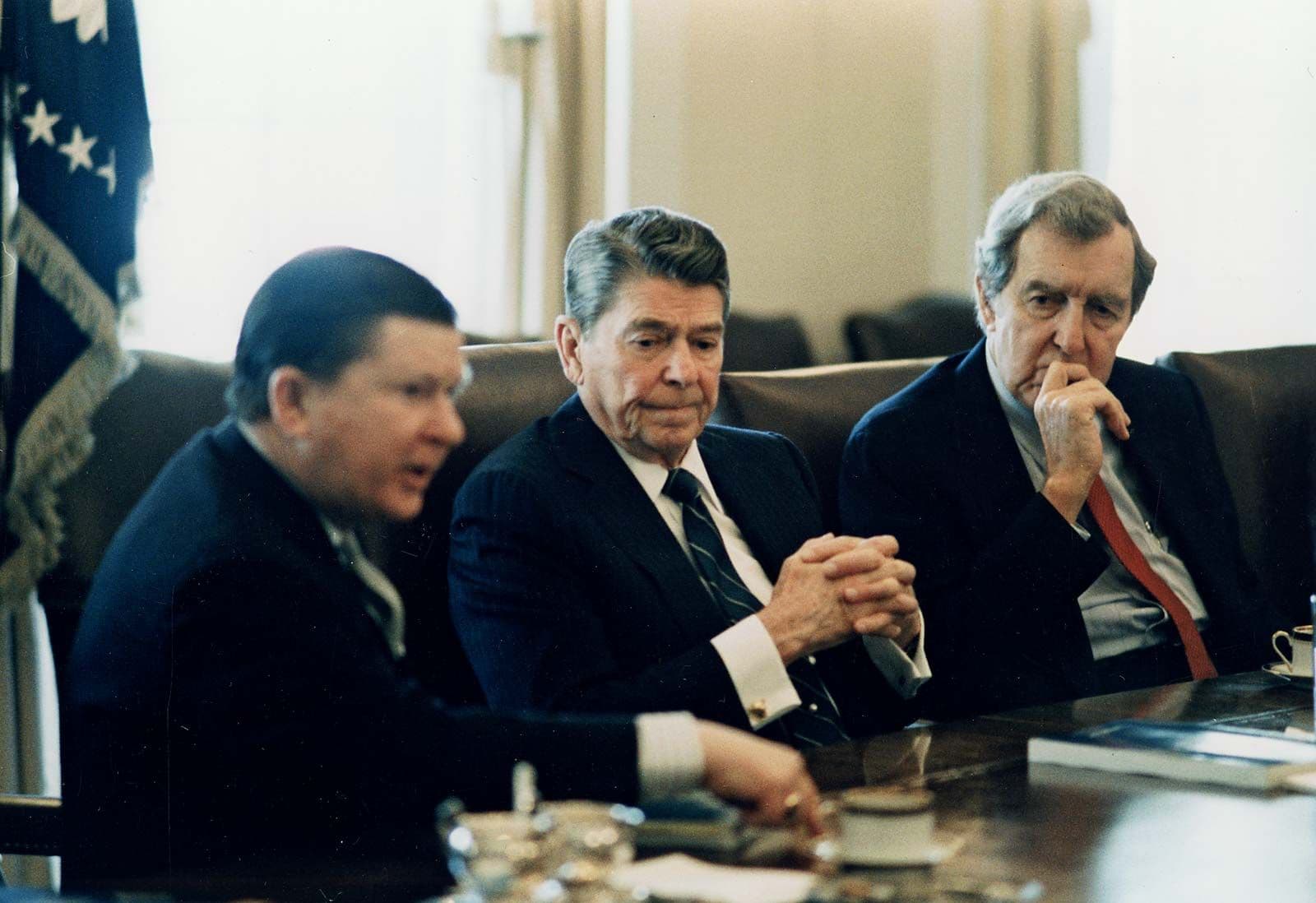
Administration publicly maintained arms embargo while secretly selling weapons to Iran and diverting profits to Contra rebels. Congressional investigations and criminal trials revealed extensive cover-up involving NSC staff, CIA, and White House officials.
“We did not, I repeat, did not trade weapons or anything else for hostages, nor will we”
From “crazy” to confirmed
The Claim Is Made
This is the moment they called it crazy.
The United States government, under President Ronald Reagan, spent years insisting it would never negotiate with terrorists or their state sponsors. That commitment became impossible to maintain in 1986 when it became clear the administration had been doing exactly that.
In the early 1980s, American hostages were being held in Lebanon by groups backed by Iran. Simultaneously, Reagan's foreign policy team was deeply invested in supporting Contra rebels fighting the left-wing Sandinista government in Nicaragua. These two separate crises converged into one of the most significant government deceptions of the Cold War era.
Officials including National Security Advisor Robert McFarlane, his successor John Poindexter, and NSC staffer Oliver North had devised a plan. They would quietly arrange the sale of weapons to Iran—technically an enemy state under an American embargo—in exchange for Iranian pressure on hostage holders in Lebanon. The profits from these weapons sales would then be illegally diverted to fund the Contras, bypassing Congressional restrictions on military aid to the rebel group.
Publicly, the Reagan administration maintained its hardline stance. State Department and Defense Department officials consistently stated that no weapons would be sold to Iran, and certainly not in exchange for hostages. Secretary of State George Shultz and Defense Secretary Caspar Weinberger both opposed the operation, though they weren't initially aware of its full scope. When asked directly about arms sales to Iran in late 1986, President Reagan denied them.
These denials began crumbling within weeks. On November 3, 1986, an obscure Lebanese magazine broke the story of secret U.S.-Iran negotiations. What followed was a scramble within the White House as officials scrambled to contain the damage. That same month, Attorney General Edwin Meese launched an investigation and discovered internal documents detailing the weapons sales and the diversion of funds to the Contras.
Get the 5 biggest receipts every week, straight to your inbox — plus an exclusive PDF: The Top 10 Conspiracy Theories Proven True in 2025-2026. No spam. No agenda. Just the papers they couldn't hide.
You just read "Iran-Contra affair saw Reagan administration secretly sell w…". We send ones like this every week.
No one's said anything yet. Be the first to drop your take.
Congress launched a full investigation. The Tower Commission, a special panel appointed by Reagan, released its findings in early 1987, confirming the secret arms sales and exposing a nearly complete lack of oversight. The joint Congressional committee investigation that followed heard testimony from the principal figures involved. North testified about the operation under limited immunity, while Poindexter acknowledged approving the scheme. McFarlane admitted his involvement and later attempted suicide.
Criminal prosecutions followed. Oliver North was convicted of obstructing Congress and destroying evidence, though his conviction was later overturned on a technicality. John Poindexter was convicted of multiple felonies. Several other officials faced charges. President Reagan eventually pardoned six Iran-Contra figures in December 1992, just before leaving office.
The Iran-Contra affair demonstrated that officials at the highest levels of government had systematically lied to Congress and the American public about fundamental matters of foreign policy. They had violated an arms embargo, funded rebel groups through illegal channels, and covered it up through document destruction and false testimony.
What remains striking is not just that it happened, but that it required a magazine leak and a special prosecutor to surface the truth. Without external pressure, these operations might have remained classified indefinitely. The affair raised durable questions about executive accountability and whether Congressional oversight could meaningfully constrain presidential power. Nearly four decades later, those questions remain largely unresolved.
Unlikely leak
Only 7.6% chance this would come out. It did.
Conspirators
~500Large op
Secret kept
39.5 years
Time to 95% exposure
500+ years