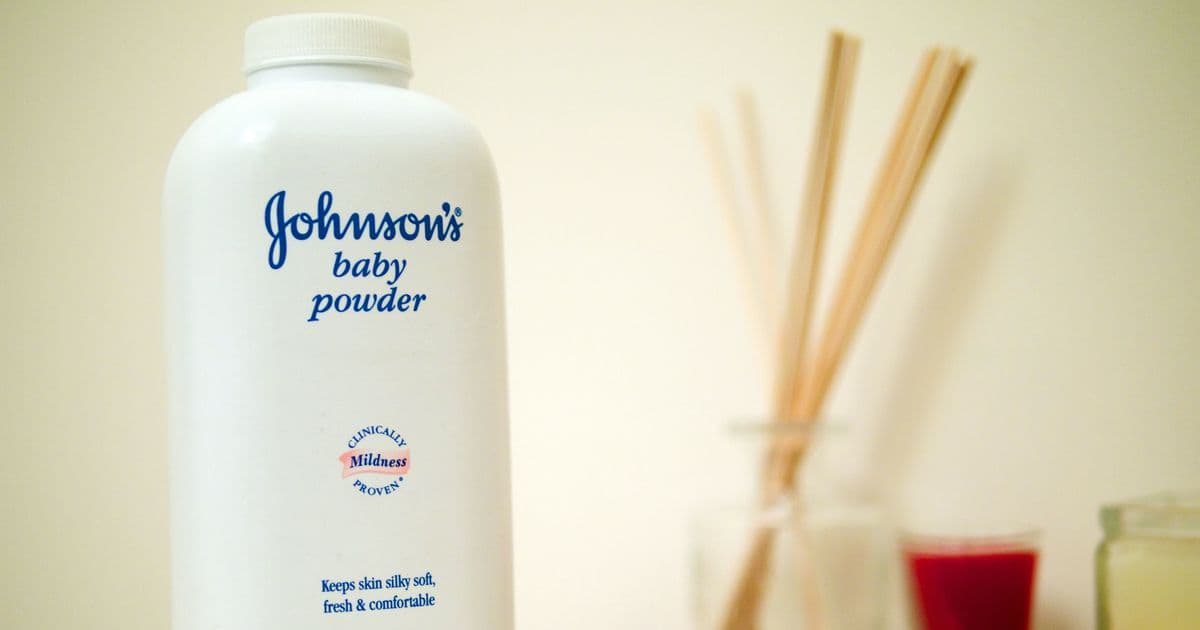
A Reuters investigation revealed that J&J knew for decades that asbestos contaminated its talc-based baby powder. Internal documents dating to the 1970s showed the company was aware of the contamination and the cancer risk but chose not to disclose it. The company faced over 40,000 lawsuits linking its talc products to ovarian cancer and mesothelioma. J&J eventually discontinued talc-based baby powder in 2023 and proposed an $8.9 billion settlement.
“J&J's baby powder contains asbestos and causes cancer. The company has known about this for decades and covered it up.”
What they said vs. what the evidence shows
“Decades of independent scientific evaluations confirm Johnson's Baby Powder is safe, does not contain asbestos, and does not cause cancer.”
— Johnson & Johnson · Dec 2018
SourceFrom “crazy” to confirmed
The Claim Is Made
This is the moment they called it crazy.
For generations, Johnson & Johnson marketed its baby powder as a trusted staple of infant care. Mothers across America dusted it on newborns without hesitation, assured by one of the world's most recognized brands that the product was safe. That trust, it turns out, was misplaced.
A Reuters investigation published in 2018 revealed what internal company documents had shown since the 1970s: J&J knew its talc-based baby powder contained asbestos, a carcinogen linked to mesothelioma and ovarian cancer. The company possessed this knowledge for decades but failed to disclose it to consumers or regulators.
For years, J&J had dismissed concerns about asbestos in its talc products. The company consistently maintained that its baby powder was safe and that any asbestos contamination was at negligible levels. When questions arose, the company attributed them to misunderstandings about talc mining and processing. This narrative held firm in the public eye for a long time, supported by the company's reputation and marketing prowess.
The evidence proved otherwise. Reuters obtained internal company documents stretching back to the 1970s showing that J&J's own scientists had detected asbestos in talc samples and communicated these findings to management. The investigation revealed that company officials were aware of the contamination and understood its health risks, yet chose not to warn consumers or change their product formulation. Some documents even suggested the company had lobbied against stricter regulations on asbestos in cosmetic products.
The consequences became undeniable. Over 40,000 lawsuits were filed against J&J linking its talc powder to ovarian cancer and mesothelioma. Juries ordered the company to pay billions in damages. In 2020 alone, a jury awarded $2.1 billion to 22 women who alleged that asbestos in J&J's baby powder caused their ovarian cancer. These verdicts were not based on speculation or assumption—they reflected the mounting scientific evidence and the company's own internal knowledge of the problem.
Get the 5 biggest receipts every week, straight to your inbox — plus an exclusive PDF: The Top 10 Conspiracy Theories Proven True in 2025-2026. No spam. No agenda. Just the papers they couldn't hide.
You just read "Johnson & Johnson knew for decades that its baby powder cont…". We send ones like this every week.
No one's said anything yet. Be the first to drop your take.
Confirmed: They Were Right
The truth comes out. Officially documented.
Confirmed: They Were Right
The truth comes out. Officially documented.
The company's response was gradual and limited. In 2020, J&J ceased selling talc-based baby powder in the United States and Canada. It took three more years before the company discontinued the product globally in 2023. By then, the damage to public trust was severe. In 2022, J&J proposed an $8.9 billion settlement to resolve thousands of outstanding lawsuits, one of the largest in corporate history.
This case matters because it reveals the gap between corporate assurance and corporate knowledge. J&J was not a company that made an honest mistake or faced an unforeseen scientific development. The company possessed knowledge of asbestos contamination that it chose not to share. Mothers who applied baby powder to their children's skin made their decisions based on incomplete information—information that J&J deliberately withheld.
The settlement and discontinued product offer little solace to those who developed cancer or lost loved ones. What this case demonstrates is that corporate reassurances require scrutiny, that internal documents often tell a different story than public statements, and that accountability—when it comes—typically arrives only after significant harm has been done. For consumers, the lesson is clear: trust but verify, and remember that what a company says and what a company knows are not always the same thing.
Beat the odds
This had a 0.2% chance of leaking — someone talked anyway.
Conspirators
~100Network
Secret kept
4.6 years
Time to 95% exposure
500+ years