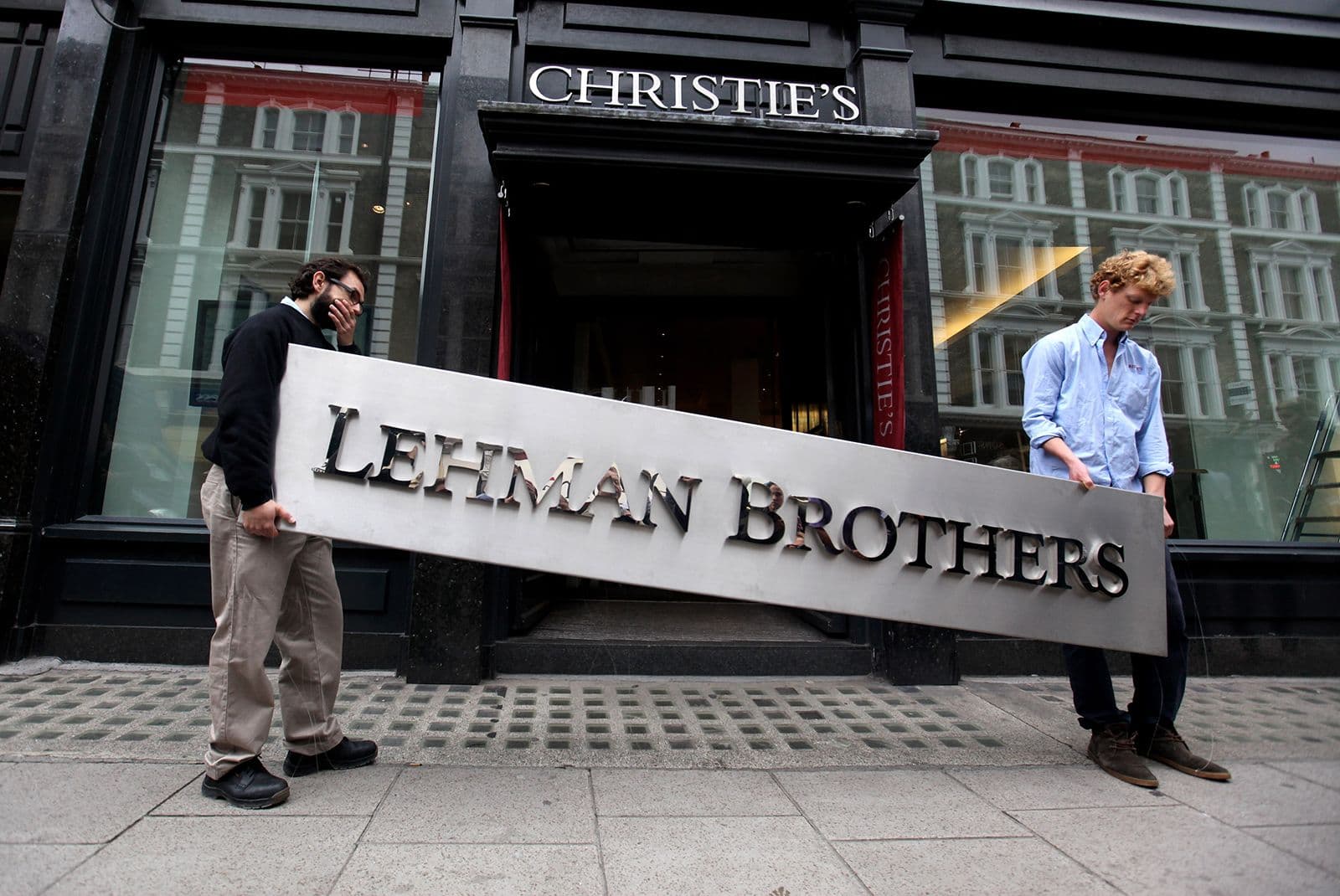
Before filing the largest bankruptcy in U.S. history in September 2008, Lehman Brothers used an accounting maneuver called 'Repo 105' to temporarily move up to $50 billion off its balance sheet each quarter. Executives described it internally as 'window dressing.' Auditor Ernst & Young knew about the scheme but approved it. A senior VP warned in an internal email that 'Repo 105 is an accounting gimmick,' yet the deception continued until Lehman's collapse triggered the global financial crisis.
“Lehman Brothers is hiding tens of billions in debt from its balance sheet using fraudulent accounting practices. Ernst & Young is complicit in this deception.”
From “crazy” to confirmed
The Claim Is Made
This is the moment they called it crazy.
Confirmed: They Were Right
The truth comes out. Officially documented.
Confirmed: They Were Right
The truth comes out. Officially documented.
In the months before Lehman Brothers collapsed in September 2008, executives at the investment bank faced a mounting problem: their balance sheet looked increasingly fragile. The solution they chose would later become a textbook example of financial deception—and a warning sign that nobody heeded.
The scheme was called Repo 105, and it worked like this. Lehman would sell assets to another party with a simultaneous agreement to buy them back at a slightly higher price, a transaction known as a repurchase agreement or "repo." The trick was in the accounting: Lehman treated these sales as actual sales rather than loans, which meant the debt temporarily disappeared from their balance sheets. Once the quarter ended and auditors signed off, the company would buy the assets back. The money had never really gone anywhere. It was pure window dressing.
For years, the financial industry accepted this as legal, if not entirely honest. The Office of the Comptroller of the Currency didn't challenge it. Rating agencies ignored warning signs. And Ernst & Young, Lehman's external auditor, approved the maneuver quarter after quarter. No regulator stepped in to say this was unacceptable.
Yet internally, Lehman knew exactly what they were doing. A senior vice president at the bank sent an email explicitly calling Repo 105 "an accounting gimmick." Executives described it among themselves as "window dressing." The documents show they understood they were misleading investors about the true health of the institution. They were moving up to $50 billion off the books—roughly one-fifth of their total assets—just to make quarterly reports look better.
When Lehman finally filed for bankruptcy in 2008, it triggered the worst financial crisis since the Great Depression. Millions lost their homes. Unemployment soared. The government spent trillions on bailouts. And only after the collapse did investigators and accountants begin asking harder questions about what had really been hidden.
The 2010 bankruptcy examiner's report detailed the Repo 105 scheme in damning detail. It confirmed that Lehman's executives had knowingly misrepresented the firm's financial condition. The evidence was there in black and white: internal emails, accounting records, and the simple fact that Ernst & Young had signed off on a practice that its own staff knew was deceptive.
What makes this case significant isn't just that it happened. It's that the warnings went unheeded. A senior executive told his company they were engaging in an accounting gimmick. Auditors who were supposed to protect investors knew about it. Yet the system—regulators, rating agencies, Congress—moved forward without meaningful intervention.
This is why Repo 105 matters today. It's not an obscure technical violation. It's evidence that the institutions designed to catch financial fraud were either asleep or complicit. It shows that a company can hide tens of billions in debt in plain sight. And it demonstrates that by the time the truth emerges, it's often too late. The damage has already been done.
Get the 5 biggest receipts every week, straight to your inbox — plus an exclusive PDF: The Top 10 Conspiracy Theories Proven True in 2025-2026. No spam. No agenda. Just the papers they couldn't hide.
You just read "Lehman Brothers hid $50 billion in debt using 'Repo 105' acc…". We send ones like this every week.
No one's said anything yet. Be the first to drop your take.