On August 15, 1971, Nixon unilaterally ended dollar-gold convertibility -- a 'temporary' measure that became permanent. By 1974, Treasury Secretary William Simon secretly traveled to Saudi Arabia on what was publicly described as a 'goodwill tour' but was actually a four-day negotiation in Jeddah. King Faisal agreed to price all oil in dollars and invest surpluses in U.S. Treasuries, in exchange for military protection. The dollar went from being backed by gold to being backed by oil -- and military force.
“The end of the gold standard was not just an economic policy change -- it was a planned transition to a petrodollar system that would require military enforcement to maintain.”
From “crazy” to confirmed
The Claim Is Made
This is the moment they called it crazy.
On August 15, 1971, President Richard Nixon walked into the Oval Office and made a decision that would reshape the global financial system. He ended the Bretton Woods agreement unilaterally, severing the direct convertibility of U.S. dollars to gold—a linchpin of post-World War II economic order. What Nixon announced as a "temporary" measure to stabilize currency markets would never be reversed.
For decades, skeptics asked a logical question: if the dollar was no longer backed by gold, what actually backed it? The official answer from economists and policymakers was vague—the dollar maintained value through the strength of the American economy and faith in U.S. institutions. But a parallel claim circulated in financial circles and among Middle East observers: the dollar had simply been exchanged for something more practical: oil.
The theory went that within years of Nixon's shock, the U.S. Treasury had negotiated a secret arrangement with Saudi Arabia's royal family. According to this account, the Saudis agreed to denominate all OPEC oil sales in dollars and recycle their petrodollar surpluses back into American Treasury bonds. In return, the U.S. would provide military protection and political support to the kingdom. The dollar, in other words, went from being backed by a precious metal buried in Fort Knox to being backed by a commodity extracted from Saudi deserts—and by the implicit threat of American military force.
When this claim emerged in interviews and memoirs, official Washington dismissed it as conspiracy thinking. Policymakers insisted that the petrodollar arrangement was simply a natural economic evolution, not a backroom deal. The idea of a secret negotiation seemed implausible to mainstream observers.
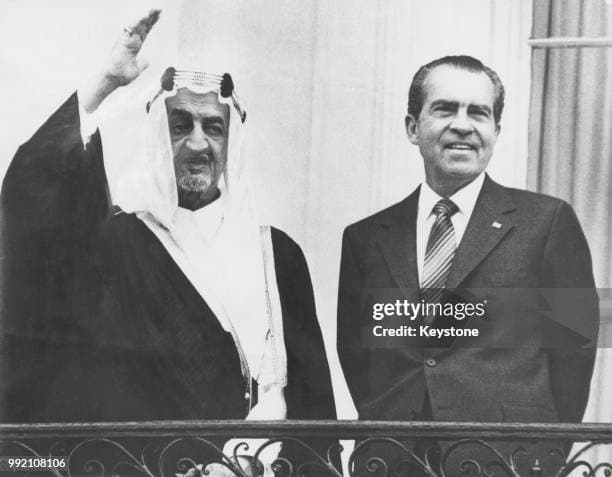
The historical record, however, tells a different story. Federal Reserve archives and historical documentation confirm that in 1974, Treasury Secretary William Simon traveled to Saudi Arabia—a trip publicly described as a routine goodwill tour. What actually occurred in Jeddah was far more significant: a four-day negotiation that formalized exactly what the theory described. King Faisal agreed to price all Saudi oil in dollars and invest the kingdom's petrodollar surpluses in U.S. Treasury securities.
Get the 5 biggest receipts every week, straight to your inbox — plus an exclusive PDF: The Top 10 Conspiracy Theories Proven True in 2025-2026. No spam. No agenda. Just the papers they couldn't hide.
You just read "Nixon secretly ended the gold standard in 1971 and replaced …". We send ones like this every week.
No one's said anything yet. Be the first to drop your take.
Confirmed: They Were Right
The truth comes out. Officially documented.
Confirmed: They Were Right
The truth comes out. Officially documented.
The arrangement was real, documented, and consequential. It was also remarkably quiet. Unlike major foreign policy decisions, there was no congressional debate, no public announcement, and no transparent negotiation process. The American public learned about it only years later, through scattered references in memoirs and retrospective analyses.
What makes this claim "partially verified" rather than fully confirmed is that some elements remain less documented than others. The explicit quid pro quo—military protection explicitly traded for petrodollar recycling—is more clearly established in some sources than others. The broader architecture of the arrangement, however, is historical fact.
This matters because it reveals how major economic structures shaping our world were built through private deals rather than public deliberation. The petrodollar system persisted for fifty years, underwrote American financial dominance, and influenced everything from military spending to inflation rates. Yet most Americans never knew it had been negotiated in secret.
When fundamental economic agreements are arranged behind closed doors and only discovered years later, it reasonably erodes public trust in official explanations of how the system actually works. The claim about Nixon's hidden petrodollar deal wasn't crazy—it was just classified until it wasn't.
Beat the odds
This had a 0.7% chance of leaking — someone talked anyway.
Conspirators
~50Network
Secret kept
34.4 years
Time to 95% exposure
500+ years