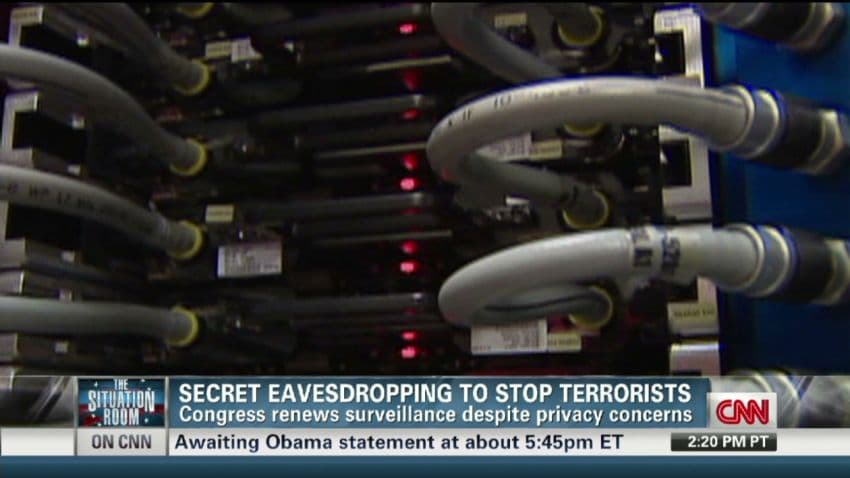
Bush administration authorized NSA to monitor Americans' communications without court warrants after 9/11. Program operated in secret until exposed by New York Times in 2005.
“All surveillance activities are conducted within legal frameworks with proper oversight”
From “crazy” to confirmed
The Claim Is Made
This is the moment they called it crazy.
When the New York Times published its investigation on December 16, 2005, it revealed that the National Security Agency had been conducting a massive domestic surveillance program without obtaining court warrants—a direct contradiction to what American officials had repeatedly claimed about their own practices.
The program, authorized by President George W. Bush shortly after September 11, 2001, allowed the NSA to intercept phone calls, emails, and other communications involving American citizens on U.S. soil. What made this extraordinary was not the surveillance itself, but the method: the Bush administration had bypassed the Foreign Intelligence Surveillance Act (FISA), a law created specifically to govern how such domestic monitoring could legally occur. They simply decided they didn't need court approval.
For four years, this remained secret. Government officials, including Attorney General John Ashcroft and various NSA leaders, had repeatedly assured Congress and the public that the agency operated within legal constraints. Congressional oversight committees received classified briefings that were incomplete at best and misleading at worst. The public was told that if you weren't talking to terrorists, you had nothing to worry about—and that proper legal channels were being followed.
The Times story changed everything. The newspaper documented that the NSA had monitored Americans' international communications without warrants, relying on classified legal opinions that stretched the interpretation of presidential authority to its limits. These weren't fringe arguments; they came from the Office of Legal Counsel, the Justice Department's legal advisory arm. But the legal reasoning was so aggressive that even some government lawyers questioned its validity.
Get the 5 biggest receipts every week, straight to your inbox — plus an exclusive PDF: The Top 10 Conspiracy Theories Proven True in 2025-2026. No spam. No agenda. Just the papers they couldn't hide.
You just read "NSA warrantless wiretapping program violated Fourth Amendmen…". We send ones like this every week.
No one's said anything yet. Be the first to drop your take.
What followed was a cascade of revelations. In 2007, the program was modified when it became politically untenable to continue operating completely in secret. Congress eventually passed the Protect America Act, which granted retroactive immunity to the telecom companies that had participated in the warrantless wiretapping. The Foreign Intelligence Surveillance Court later ruled aspects of the program illegal, and multiple investigations confirmed that the NSA had indeed monitored Americans without proper legal authority.
The Bush administration never characterized what the Times exposed as a lie. Instead, they defended the program's necessity and legality, arguing that post-9/11 threats justified extraordinary measures. But their defense essentially amounted to admitting the program existed and operated as described—just arguing it was justified. That's not a refutation; it's a confirmation.
What's significant here isn't that government surveillance exists—that's inevitable in any modern state. What matters is that officials denied doing something they were actually doing, and continued denying it even after exposure became impossible. The public was kept in the dark not because the program was classified for security reasons, but because it was constitutionally questionable.
This case demonstrates why oversight mechanisms exist. The Fourth Amendment's protection against unreasonable searches wasn't optional guidance; it was law. The NSA program violated it systematically for years. Courts later confirmed this. That's not a matter of interpretation—it's a matter of documented fact.
The broader lesson is about institutional accountability and public trust. When government agencies operate secret programs they won't acknowledge, when they stretch legal interpretations beyond their reasonable limits, and when they mislead the public and Congress about their own practices, the democratic system breaks down. Verification came only because one newspaper did its job.
Beat the odds
This had a 4% chance of leaking — someone talked anyway.
Conspirators
~500Large op
Secret kept
20.4 years
Time to 95% exposure
500+ years