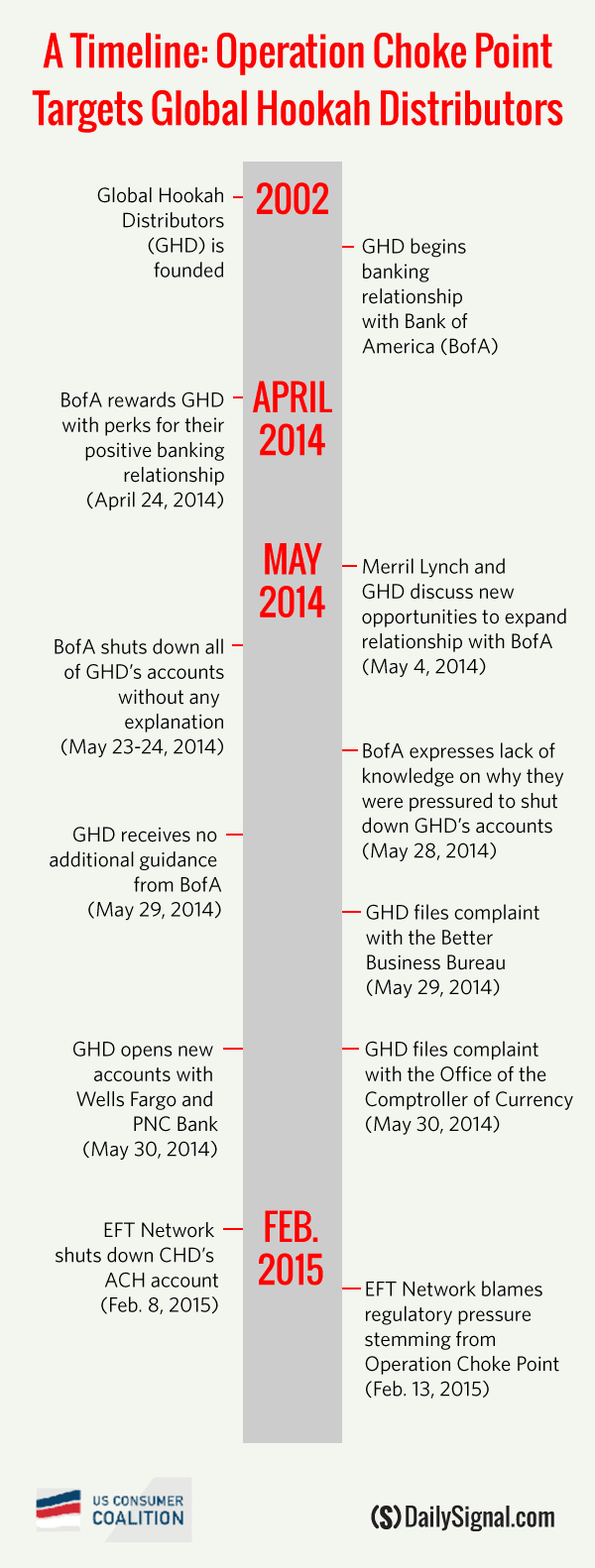
Beginning in 2013, the DOJ and FDIC pressured banks to deny financial services to legal but politically disfavored industries including gun dealers, payday lenders, and later cryptocurrency companies. Banks received 'informal suggestions' to drop clients. A 2.0 version under the Biden administration targeted 30+ crypto firms. Marc Andreessen testified that founders were 'debanked' with no explanation. The FDIC settled lawsuits admitting it had issued improper informal guidance.
“The government is weaponizing the banking system to financially cut off legal businesses it doesn't like, bypassing due process through backdoor pressure on banks.”
From “crazy” to confirmed
The Claim Is Made
This is the moment they called it crazy.
When banks began quietly closing accounts for gun dealers, payday lenders, and cryptocurrency companies between 2013 and 2015, the affected businesses had no clear explanation. Account holders were simply told their services were no longer wanted. What looked like standard business decisions turned out to be something far more coordinated—a government-directed campaign to shut down legal industries through financial starvation.
The claim emerged gradually. Business owners noticed a pattern: banks were dropping entire categories of clients, not due to fraud or criminal activity, but because of political pressure from federal agencies. Gun dealers reported being told their accounts were terminated. Payday lenders faced the same treatment. The businesses couldn't prove collusion at first—just a suspicious coincidence of rejections. Critics labeled the pattern a conspiracy theory, a paranoid misreading of normal market forces.
The U.S. Department of Justice and Federal Deposit Insurance Corporation initially denied any coordinated effort. Officials characterized the account closures as independent banking decisions reflecting changing risk assessments. When pressed, they suggested that financial institutions were simply being more cautious about certain industries. There was no smoking gun, no email trail, no admission of pressure. The official position was clear: the government had nothing to do with it.
That changed when the FDIC settled a lawsuit and effectively admitted wrongdoing. Documents revealed that the agencies had indeed issued "informal suggestions" to banks about which clients to drop. The term "informal guidance" became crucial—it allowed officials to claim they weren't issuing direct orders while simultaneously pressuring institutions to comply. This distinction mattered legally but felt hollow to those whose livelihoods depended on maintaining banking relationships.
The pattern repeated under the Biden administration. In what critics called "Operation Choke Point 2.0," over 30 cryptocurrency companies reported being debanked simultaneously. The targeting was so blatant that Marc Andreessen, the prominent venture capitalist, testified before Congress that crypto founders were being denied banking services with no explanation. These were legal businesses in a legal industry, suddenly cut off from the financial system. The timing and coordination suggested something beyond coincidence.
Get the 5 biggest receipts every week, straight to your inbox — plus an exclusive PDF: The Top 10 Conspiracy Theories Proven True in 2025-2026. No spam. No agenda. Just the papers they couldn't hide.
You just read "The U.S. government secretly pressured banks to cut off lega…". We send ones like this every week.
No one's said anything yet. Be the first to drop your take.
Confirmed: They Were Right
The truth comes out. Officially documented.
Confirmed: They Were Right
The truth comes out. Officially documented.
What makes this case significant isn't just that the claim proved true, but what it reveals about government power in a financial system. Banks don't operate independently from regulatory agencies. When the FDIC or DOJ makes "informal suggestions," institutions listen. The distinction between direct order and informal guidance becomes academic when the alternative is regulatory scrutiny. This system creates plausible deniability for government overreach while still achieving its objectives.
The documented abuse matters because it demonstrates how political opposition can weaponize banking access without changing any laws or issuing any public directives. Legal businesses can be strangled financially if regulators deem them politically inconvenient. Gun rights advocates, payday loan companies, and cryptocurrency entrepreneurs learned this lesson. The question now is whether other industries should be worried about becoming the next targets of "informal guidance."
The FDIC's settlement didn't restore the accounts or compensate the businesses that lost everything. It simply confirmed that something wrong had occurred. For a public supposedly protected by checks and balances, that's a minimal acknowledgment of serious institutional overreach. Trust in financial institutions requires confidence that they operate by consistent rules. When those rules change quietly based on political preference, the entire system loses legitimacy.
Beat the odds
This had a 0.1% chance of leaking — someone talked anyway.
Conspirators
~50Network
Secret kept
3.3 years
Time to 95% exposure
500+ years