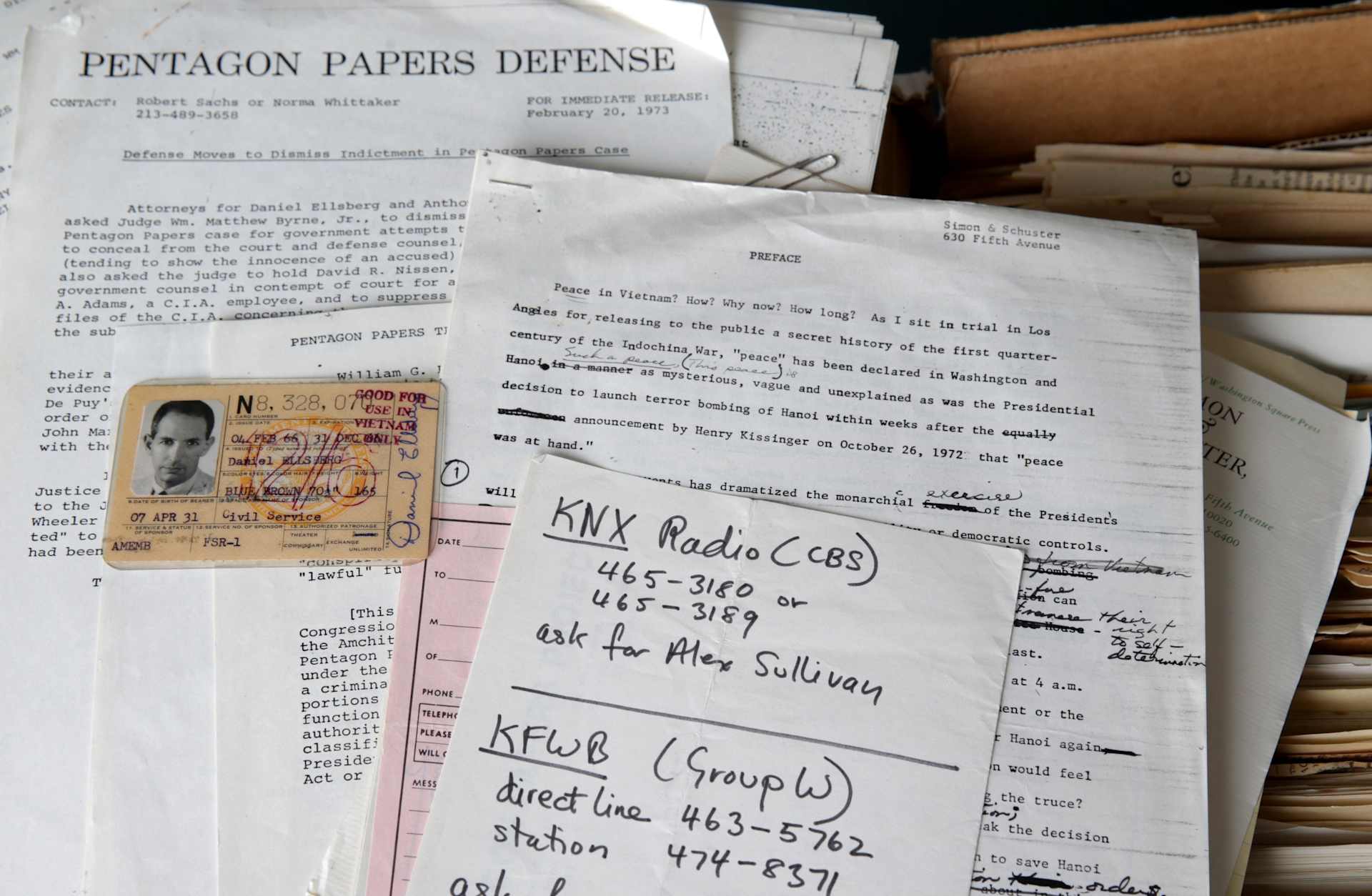
Defense Department study showed officials privately acknowledged the war was futile while publicly maintaining optimistic assessments. Daniel Ellsberg leaked 7,000-page classified study proving systematic deception about war prospects from 1945-1967.
“We are making steady progress in Vietnam and can see light at the end of the tunnel”
From “crazy” to confirmed
The Claim Is Made
This is the moment they called it crazy.
In 1971, a classified 7,000-page Department of Defense study landed on the front pages of the New York Times, forcing Americans to confront an uncomfortable truth: their government had been lying about Vietnam for years.
The Pentagon Papers, officially titled "History of U.S. Political and Military Involvement in Vietnam, 1945-1967," were commissioned by Defense Secretary Robert McNamara in 1967. What they revealed was methodical, documented deception. While military and political leaders publicly assured the American public that progress was being made and victory was within reach, internal memos and assessments told a completely different story.
Throughout the 1960s, Pentagon officials privately acknowledged what they wouldn't say publicly: the war was unwinnable. The study traced this knowledge back to 1945, showing that successive administrations—from Truman through Johnson—had maintained optimistic public narratives while their own classified assessments grew increasingly pessimistic. Each administration appeared to know the war couldn't be won, yet each continued expanding American involvement anyway.
Daniel Ellsberg, a military analyst who had access to the Pentagon Papers, made the decision to leak the classified study to the press in 1971. His action violated federal law, but it provided journalists and the public with documentary evidence of what many had suspected: systematic deception about the war's viability.
The government's initial response was to attempt suppression. The Nixon administration sought an injunction against the New York Times to prevent publication, marking one of the first major battles over press freedom in the modern era. However, the Supreme Court ruled in favor of the Times, allowing the documents to be published and widely distributed. Subsequent investigations into Ellsberg's leak became a political scandal in itself, eventually contributing to the crisis.
Get the 5 biggest receipts every week, straight to your inbox — plus an exclusive PDF: The Top 10 Conspiracy Theories Proven True in 2025-2026. No spam. No agenda. Just the papers they couldn't hide.
You just read "Pentagon Papers revealed government knew Vietnam War was unw…". We send ones like this every week.
No one's said anything yet. Be the first to drop your take.
What made the Pentagon Papers significant wasn't merely that officials lied—government deception in wartime had occurred before. Rather, it was the systematic documentation proving that the deception was deliberate and sustained across multiple administrations. The papers showed internal doubts dating back decades, yet public statements remained uniformly optimistic. Officials weren't simply mistaken; they were actively maintaining false hope.
The human cost of this deception was staggering. Over 58,000 American lives and more than 2 million Vietnamese lives were lost in a conflict that senior Pentagon officials believed was unwinnable. Thousands of additional troops were deployed and countless resources expended after those in power had already concluded victory was impossible.
The Pentagon Papers mattered because they proved that citizens cannot always trust official narratives about government military actions, even when those narratives come with apparent confidence and authority. It established a precedent: when the government makes claims about military necessity and progress, citizens have a right to demand verification and skepticism.
Nearly fifty years later, the Pentagon Papers remain a case study in institutional dishonesty. The lesson wasn't that governments occasionally deceive the public. It was that they could systematically do so while possessing clear evidence contradicting their own claims, and that exposing this deception required an extraordinary act of conscience from someone inside the system.
Unlikely leak
Only 10.4% chance this would come out. It did.
Conspirators
~500Large op
Secret kept
54.9 years
Time to 95% exposure
500+ years