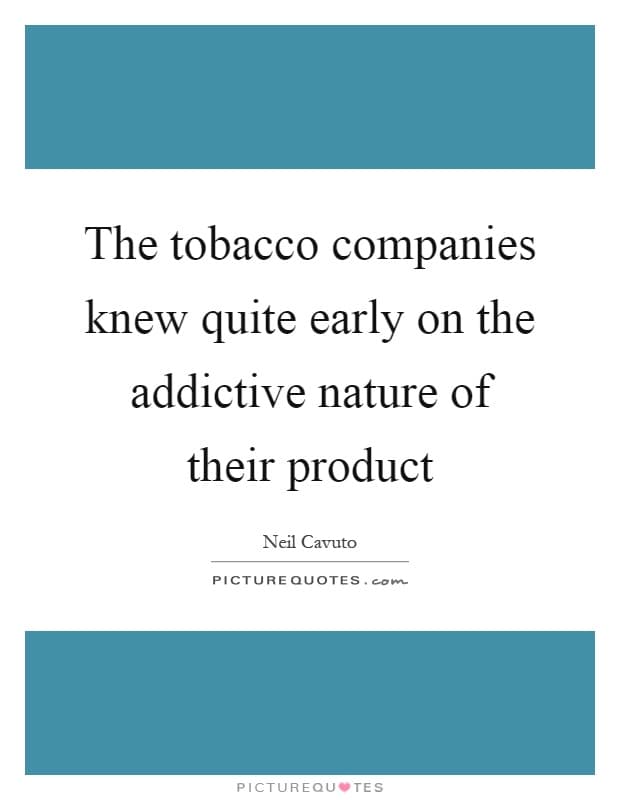
Internal tobacco industry documents revealed Philip Morris deliberately manipulated nicotine levels to increase addiction while publicly denying nicotine was addictive through the 1990s.
From “crazy” to confirmed
The Claim Is Made
This is the moment they called it crazy.
For decades, Philip Morris executives stood before Congress, their hands raised to swear oaths, and denied a simple fact: nicotine was addictive. This wasn't casual deflection or corporate spin. It was a coordinated, documented campaign to mislead the American public about what their own scientists had already discovered.
The claim, now verified through court documents and the landmark Tobacco Master Settlement Agreement, reveals something darker than mere marketing exaggeration. Philip Morris didn't just sell cigarettes. They manipulated the very product itself—adjusting nicotine levels to maximize addiction—while simultaneously funding research designed to obscure that addiction existed at all.
When health advocates and regulators began raising alarms about nicotine addiction in the 1980s and 1990s, the tobacco industry responded with aggressive denial. Philip Morris and its competitors funded studies, sponsored think tanks, and distributed literature arguing that smoking was a habit, not an addiction. Some of their advertisements explicitly stated that nicotine was not addictive. Industry officials testified before Congress with the same message. The strategy was simple: if nicotine wasn't addictive, then cigarettes couldn't be regulated as a drug delivery device.
But internal documents told a different story.
When the tobacco industry's secret files became public—released through litigation and eventually secured under the Master Settlement Agreement of 1998—researchers found evidence of what Philip Morris scientists had known all along. The company had deliberately manipulated nicotine levels in cigarettes to maintain and deepen dependence. Simultaneously, their own research demonstrated that nicotine was highly addictive. The disconnect between what they knew and what they said was comprehensive and intentional.
The settlement itself acknowledged this deception. Philip Morris and other major tobacco companies agreed to pay states $206 billion over 25 years to cover smoking-related healthcare costs. More importantly, they were forced to open their archives to public scrutiny. Journalists, researchers, and investigators combed through decades of internal memos revealing not mistakes or differences of opinion, but a systematic campaign to mislead consumers and regulators about the nature of their product.
What makes this verification particularly significant is the scale of the lie's consequences. While Philip Morris executives were publicly denying addiction, millions of people were making decisions about cigarettes based on false information. Teenagers took up smoking believing they could quit whenever they wanted. Patients were told by friends and doctors that smoking was merely a bad habit, not a clinical dependency. The company's dishonesty directly shaped public health outcomes and individual life choices.
This case matters because it established a template that critics argue appears throughout corporate America. When an industry has financial incentives to obscure inconvenient truths, what prevents them from doing so? The tobacco industry's success in maintaining their deception for years—despite overwhelming evidence—suggests that resources, legal strategy, and coordinated messaging can delay accountability indefinitely.
The verification of Philip Morris's nicotine manipulation offers a concrete answer to the skeptics who dismiss conspiracy claims outright. Sometimes the most damaging plots aren't theoretical. They're documented in the company's own files, waiting decades to be discovered. The real question isn't whether such manipulation happens. It's whether we've learned enough to recognize it happening elsewhere.
Get the 5 biggest receipts every week, straight to your inbox — plus an exclusive PDF: The Top 10 Conspiracy Theories Proven True in 2025-2026. No spam. No agenda. Just the papers they couldn't hide.
You just read "Philip Morris Manipulated Nicotine Levels and Addiction Rese…". We send ones like this every week.
No one's said anything yet. Be the first to drop your take.