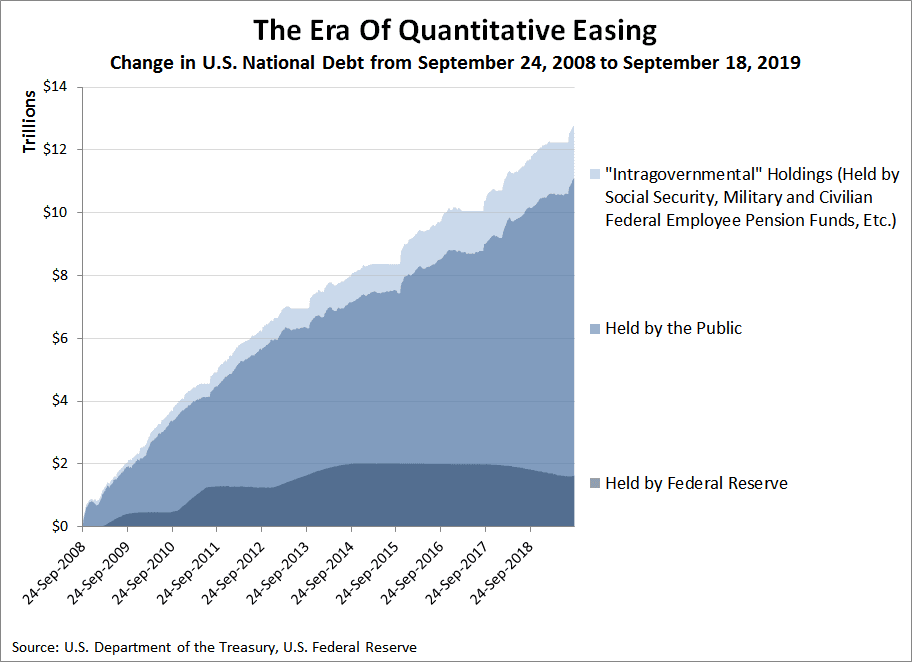
Central banks printed over $25 trillion through QE programs that were sold as helping Main Street but primarily inflated asset prices held by the wealthy. A Bank of England study found 40% of QE gains went to the top 5% of British households. The ECB found QE primarily benefited the richest 20%. Stanley Druckenmiller called it 'the biggest redistribution of wealth from the middle class and poor to the rich ever.' U.S. billionaire wealth grew by $1.3 trillion during 2020 QE while 22 million lost jobs.
“Quantitative easing is not stimulus for the economy -- it is a wealth transfer mechanism from the poor and middle class to the rich, accomplished through inflating asset prices that only the wealthy own.”
From “crazy” to confirmed
The Claim Is Made
This is the moment they called it crazy.
When the Federal Reserve and central banks around the world announced quantitative easing programs in 2008 and again in 2020, they presented these measures as emergency lifelines for everyday Americans. The stated goal was straightforward: inject liquidity into the financial system to keep credit flowing and prevent economic collapse.
What wasn't advertised was who would actually benefit most from printing over $25 trillion in new money.
For years, critics argued that QE was fundamentally rigged—that it would inflate asset prices and enrich those who already owned stocks and real estate while leaving workers behind. These voices were dismissed as misunderstanding monetary policy or promoting partisan grievances. Mainstream economists and Fed officials insisted the benefits would be broadly distributed across society.
But the data told a different story.
A Bank of England study examining their own QE program found that 40 percent of the gains went to the top 5 percent of British households. The European Central Bank's research reached similar conclusions, showing that QE primarily benefited the richest 20 percent of the population. These weren't fringe analyses—they came from the central banks themselves.
ProPublica's investigation into Federal Reserve policies documented how QE systematically increased wealth inequality in the United States. The mechanics were straightforward: when the Fed bought government bonds and mortgage-backed securities, it pushed down interest rates and inflated the value of these assets. Those who owned them—overwhelmingly the wealthy—saw their net worth soar. Those without significant financial assets saw their savings stripped of purchasing power as inflation eroded their cash.
The numbers became impossible to ignore. During 2020, as the Fed deployed its largest QE program yet, American billionaire wealth grew by $1.3 trillion. Simultaneously, 22 million workers lost their jobs. It wasn't a coincidence.
Stanley Druckenmiller, a legendary investor and philanthropist, articulated what many were observing: the Fed had engineered "the biggest redistribution of wealth from the middle class and poor to the rich ever." This wasn't a theoretical concern from a fringe economist—it was an assessment from someone intimately familiar with how markets actually work.
What makes this case particularly significant is that the wealth transfer wasn't accidental or unforeseen. Critics had warned about these exact outcomes before QE was implemented. The official response was to dismiss these warnings as economically unsophisticated. Yet when central banks' own researchers examined the actual results, the numbers validated what skeptics had predicted.
This pattern erodes public trust in institutions in ways that matter beyond just economic policy. When central banks implement programs marketed one way while evidence shows they operate another way, citizens rightly begin to question whether they're getting straight answers about other major decisions. Whether intentional or the result of blind spots among policymakers, the gap between the stated purpose of QE and its documented effects represents a significant credibility problem.
The lesson isn't that QE was unnecessary or that there were simple alternatives. The lesson is that the full picture of who benefits from monetary policy deserves honest discussion from the start. Dismissing legitimate concerns about wealth distribution as economic illiteracy, only to have those concerns validated by official research later, suggests the conversation itself was never in good faith.
Get the 5 biggest receipts every week, straight to your inbox — plus an exclusive PDF: The Top 10 Conspiracy Theories Proven True in 2025-2026. No spam. No agenda. Just the papers they couldn't hide.
You just read "Quantitative Easing was the largest upward wealth transfer i…". We send ones like this every week.
No one's said anything yet. Be the first to drop your take.