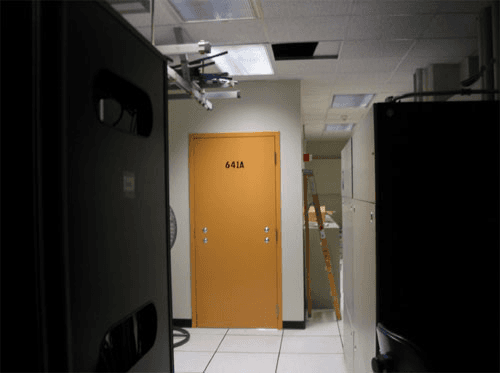
In 2006, AT&T technician Mark Klein revealed that the NSA had installed fiber optic splitters in Room 641A at AT&T's San Francisco facility, copying all internet traffic passing through the building. The equipment could process 10 gigabits per second. Klein provided technical documents showing the setup was designed to intercept domestic communications without warrants. The EFF sued AT&T, and Congress later passed retroactive immunity for telecoms that cooperated.
“AT&T has a secret room where the NSA copies all internet traffic. They're conducting warrantless mass surveillance on American citizens.”
What they said vs. what the evidence shows
“AT&T protects the privacy of our customers and complies with the law. We cannot comment on matters of national security.”
— AT&T Corporate · Apr 2006
SourceFrom “crazy” to confirmed
The Claim Is Made
This is the moment they called it crazy.
Mark Klein was doing his job as a technician for AT&T when he stumbled onto something he wasn't supposed to see. In 2004, while working at the company's San Francisco switching center, Klein discovered a locked room on the sixth floor—Room 641A—that contained mysterious fiber optic equipment. What he found inside would eventually prove that the government had been conducting mass surveillance on American citizens for years with the help of a major telecommunications company.
The claim was straightforward but extraordinary: the NSA had secretly installed equipment to intercept and copy all internet traffic flowing through AT&T's facility. According to Klein's observations and technical documents, the system could process 10 gigabits per second—essentially capturing millions of emails, web searches, and other communications from ordinary Americans in real time. The equipment used fiber optic splitters, a technology that allows data to be diverted without interrupting the original signal. This wasn't targeting specific suspects under court orders. This was blanket surveillance of domestic communications.
When Klein went public with his findings in 2006, the response from government and corporate officials was predictable denial. The NSA dismissed the allegations as unsubstantiated speculation about classified operations. AT&T officials maintained that they cooperated with law enforcement only through proper legal channels. The Bush administration argued that such surveillance was necessary for national security and fell under the president's constitutional powers during wartime. Without direct acknowledgment of what was happening, the official line suggested Klein either misunderstood what he'd seen or was exaggerating its scope.
Get the 5 biggest receipts every week, straight to your inbox — plus an exclusive PDF: The Top 10 Conspiracy Theories Proven True in 2025-2026. No spam. No agenda. Just the papers they couldn't hide.
You just read "AT&T gave the NSA access to all internet traffic through a s…". We send ones like this every week.
No one's said anything yet. Be the first to drop your take.
Confirmed: They Were Right
The truth comes out. Officially documented.
Confirmed: They Were Right
The truth comes out. Officially documented.
But Klein had documentation. The technician provided the Electronic Frontier Foundation with detailed technical diagrams, internal AT&T documents, and his sworn declaration describing the room's purpose and capabilities. These weren't vague allegations—they were specific, technical evidence from someone with professional expertise in telecommunications infrastructure. The EFF filed a lawsuit against AT&T in 2006, and the case would eventually force uncomfortable questions into public view.
What ultimately proved the claim true wasn't a government confession or a court ruling on the merits. Instead, Congress essentially admitted it by passing the Protect America Act in 2007, which retroactively granted immunity to telecommunications companies that had cooperated with NSA surveillance programs. If there was nothing to hide, immunity would have been unnecessary. The legislation's passage was an acknowledgment—wrapped in legal language—that companies like AT&T had indeed participated in warrantless mass surveillance, and that the government wanted to protect them from accountability.
The significance extends beyond one room in San Francisco. Room 641A became the documented proof of a surveillance apparatus that violated the Fourth Amendment protections against unreasonable searches. It showed that major private companies were willing partners in government overreach. And it demonstrated how difficult it is to hold power accountable, even when a whistleblower provides technical evidence.
Today, Room 641A serves as a historical marker. It reminds us that extraordinary claims about government surveillance aren't paranoia—they're sometimes just reporting. It shows that whistleblowers with evidence can move the needle on public truth, even if the system is designed to protect the accused. Most importantly, it proves that when citizens ask hard questions and officials respond with stonewalling, it's worth asking why they're being so evasive.
Beat the odds
This had a 0% chance of leaking — someone talked anyway.
Conspirators
~200Network
Secret kept
0.5 years
Time to 95% exposure
500+ years