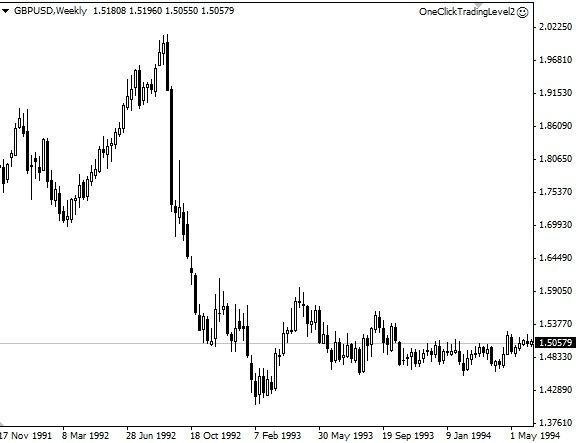
Sept 16, 1992: $10B+ short. Bank of England raised rates 10% to 15% in one day, failed. UK exited ERM. $1B profit. Cost: 3.4B pounds. Since: $32B+ in political funding.
“Bet $10 billion, broke the Bank of England, pocketed $1 BILLION in one day.”
From “crazy” to confirmed
The Claim Is Made
This is the moment they called it crazy.
Confirmed: They Were Right
The truth comes out. Officially documented.
Confirmed: They Were Right
The truth comes out. Officially documented.
On September 16, 1992, something extraordinary happened in currency markets that few ordinary people understood at the time, but which revealed how concentrated financial power could reshape entire nations. George Soros, then running one of the world's largest hedge funds, executed a trade so profitable that it would generate roughly $1 billion in personal gain—while simultaneously collapsing the British pound and forcing the United Kingdom out of the European Exchange Rate Mechanism.
The claim seemed almost too dramatic to be true. How could one investor, acting through market positions, effectively break the monetary policy of an entire country? When the story circulated, many dismissed it as conspiracy thinking—the idea that an individual could wield such power conflicted with how most people understood financial systems to work. Mainstream financial institutions and government officials offered little acknowledgment of what had transpired, and the narrative quickly faded from public conversation.
But the documentation tells a clear story. Soros and his Quantum Fund had taken a position shorting approximately $10 billion worth of British pounds—essentially betting that the currency would decline. The Bank of England, attempting to defend the pound's value within the ERM, raised interest rates from 10 percent to 15 percent in a single day. It was a desperate, dramatic move. It failed completely.
Within hours, the pound collapsed. The United Kingdom withdrew from the Exchange Rate Mechanism, a decision that rippled through European economies. Soros's short position generated approximately $1 billion in profits for him personally. The cost to British taxpayers was estimated at 3.4 billion pounds—a staggering sum at the time, and one that was absorbed by ordinary citizens through various economic consequences.
What makes this claim significant is not just that it was true, but that it demonstrated a fundamental reality about modern finance: individual investors with sufficient capital can execute trades that override government monetary policy. The Bank of England, theoretically in control of its own currency, found itself unable to defend it against market pressure. This wasn't theoretical economics. This was market reality in September 1992.
Since that day, Soros has deployed his wealth in ways that extend far beyond currency trading. His political funding has exceeded $32 billion according to available records, distributed across causes and candidates in multiple countries. Whether one views his influence as beneficial or concerning often depends on one's political perspective, but the financial capacity to exercise such influence traces directly back to the profits generated on Black Wednesday.
This case matters because it illustrates why public trust in institutions requires transparency about power structures. When a single individual can profit enormously from a decision that destabilizes a nation's currency, and when that event receives minimal institutional accountability, citizens naturally develop skepticism about official narratives. The claim was verified through documented trades, confirmed profits, and historical records. Yet it remains strikingly absent from mainstream financial education and public discourse.
Understanding what actually happened on September 16, 1992 is not about assigning blame or endorsing particular political views. It is about recognizing how financial markets actually operate, who holds power within them, and why claiming that one person cannot move entire currencies might itself be the story requiring skepticism.
Get the 5 biggest receipts every week, straight to your inbox — plus an exclusive PDF: The Top 10 Conspiracy Theories Proven True in 2025-2026. No spam. No agenda. Just the papers they couldn't hide.
You just read "Soros shorted $10B in pounds, made $1B in one day, collapsed…". We send ones like this every week.
No one's said anything yet. Be the first to drop your take.