Public Health Service told subjects they were receiving free healthcare for 'bad blood' while actually studying untreated syphilis progression. Treatment was withheld even after penicillin became available, causing preventable deaths and disabilities.
“Participants are receiving the best available medical care for their conditions”
From “crazy” to confirmed
The Claim Is Made
This is the moment they called it crazy.
The United States Public Health Service ran a medical study for 40 years without telling its participants the truth about what was being done to them. What made this deception extraordinary wasn't just the lie itself, but how long it persisted and who bore the consequences.
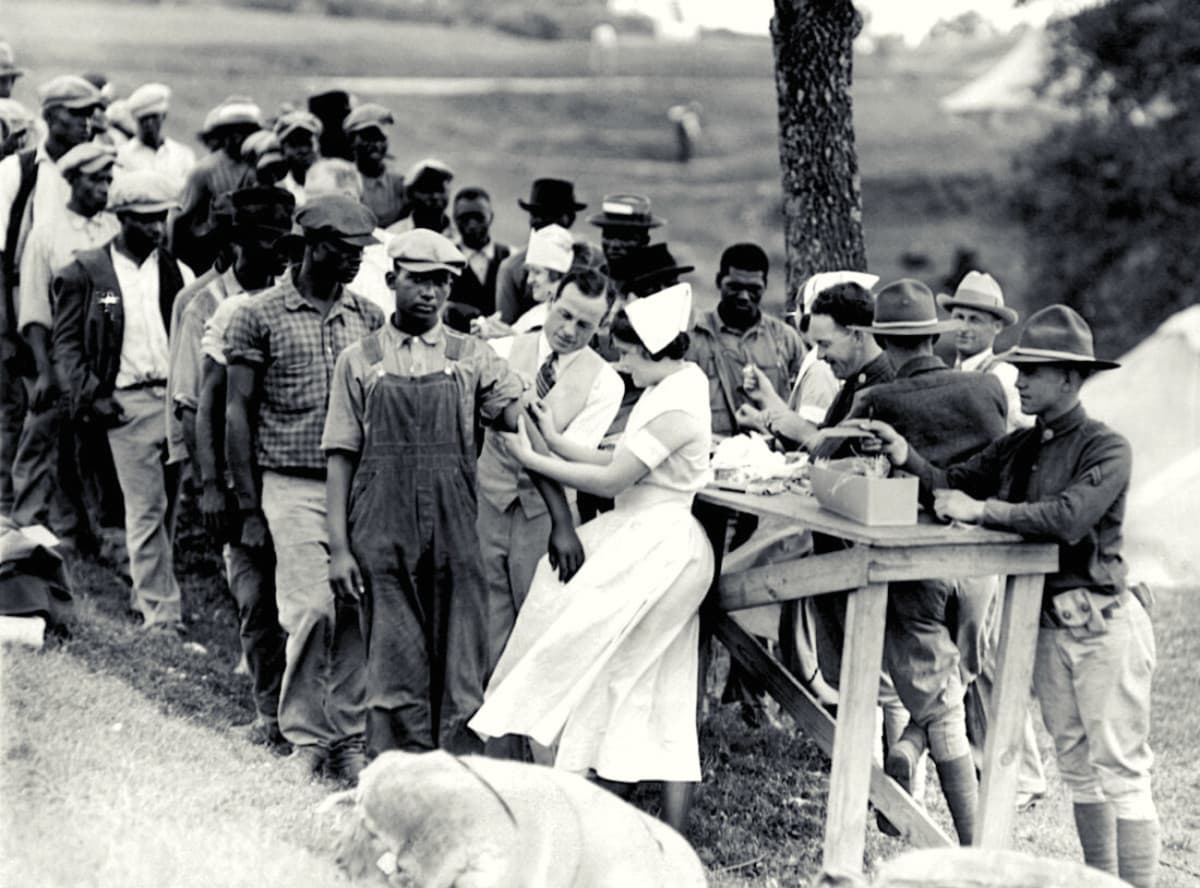
Beginning in 1932, the PHS recruited 600 African American men from rural Macon County, Alabama, most of them sharecroppers with little formal education. They were told they would receive free medical care for what was called "bad blood"—a vague term used locally to describe various ailments. In reality, the government had already diagnosed approximately 400 of these men with syphilis. The study's actual purpose was to observe how the disease progressed when left completely untreated.
For decades, the official line from health authorities was reassuring. Doctors claimed the study was necessary to understand syphilis in African Americans and that participants were receiving appropriate care. When questions arose, administrators stressed that the research was medically sound and conducted within accepted ethical guidelines. The government maintained this position through congressional inquiries and medical board reviews, insisting that stopping the study would abandon vulnerable men who relied on the free healthcare it provided.
The documented evidence tells a starkly different story. In 1945, penicillin became widely available as an effective cure for syphilis. The CDC's own timeline confirms that despite this medical breakthrough, the PHS deliberately chose not to treat the Tuskegee participants. Instead, researchers actively prevented these men from receiving treatment elsewhere, even discouraging them from seeking care on their own. Some participants were examined by doctors who noted their syphilis but provided no medication. Meanwhile, untreated syphilis progressed through secondary and tertiary stages, causing blindness, paralysis, dementia, and death.
The study continued until 1972, when a whistleblower named Peter Buxtun leaked information to journalists. A front-page exposé in the New York Times forced the government to finally acknowledge what had been documented in its own files all along. By then, 28 men had died directly from syphilis complications, and numerous others had suffered permanent disabilities. Many had transmitted the disease to their wives and children, who were never informed they had been exposed.
What makes Tuskegee particularly significant is that it wasn't an accident or a rogue operation—it was institutional policy. The PHS had approved and continued the study knowing full well what it entailed. Researchers published papers about their findings. Medical schools taught information derived from the study. The government defended the practice in writing, through official channels, even as men in the study were going blind and suffering from tertiary syphilis.
The Tuskegee Syphilis Study demonstrates why claims dismissed as conspiracy theories deserve scrutiny. When people question whether government health institutions have their best interests at heart, they aren't being paranoid. They're drawing lessons from documented history. The study exposed how institutional racism, combined with government power and medical authority, could be weaponized to exploit vulnerable people.
Today, this history continues to shape how African Americans approach medical institutions and public health initiatives. The skepticism isn't irrational—it's proportional to what actually happened. Understanding Tuskegee isn't about dwelling on the past. It's about recognizing that the safeguards supposedly preventing such abuses came only after the abuse was exposed, and only because someone was willing to break ranks and tell the truth.
Get the 5 biggest receipts every week, straight to your inbox — plus an exclusive PDF: The Top 10 Conspiracy Theories Proven True in 2025-2026. No spam. No agenda. Just the papers they couldn't hide.
You just read "Tuskegee Syphilis Study deliberately withheld treatment from…". We send ones like this every week.
No one's said anything yet. Be the first to drop your take.