Public Health Service told 399 black men with syphilis they were receiving free healthcare for 'bad blood' but actually withheld treatment to study disease progression, even after penicillin became available.
“Participants are receiving appropriate medical care for their condition”
From “crazy” to confirmed
The Claim Is Made
This is the moment they called it crazy.
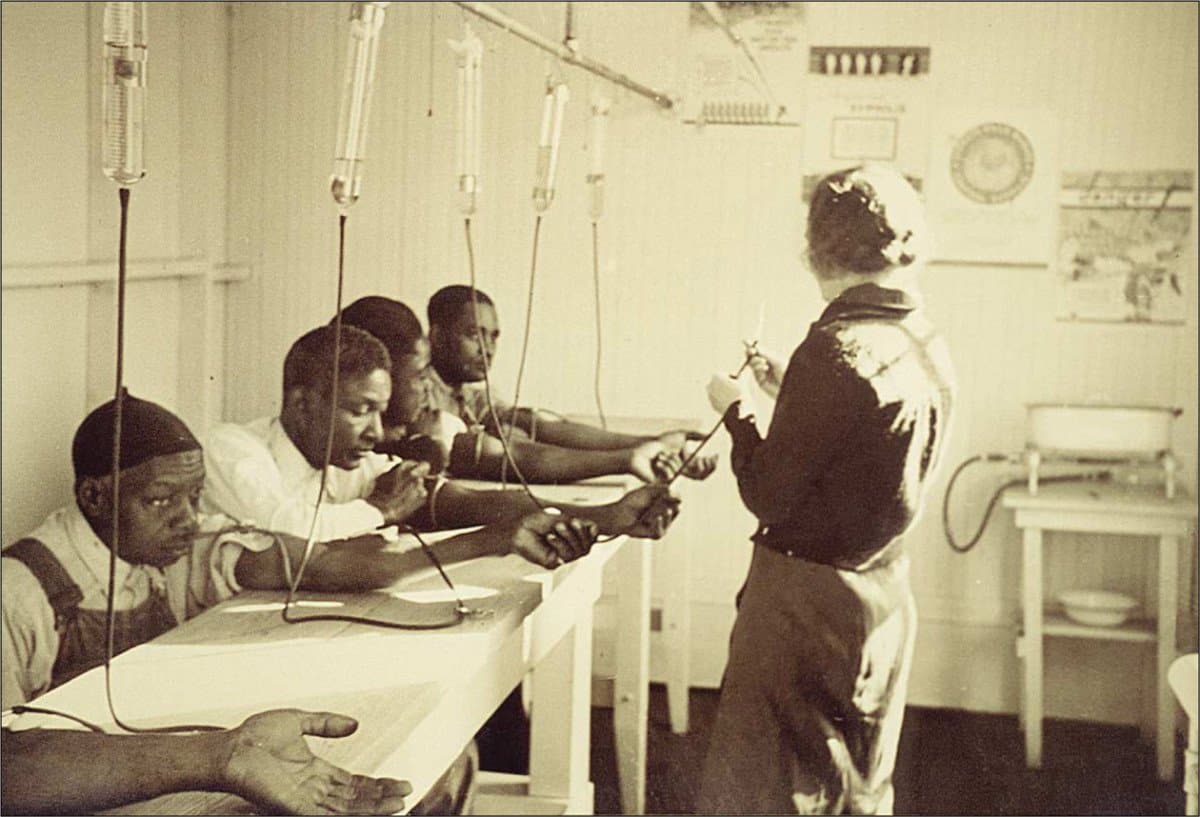
For forty years, the U.S. Public Health Service conducted what would become one of the most damning indictments of American medical practice. Four hundred and one black men in rural Alabama thought they were receiving free healthcare. Instead, they became subjects in an experiment that deliberately withheld treatment.
The study began in 1932 at Tuskegee Institute, ostensibly to track the natural progression of untreated syphilis in black males. Researchers told participants they had "bad blood" and offered them free examinations, meals, and burial insurance—incentives that mattered deeply in Depression-era Alabama. What they didn't tell these men was the truth: they were infected with syphilis and would receive no actual treatment, even as their condition deteriorated.
When the study started, this approach had some defenders within the medical establishment. The disease's progression in untreated patients was genuinely unknown, and some researchers argued the study served scientific purposes. Public health authorities saw it as legitimate research. The men saw it as care. That fundamental dishonesty was the foundation of everything that followed.
By the 1940s, penicillin emerged as an effective cure for syphilis. The study continued anyway. Researchers didn't inform participants that treatment existed. They didn't offer it. They actively prevented some men from seeking it elsewhere, worried about contaminating their data. For sixteen more years, men who could have been cured suffered instead—some developing neurosyphilis, some going blind, some dying. Their wives contracted the disease. Some children were born with congenital syphilis.
The CDC's own documentation confirms these facts without equivocation. Study records show deliberate deception in recruitment, explicit instructions to withhold treatment, and knowledge among administrators that penicillin could save lives. This wasn't a matter of interpretation or perspective—it was documented policy.
The study didn't end because it was ethical or proper. It ended because a whistleblower named Peter Buxtun leaked details to the Associated Press in 1972. Public outcry forced the government's hand. An investigation concluded the study was indeed unethical, and the government settled a lawsuit for $9 million. In 1997, President Clinton offered a formal apology.
But apologies don't restore trust. The Tuskegee study represents something darker than individual misconduct—it reveals how institutions can systematize cruelty when they view certain populations as disposable. These weren't isolated bad actors; this was systematic policy across multiple administrations and agencies over four decades.
This matters because trust in public health institutions depends on the belief that they prioritize patient welfare over institutional interests. Tuskegee proved that belief was once misplaced. Black Americans remember this history. When they express skepticism about medical institutions, vaccination programs, or health research, Tuskegee isn't ancient history—it's evidence.
The real tragedy isn't just what happened to four hundred men in Alabama. It's that we learned this lesson only because someone broke ranks and told the truth. How many other violations occurred in darkness because no one chose to speak up? That question is why Tuskegee remains relevant. It serves as proof that documented claims of medical malfeasance deserve serious consideration, not reflexive dismissal.
Get the 5 biggest receipts every week, straight to your inbox — plus an exclusive PDF: The Top 10 Conspiracy Theories Proven True in 2025-2026. No spam. No agenda. Just the papers they couldn't hide.
You just read "Tuskegee Syphilis Study denied treatment to infected black m…". We send ones like this every week.
No one's said anything yet. Be the first to drop your take.