Public Health Service told participants they were receiving free healthcare for 'bad blood' while actually studying untreated syphilis. Study continued for 40 years even after penicillin became available, leaving men to suffer and infect partners.
“The study provides important medical benefits to participants through free healthcare and monitoring”
From “crazy” to confirmed
The Claim Is Made
This is the moment they called it crazy.
For four decades, the U.S. Public Health Service ran a medical experiment that would become one of the darkest chapters in American healthcare history. What began in 1932 as a study of untreated syphilis in rural Alabama ended in 1972 with national scandal, government apology, and a $10 million settlement. Yet the experiment itself wasn't hidden—it was published in medical journals and discussed in public health circles for years before anyone with power decided to stop it.
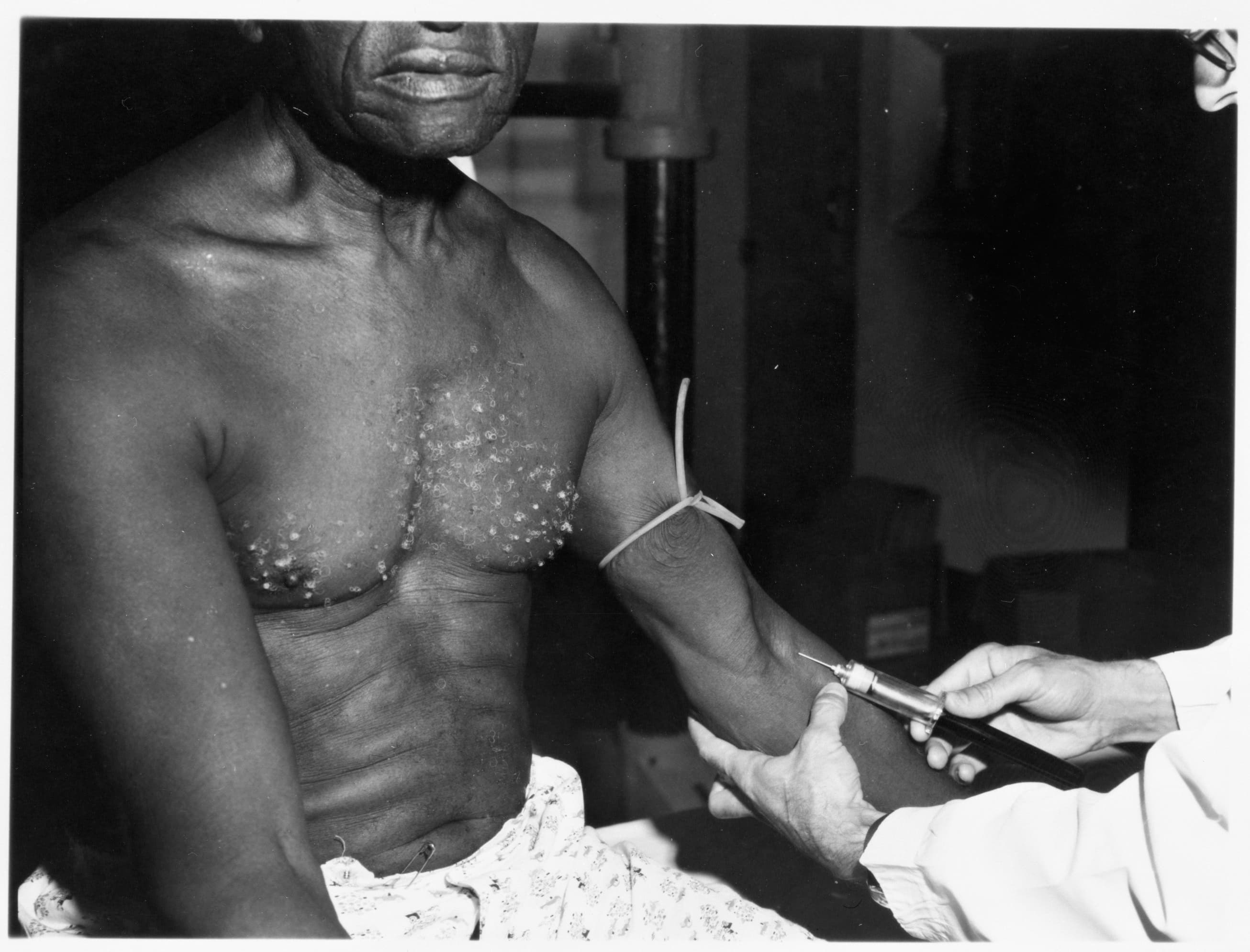
The study, conducted in Macon County, Alabama, recruited approximately 600 Black men, telling them they were receiving free healthcare for "bad blood," a catch-all term for various ailments. Researchers offered free meals, transportation, and medical exams as incentives. The real purpose was far different: the Public Health Service wanted to observe how untreated syphilis progressed in Black men, comparing the disease's natural course to earlier studies conducted on white men in Oslo.
When the study began, penicillin did not yet exist as a widely available treatment. But by the 1940s, penicillin became the standard cure for syphilis. The researchers knew this. They continued the study anyway, now actively denying treatment to men who could have been cured. Study administrators even sent letters to local draft boards ensuring that participants wouldn't be drafted into military service—where they might receive penicillin treatment that would ruin the research.
The dismissal of early concerns followed a predictable pattern. When medical staff questioned the ethics of withholding treatment, they were overruled by leadership. The study had institutional legitimacy. It was conducted by a government agency, approved by local health departments, and published in respected medical journals. Its existence was not secret. The American Journal of Public Health published reports from the study. Yet this very legitimacy—the fact that it was official, documented, and peer-reviewed—made it easier to ignore the fundamental question: Was this ethical?
The evidence that proved the claim true came partly from the researchers' own records. Internal memos and study documentation revealed the deliberate withholding of penicillin treatment. But the most decisive proof came from a whistleblower. In 1972, Peter Buxtun, a venereal disease investigator who had worked on the study, leaked information to journalist Jean Heller at the Associated Press. Heller's investigation brought the experiment into public view. Within weeks, the study was shut down and an official apology was issued.
What emerged was the uncomfortable reality that the study had never been secret—it had simply been ignored by institutions that should have questioned it earlier. Medical boards knew about it. Government officials knew about it. The silence wasn't due to lack of information. It was due to the devalued status of the subjects: poor, rural Black men whose suffering was deemed acceptable in the name of science.
The Tuskegee study matters not because it was a hidden conspiracy, but because it was a systemic failure of oversight and ethics that operated in plain sight for 40 years. It revealed that official sanction and institutional legitimacy are not the same as moral authority. For many African Americans, it became the defining symbol of medical mistrust—a wound that shaped attitudes toward the healthcare system for generations. The lesson remains urgent: institutions require scrutiny precisely when they claim legitimacy.
Get the 5 biggest receipts every week, straight to your inbox — plus an exclusive PDF: The Top 10 Conspiracy Theories Proven True in 2025-2026. No spam. No agenda. Just the papers they couldn't hide.
You just read "Tuskegee Syphilis Study let Black men die untreated to obser…". We send ones like this every week.
No one's said anything yet. Be the first to drop your take.