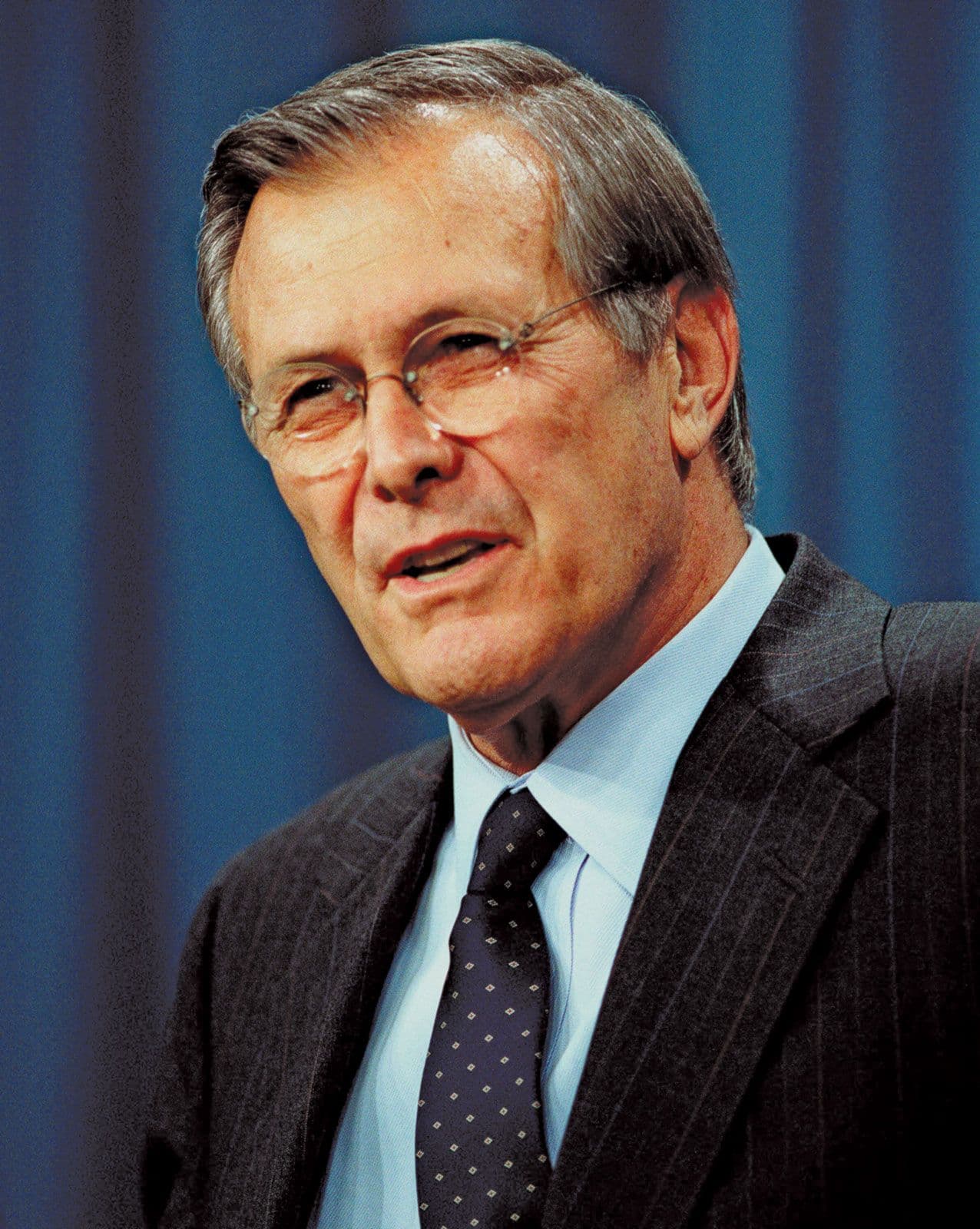
The FDA placed a stay on aspartame approval in 1975 after discovering 'serious shortcomings' in all 15 long-term studies submitted by G.D. Searle. A grand jury investigation was requested but the US Attorney withdrew after considering a job at Searle's law firm. When Rumsfeld (Searle's CEO) helped elect Reagan, the new FDA Commissioner Arthur Hayes approved aspartame within months — against the conclusions of FDA toxicologists and an independent Board of Inquiry. Hayes then left the FDA to join Searle's PR firm.
“The FDA commissioner approved aspartame overriding the conclusions of FDA toxicologists and independent experts who found the safety data insufficient.”
From “crazy” to confirmed
The Claim Is Made
This is the moment they called it crazy.
The story of aspartame and Donald Rumsfeld is one of the most disturbing examples of corporate corruption in FDA history. How did a chemical sweetener that FDA scientists rejected twice for causing brain tumors in lab animals end up in thousands of food products worldwide? The answer involves one of the most powerful men in American politics, a newly installed FDA commissioner, and a revolving door that would make any lobbyist blush.
Aspartame was first developed by G.D. Searle & Company in the 1960s. When the company applied for FDA approval, the agency's own toxicologists flagged serious problems. In 1975, the FDA placed a formal stay on aspartame approval after finding "serious shortcomings" in all 15 long-term safety studies Searle had submitted.
These were not minor paperwork issues. FDA investigators discovered manipulated data, tumors removed from test animals without documentation, and animals reported as dead that were later found alive. The aspartame safety data was so problematic that in 1977, the FDA asked the U.S. Attorney's office to convene a grand jury to investigate whether Searle had committed fraud in its testing.
But the grand jury investigation never happened. The U.S. Attorney assigned to the case, Samuel Skinner, withdrew after being offered a position at Sidley & Austin — the law firm representing G.D. Searle. The investigation was handed to a new attorney, the statute of limitations expired, and the case died quietly.
In 1977, G.D. Searle hired Donald Rumsfeld as its new CEO. Rumsfeld was not a pharmaceutical executive — he was a political heavyweight who had served as Secretary of Defense under Gerald Ford and White House Chief of Staff before that. His hiring was strategic. Searle didn't need a better scientist. They needed political connections.
Get the 5 biggest receipts every week, straight to your inbox — plus an exclusive PDF: The Top 10 Conspiracy Theories Proven True in 2025-2026. No spam. No agenda. Just the papers they couldn't hide.
You just read "Aspartame was approved after Searle CEO Donald Rumsfeld used…". We send ones like this every week.
No one's said anything yet. Be the first to drop your take.
Confirmed: They Were Right
The truth comes out. Officially documented.
Confirmed: They Were Right
The truth comes out. Officially documented.
The aspartame Donald Rumsfeld connection became crystal clear after the 1980 presidential election. Rumsfeld was part of Ronald Reagan's transition team and a major campaign supporter. According to a former Searle salesperson quoted in multiple investigations, Rumsfeld told company employees he would "call in his markers" to get aspartame approved. Whether those exact words were used, what happened next speaks for itself.
On the day Ronald Reagan took office — January 21, 1981 — the outgoing FDA commissioner's authority to block aspartame was effectively over. Reagan appointed Arthur Hull Hayes Jr. as the new FDA commissioner. Hayes had no background in food safety regulation.
Within months, Hayes approved aspartame for use in dry foods, overruling the FDA's own Board of Inquiry — a panel of independent scientists who had recommended against approval, citing unresolved questions about brain tumor data. In 1983, Hayes expanded the approval to include carbonated beverages, the biggest market for the sweetener.
The aspartame FDA approval process had been stalled for over a decade by career scientists who found the evidence insufficient. It took one political appointment to reverse all of that.
After leaving the FDA in late 1983 amid controversy over accepting corporate gifts, Arthur Hayes took a position as a consultant for Burson-Marsteller — the public relations firm representing G.D. Searle. The regulator who approved aspartame went to work for the company that made it.
This wasn't a quiet move years later. This was a direct transition that confirmed what critics had suspected: Hayes's decision may have been influenced by anticipated career rewards. The aspartame controversy wasn't just about chemistry — it was about corruption.
Here is the documented sequence of events:
- **1975**: FDA finds "serious shortcomings" in all Searle aspartame studies, places stay on approval
- **1977**: FDA requests grand jury investigation into Searle's testing fraud
- **1977**: U.S. Attorney withdraws from case, takes job at Searle's law firm
- **1977**: Donald Rumsfeld becomes CEO of G.D. Searle
- **1980**: Rumsfeld actively supports Reagan's presidential campaign
- **1981**: Reagan appoints Arthur Hayes as FDA Commissioner
- **1981**: Hayes approves aspartame, overruling FDA scientists and Board of Inquiry
- **1983**: Hayes expands aspartame approval to soft drinks
- **1983**: Hayes leaves FDA, joins Searle's PR firm
- **1985**: Monsanto acquires G.D. Searle, inheriting aspartame profits
The scientific debate about aspartame safety continues decades later. In 2023, the WHO's International Agency for Research on Cancer classified aspartame as "possibly carcinogenic to humans." Meanwhile, the FDA maintains its position that aspartame is safe at approved levels.
But the real issue was never just about whether aspartame is safe or dangerous. The aspartame Rumsfeld story exposes how the regulatory system meant to protect public health can be hijacked by political connections and corporate influence. When career FDA toxicologists spend years raising safety concerns and a political appointee overrules them within months, the process itself is compromised.
The Rumsfeld aspartame connection is a textbook case of regulatory capture — where the agency meant to regulate an industry becomes controlled by that industry instead. Every element is present: suppressed investigations, political appointments, overruled scientists, and a revolving door between the regulator and the regulated.
Whether you consume aspartame or avoid it, the story of how it was approved should concern everyone who trusts that the FDA is making decisions based on science rather than politics.
Beat the odds
This had a 0.7% chance of leaking — someone talked anyway.
Conspirators
~300Network
Secret kept
5.5 years
Time to 95% exposure
500+ years