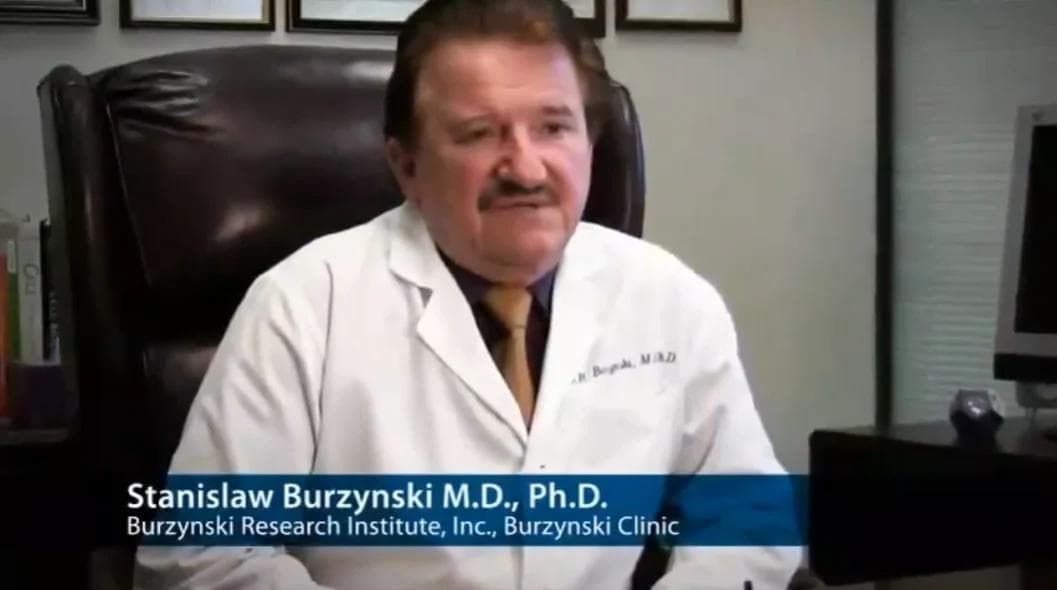
Since the 1970s, Dr. Stanislaw Burzynski has claimed his antineoplaston therapy can treat certain cancers. The FDA and Texas Medical Board repeatedly tried to shut him down, bringing criminal charges in the 1990s. He was acquitted of all 75 counts in 1997. Some patients reported results. However, no randomized controlled trials have proven efficacy, and the FDA cited numerous protocol violations. The case represents the tension between innovation persecution and the need for rigorous evidence.
“The FDA is persecuting Dr. Burzynski because his therapy threatens the pharmaceutical industry's cancer treatment monopoly.”
From “crazy” to confirmed
The Claim Is Made
This is the moment they called it crazy.
In 1997, a Texas physician named Dr. Stanislaw Burzynski walked out of a federal courthouse acquitted of all 75 criminal charges brought against him by the U.S. government. Yet the victory felt hollow. His experimental cancer treatment, which he had been developing since the 1970s, remained scientifically unproven and largely inaccessible to patients—exactly where federal regulators had worked to keep it for two decades.
The story of Dr. Burzynski's antineoplaston therapy sits uncomfortably at the intersection of medical innovation and patient protection, raising questions about who gets to decide what treatments deserve investigation and under what circumstances regulators can effectively block a doctor's work.
Burzynski's claims were straightforward. He had identified compounds he called antineoplastons—naturally occurring peptides and amino acid derivatives—that he believed could treat certain cancers, particularly brain tumors. Beginning in the 1970s, he began treating patients with these compounds outside conventional chemotherapy frameworks. Some patients reported positive outcomes. Others traveled significant distances seeking his treatments. Word spread, particularly among desperate cancer patients who had exhausted standard options.
The FDA and Texas Medical Board saw things differently. From the 1980s onward, they aggressively pursued enforcement action against Burzynski's clinic. They cited protocol violations, inadequate records, and lack of rigorous clinical evidence. In 1995, federal prosecutors indicted him on charges including mail fraud and drug distribution without approval. The case seemed straightforward: an unlicensed practice operating outside established medical channels.
But the trial revealed complications the regulatory narrative had glossed over. Burzynski's legal defense highlighted the FDA's own inconsistencies and the documented cases of cancer patients who had experienced remission under his care. In March 1997, a jury acquitted him on every count. The government's case had failed to convince ordinary citizens that criminal intent existed.
Get the 5 biggest receipts every week, straight to your inbox — plus an exclusive PDF: The Top 10 Conspiracy Theories Proven True in 2025-2026. No spam. No agenda. Just the papers they couldn't hide.
You just read "Dr. Burzynski's cancer treatment was targeted by the FDA for…". We send ones like this every week.
No one's said anything yet. Be the first to drop your take.
Yet acquittal did not vindicate antineoplaston therapy. The American Cancer Society notes that no randomized controlled trials—the gold standard in medical research—have demonstrated efficacy for the treatment. The FDA's concerns about protocol violations and data integrity were documented and substantive, not merely bureaucratic obstruction. Burzynski had conducted clinical trials, but the scientific establishment remained unconvinced the evidence met rigorous standards.
This is where the case becomes genuinely complex. The acquittal proved the government overreached in criminalizing the physician. But it did not prove the therapy works. Anecdotal reports and patient testimonies, however compelling, are not equivalent to scientific proof. Some patients recovered; others did not. Without controlled comparisons and transparent data, distinguishing Burzynski's treatment effect from spontaneous remission or the placebo effect becomes impossible.
The case matters precisely because it resists easy resolution. If regulators can criminally prosecute physicians for treating patients with unproven therapies, they wield extraordinary power over medical practice. But if rigorous scientific standards are dismissed as mere bureaucratic gatekeeping, the protection they offer vanishes. A patient who recovers on an unproven treatment still recovered—but the next patient, lacking evidence-based guidance, may be harmed.
What remains is a cautionary tale about institutional overreach and institutional skepticism coexisting in the same story. Burzynski was wrongly prosecuted, but his therapy never crossed the threshold into accepted medicine. The question for regulators, scientists, and patients today remains unresolved: how do we encourage genuine innovation while maintaining the evidentiary standards that protect people from false hope?
Beat the odds
This had a 3.4% chance of leaking — someone talked anyway.
Conspirators
~200Network
Secret kept
43.3 years
Time to 95% exposure
500+ years