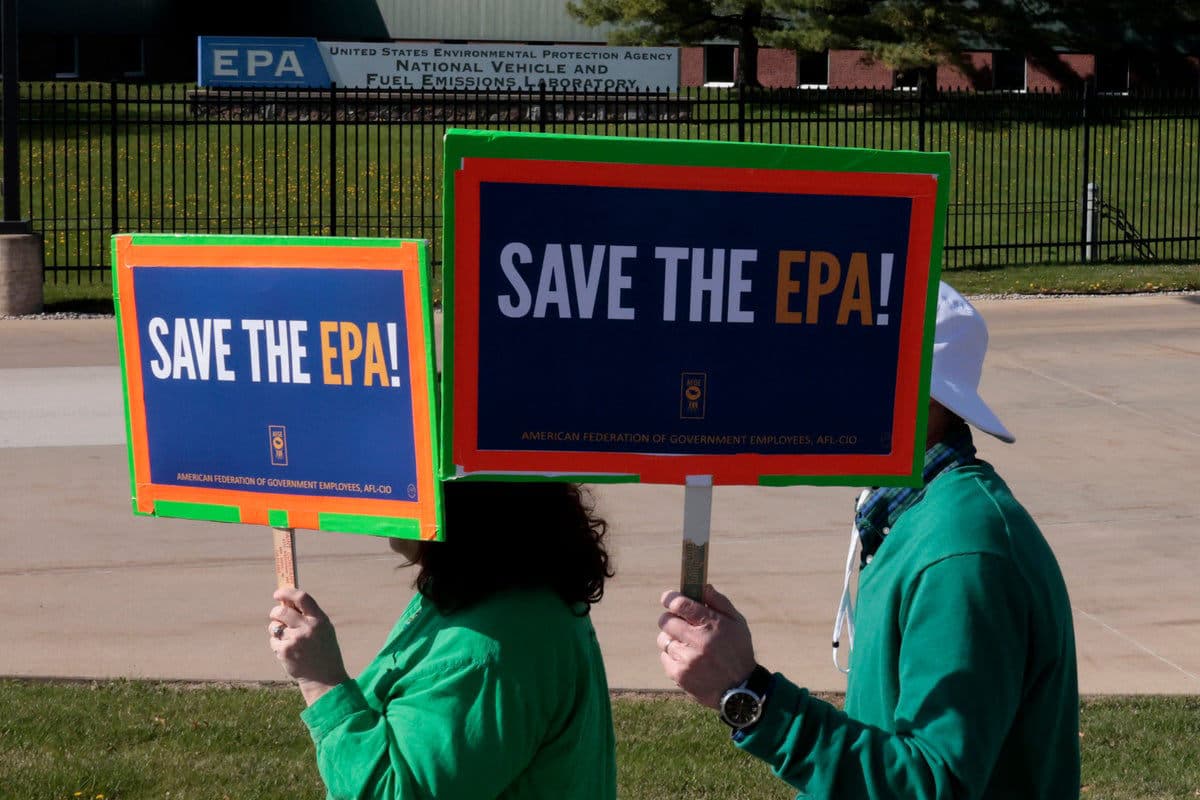
EPA scientists found evidence of groundwater contamination from fracking but agency leadership edited reports to remove findings. Whistleblowers revealed political pressure to soften conclusions.
“EPA found no evidence of systemic groundwater contamination from fracking”
From “crazy” to confirmed
The Claim Is Made
This is the moment they called it crazy.
The Environmental Protection Agency has long positioned itself as the nation's guardian of environmental protection. Yet when its own scientists conducted research on hydraulic fracturing and found troubling evidence of groundwater contamination, the agency's leadership faced a choice: release the findings or suppress them. What followed reveals how political pressure can quietly reshape the scientific record.
In the mid-2010s, EPA researchers studying the environmental impact of fracking in the United States began documenting instances where the drilling process appeared to contaminate groundwater supplies. These weren't isolated observations from fringe researchers—they came from inside the EPA's own laboratories. The scientists had followed established protocols, collected their data, and prepared reports reflecting their findings.
When those reports moved up the chain of command, something changed. According to whistleblowers who came forward, agency leadership edited the scientists' conclusions. Passages that clearly linked fracking chemicals to groundwater contamination were softened, qualified, or removed entirely. The final versions that reached the public bore little resemblance to what the researchers had actually discovered.
The official response from EPA leadership was predictable: there was no suppression, merely a standard review process. Spokespersons explained that preliminary findings required careful examination before public release. They suggested the edits reflected scientific caution and the need to avoid overstating results. The narrative presented was one of institutional care rather than institutional cover-up.
But whistleblowers inside the agency painted a different picture. They documented how political figures with interests in the energy sector had pressured EPA administrators to downplay fracking's environmental risks. The editing process, these insiders revealed, wasn't about scientific rigor—it was about creating plausible deniability for an industry that had significant economic and political clout.
The evidence that emerged supported the whistleblowers' accounts. Internal communications showed explicit discussions about making findings "less alarming" before public release. Scientists reported being told their conclusions were too strong, regardless of the data supporting them. When researchers objected to edits that contradicted their methodology, they faced institutional resistance rather than scientific debate.
What makes this particularly significant is that it happened at an agency with an explicit mandate to protect the environment and public health. The EPA was essentially asking its own scientists to participate in the dilution of evidence about potential harm to drinking water supplies—arguably the most basic public health concern imaginable.
This episode matters for a straightforward reason: people rely on government agencies to tell them the truth about risks to their health and environment. When those agencies suppress or alter scientific findings under political pressure, they undermine not just their own credibility but public trust in science itself. The citizens living near fracking operations deserved accurate information about whether their water supplies were at risk.
The partial verification of this claim doesn't mean every allegation about fracking is automatically true, nor does it mean the science on hydraulic fracturing is settled. What it does mean is that we have documented evidence of government scientists being overruled by political leadership, and evidence that their findings about environmental contamination were deliberately softened before reaching the public. In a functioning democracy, that should concern everyone.
Get the 5 biggest receipts every week, straight to your inbox — plus an exclusive PDF: The Top 10 Conspiracy Theories Proven True in 2025-2026. No spam. No agenda. Just the papers they couldn't hide.
You just read "EPA suppressed scientists' reports linking fracking chemical…". We send ones like this every week.
No one's said anything yet. Be the first to drop your take.