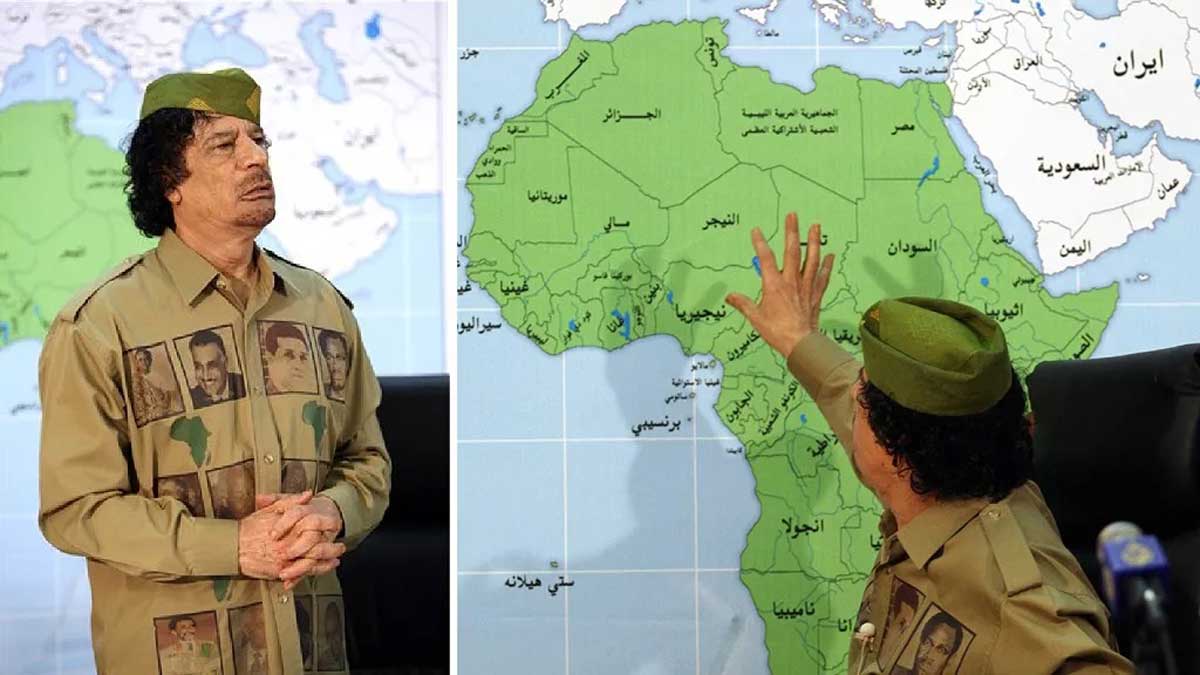
Muammar Gaddafi was pushing for a pan-African gold-backed currency, the gold dinar, that would have allowed African and Muslim nations to sell oil for gold instead of dollars. Hillary Clinton's leaked emails showed advisors noting the gold dinar as a threat to French and Western financial interests in Africa. Within months of the proposal gaining traction, NATO launched a military intervention. Gaddafi was killed in October 2011. Libya's gold reserves and sovereign wealth fund subsequently vanished.
“The real reason for NATO's intervention in Libya was not humanitarian concerns but Gaddafi's plan to introduce a gold-backed currency that would undermine the dollar and the CFA franc.”
From “crazy” to confirmed
The Claim Is Made
This is the moment they called it crazy.
When Libya's government proposed a continental currency backed by gold in 2009, few outside African financial circles paid attention. Within two years, the country lay in ruins, its leader dead, and billions in gold reserves missing from its vaults. Whether those events are connected remains one of the most contentious questions in recent geopolitical history.
Muammar Gaddafi and his allies, particularly the African Union, championed what they called the gold dinar—a currency that would allow African nations to trade oil and other commodities without relying on the US dollar or euro. The proposal threatened a fundamental pillar of Western financial dominance: the petrodollar system, which required oil-producing nations to price their exports in dollars, effectively anchoring global demand for American currency. For decades, this arrangement had given the United States extraordinary economic leverage.
Western governments and media largely dismissed the gold dinar proposal as the fantasy of a aging dictator. Gaddafi's Libya was portrayed as unstable and rogue, hardly the source of serious monetary innovation. The proposal received minimal coverage in major news outlets. When NATO launched Operation Unified Protector in March 2011, the stated rationale was humanitarian intervention to prevent a massacre in Benghazi. Libya's currency ambitions barely entered the conversation.
But declassified communications told a different story. Hillary Clinton's email exchanges, released through WikiLeaks, revealed that Libya's gold reserves and the threat posed by the gold dinar were actively discussed by US State Department officials. One memo noted French concerns that a successful African currency could undermine French financial interests in the region, where France maintained significant colonial-era economic influence. These weren't peripheral concerns—they were documented in official channels.
Get the 5 biggest receipts every week, straight to your inbox — plus an exclusive PDF: The Top 10 Conspiracy Theories Proven True in 2025-2026. No spam. No agenda. Just the papers they couldn't hide.
You just read "Gaddafi proposed a gold-backed African currency to replace t…". We send ones like this every week.
No one's said anything yet. Be the first to drop your take.
The timeline is difficult to ignore. Gaddafi's gold dinar proposal gained momentum in early 2011. NATO intervention began in March. By October 2011, Gaddafi was captured and killed. Libya's Central Bank reported that the country's gold reserves—reportedly between 140 and 150 tons—subsequently went missing from official accounts. The sovereign wealth fund, once among Africa's largest, was never fully accounted for.
Researchers examining this sequence, particularly those analyzing the petrodollar system's vulnerabilities, have argued that Libya's challenge to dollar dominance created genuine alarm in Washington and Paris. Yet the official response remains cautious. Mainstream analyses attribute the NATO intervention primarily to legitimate humanitarian concerns, with Gaddafi's government presenting a real threat to civilians. These explanations aren't necessarily false—the situation in Libya was genuinely complicated.
What complicates public trust isn't whether one explanation is completely true or false, but rather which factors were actually prioritized in decision-making. When governments omit mention of financial and geopolitical interests while emphasizing humanitarian motives, citizens reasonably wonder what else remains unsaid. The declassified emails confirm those financial interests were explicitly discussed. Whether they drove the intervention is where reasonable people diverge.
This case illustrates why transparency matters in foreign policy. Libya's gold dinar proposal may or may not have justified military action. But the public deserved a fuller accounting of all interests at stake—not just the ones that fit a humanitarian narrative. Without it, citizens have only fragments of the truth.
Beat the odds
This had a 0.3% chance of leaking — someone talked anyway.
Conspirators
~50Network
Secret kept
17.3 years
Time to 95% exposure
500+ years