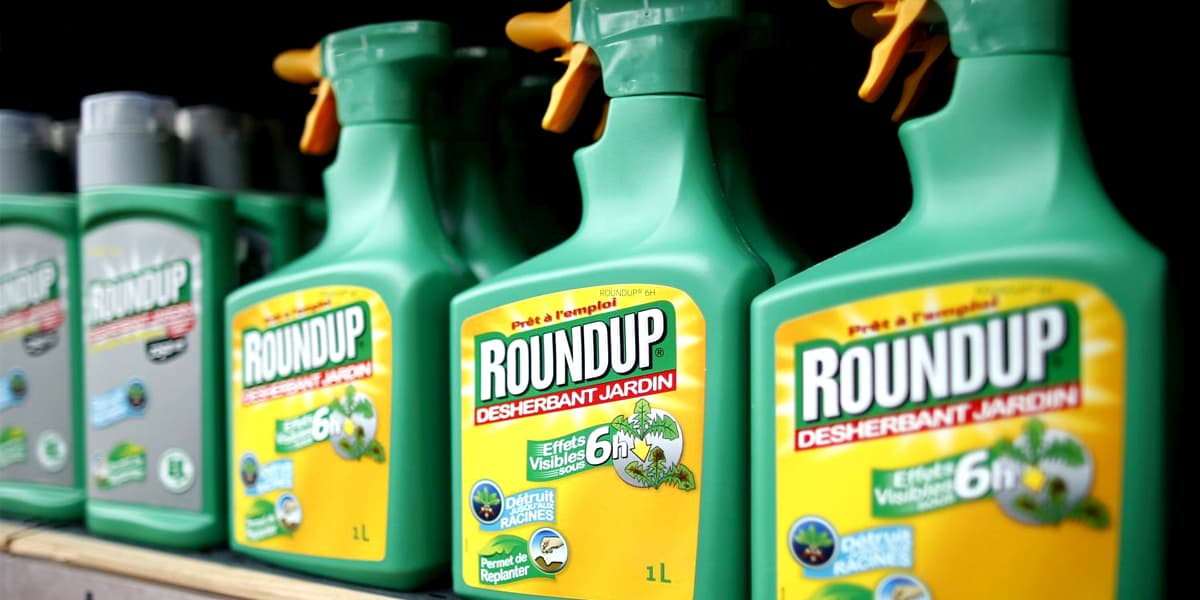
Internal Monsanto emails revealed company scientists ghostwrote academic papers and paid researchers to publish studies downplaying glyphosate cancer risks. The WHO classified glyphosate as a probable carcinogen in 2015.
“Glyphosate does not cause cancer and poses no risk to human health”
From “crazy” to confirmed
The Claim Is Made
This is the moment they called it crazy.
When you read a peer-reviewed study in a scientific journal, there's an implicit assumption: the researchers whose names appear on the paper actually wrote it. That assumption, it turns out, was naive. Internal Monsanto documents revealed through litigation showed that the company had systematically ghostwritten scientific papers defending its flagship herbicide Roundup, then paid academics to put their names on the work and publish it as independent research.
For decades, Monsanto maintained that glyphosate—the active ingredient in Roundup—was safe for human use. The company pointed to published studies as evidence. Regulators relied on this research. Farmers sprayed millions of gallons of the herbicide across crops worldwide. The narrative was clean: independent scientists had studied the chemical and found no cancer risk.
The dismissal of concerns came from official channels. Regulatory agencies including the U.S. Environmental Protection Agency repeatedly affirmed Roundup's safety. When the World Health Organization's International Agency for Research on Cancer classified glyphosate as a "probable human carcinogen" in 2015, pushed back hard. The company questioned the WHO's methodology and cited its own body of supporting research. The implication was clear: those worried about cancer risks simply didn't understand the science.
Get the 5 biggest receipts every week, straight to your inbox — plus an exclusive PDF: The Top 10 Conspiracy Theories Proven True in 2025-2026. No spam. No agenda. Just the papers they couldn't hide.
You just read "Monsanto ghostwrote studies claiming Roundup herbicide was s…". We send ones like this every week.
No one's said anything yet. Be the first to drop your take.
What changed everything was litigation. Thousands of people who used Roundup sued Monsanto, claiming the herbicide caused their non-Hodgkin lymphoma. During the discovery process—where companies must hand over internal documents—a damaging pattern emerged. Email exchanges between Monsanto scientists and outside researchers showed the company didn't just fund studies; it orchestrated them. Company scientists wrote drafts of papers, controlled the narrative, and then recruited academics to serve as the official authors.
One particularly revealing set of emails showed Monsanto discussing how to use third-party researchers to create the appearance of independent scientific support. The company wasn't simply funding research; it was manufacturing the appearance of independent research. This distinction matters enormously. A study published under a university researcher's name carries different weight than a paper clearly labeled as company-sponsored science.
The evidence mounted through these court-disclosed documents. Internal communications showed Monsanto was aware of concerning toxicology data while simultaneously pushing out studies claiming safety. The company had essentially written much of the scientific literature it cited to defend its product. Regulators and the public had been reading Monsanto's own arguments, dressed up in academic language and published under someone else's name.
This wasn't marginal scientific fraud. It was industrial-scale manufacturing of consent. And it worked. For years. The strategy delayed legitimate scrutiny and shaped public policy. Farmers continued applying a product that many regulators now view with suspicion, partly because they trusted research that wasn't actually independent.
The deeper problem this exposes is structural. Monsanto had resources and incentive to shape science in ways that individual researchers, however ethical, couldn't entirely resist. The company could offer grants, consulting fees, and the prestige of publication. It could identify which researchers might be cooperative. It could control the initial drafts.
The Monsanto papers don't prove Roundup is definitely dangerous—that remains genuinely contested science. What they prove is simpler and more troubling: when corporations write their own scientific defense and pay people to sign their names to it, the entire process becomes unreliable. Regulators based decisions on studies they believed were independent. That trust, once broken, is extraordinarily hard to rebuild.
Beat the odds
This had a 0.4% chance of leaking — someone talked anyway.
Conspirators
~100Network
Secret kept
9.2 years
Time to 95% exposure
500+ years