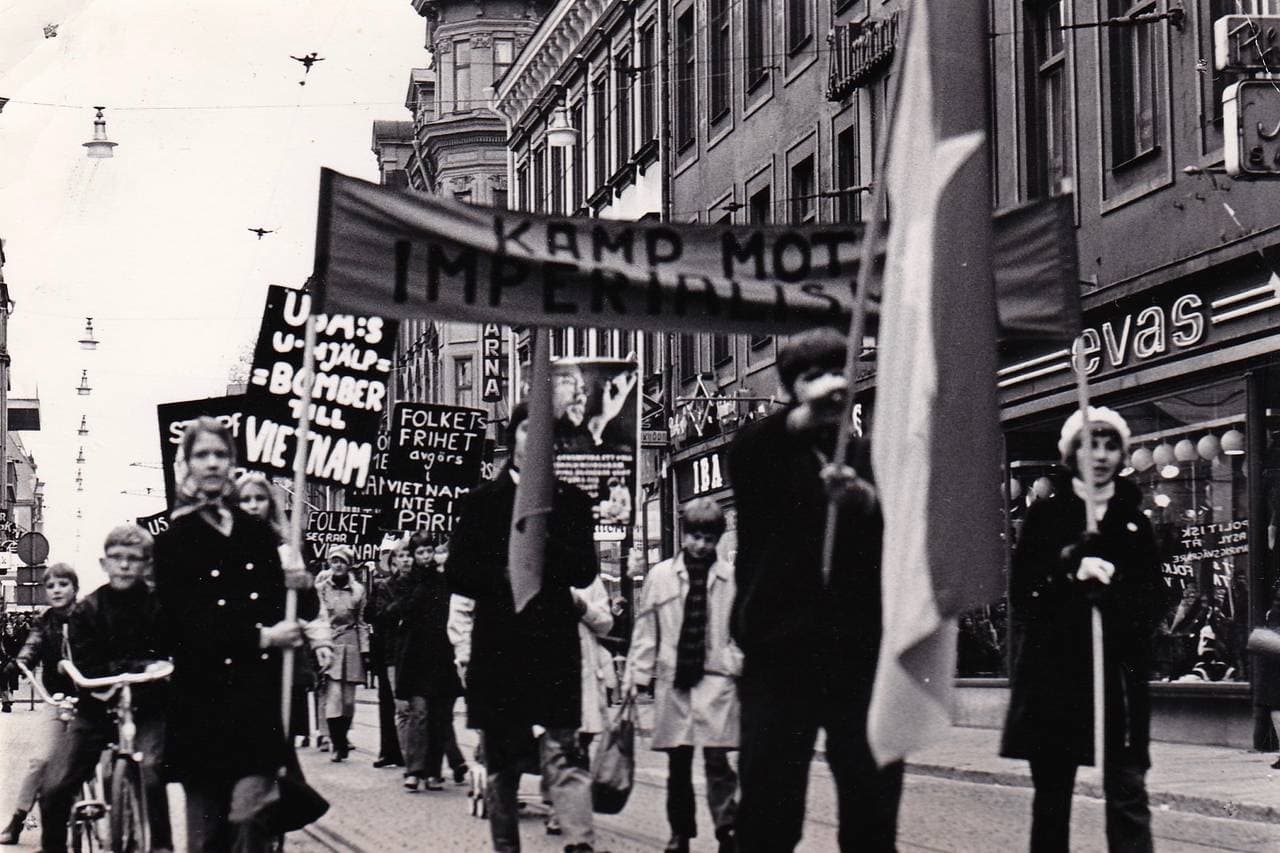
CIA domestic surveillance program created psychological profiles and monitored communications of war protesters from 1967-1974. Agency maintained files on 13,000 Americans and 1,000 organizations despite having no legal authority for domestic operations.
“CIA activities are focused exclusively on foreign intelligence gathering”
From “crazy” to confirmed
The Claim Is Made
This is the moment they called it crazy.
When the FBI knocked on doors in the 1960s and 70s, asking neighbors about anti-war activists, most Americans had no idea why. The government wasn't just watching protests—it was systematically building dossiers on thousands of citizens who had done nothing but exercise their constitutional rights.
Operation CHAOS began in 1967, born from a specific government worry: that foreign powers were orchestrating American anti-war protests. CIA Director Richard Helms created the program to answer a simple question that would justify extraordinary measures. Were communist countries really behind the Vietnam War resistance movement? The agency decided to find out by doing what no law permitted them to do—conduct large-scale domestic surveillance.
For years, the official line was solid denial. When activists and journalists raised concerns, they were dismissed as paranoid. The CIA was supposed to focus on foreign intelligence, not spy on American citizens. That was the FBI's job, the government insisted, and they followed the law. If the CIA was involved in anything domestically, it was minimal and always proper. These reassurances worked for a long time.
Then came proof. When Operation CHAOS documents were declassified and placed in the CIA Reading Room, the scale of the operation became undeniable. Between 1967 and 1974, the agency had compiled files on approximately 13,000 American citizens. They maintained records on roughly 1,000 domestic organizations. Agents infiltrated protest groups, recruited informants, and created detailed psychological profiles of activists. They intercepted mail, monitored communications, and tracked movements.
Get the 5 biggest receipts every week, straight to your inbox — plus an exclusive PDF: The Top 10 Conspiracy Theories Proven True in 2025-2026. No spam. No agenda. Just the papers they couldn't hide.
You just read "Operation CHAOS infiltrated anti-war groups and collected fi…". We send ones like this every week.
No one's said anything yet. Be the first to drop your take.
The agency had no legal authority to do any of this. Domestic operations weren't in their charter. The National Security Act that created the CIA specifically restricted it from law enforcement and internal security functions. Yet the program continued for seven years with minimal oversight, building one of the most extensive domestic surveillance databases ever assembled by a government agency.
What makes this verification particularly important is what was actually found. After scrutinizing thousands of Americans and hundreds of organizations, CHAOS investigators reached a conclusion that contradicted the entire justification for the program. There was no credible evidence that foreign powers were directing the anti-war movement. The protests were homegrown, organic, and driven by genuine American opposition to an unpopular war.
So the surveillance happened anyway. Americans were filed away, investigated, and tracked not because of actual criminal activity or foreign conspiracy, but because they exercised free speech at an inconvenient moment. The government discovered what it wanted to find was nowhere to be found, and continued looking anyway.
This matters because it reveals a pattern that doesn't stay in the past. Operation CHAOS wasn't an aberration—it was exposed because whistleblowers and subsequent investigations forced disclosure. How many similar programs existed without getting caught? The operation demonstrates that official denials about surveillance have limited reliability, that institutional safeguards can fail silently, and that citizens can be extensively monitored without their knowledge or consent.
When people today express skepticism about government assurances regarding surveillance, they're not being paranoid. They're being historically informed.
Unlikely leak
Only 9.8% chance this would come out. It did.
Conspirators
~500Large op
Secret kept
51.3 years
Time to 95% exposure
500+ years