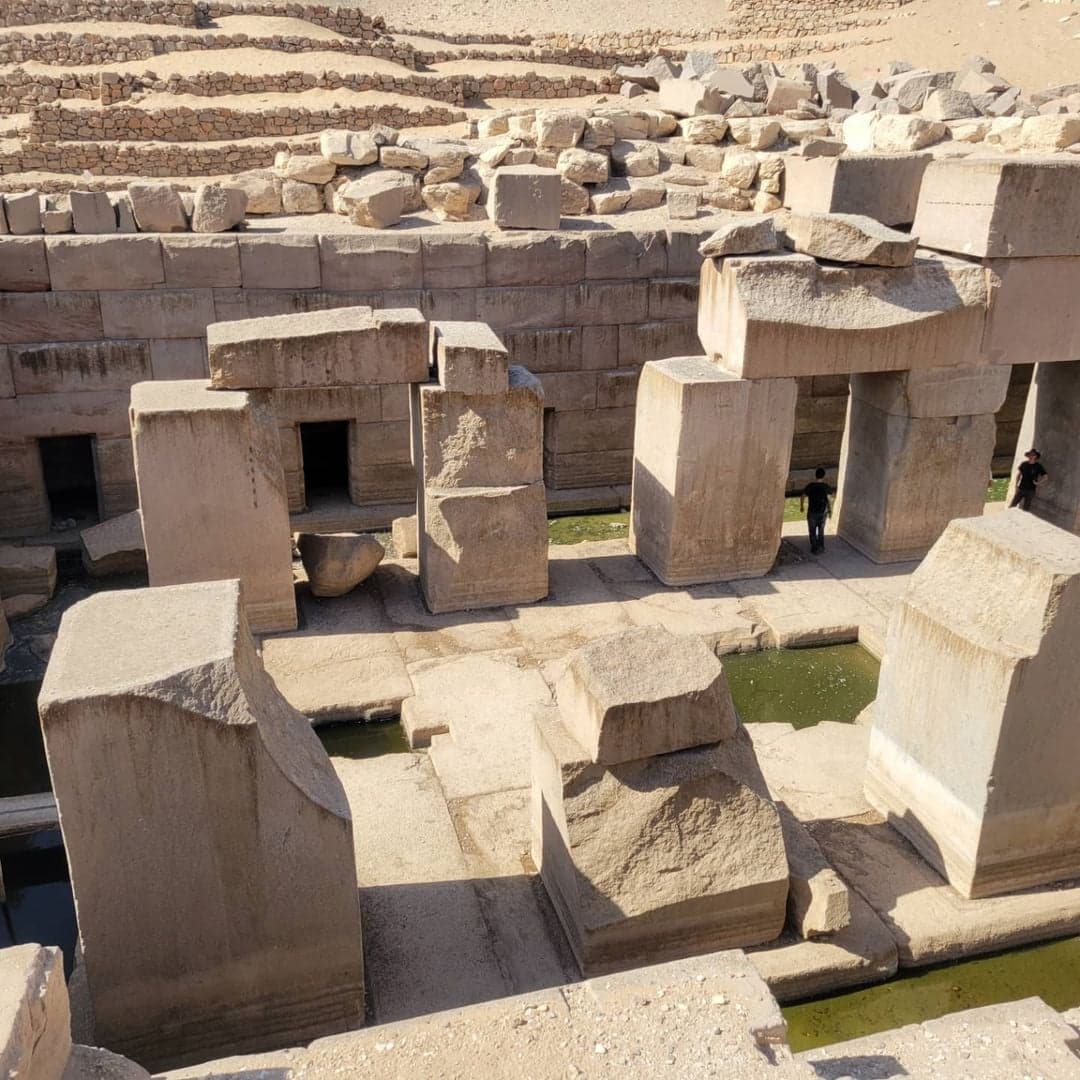
The Osireion at Abydos, Egypt features 100-tonne granite pillars and a construction style radically different from surrounding dynastic structures. Its underground chamber fills with water that cannot be permanently drained. Mainstream archaeology struggles to explain its age and purpose.
“The Osireion at Abydos, Egypt features 100-tonne granite pillars and a construction style radically different from surrounding dynastic structures. Its underground chamber fills with water that cannot be permanently drained. Mainstream archaeology struggles to explain its age and purpose.”
Behind the Temple of Seti I at Abydos lies a structure that Egyptologists have struggled to explain for over a century: the Osireion. Its construction defies the conventional timeline of Egyptian civilization.
The Osireion features 100-tonne granite pillars — among the largest stone blocks used in any Egyptian structure. Its construction technique is radically different from the surrounding Temple of Seti I. The underground chamber perpetually fills with groundwater that cannot be permanently drained, despite modern pumping attempts.
Mainstream archaeology dates the Osireion to Seti I (circa 1280 BC). But the construction style more closely resembles the Valley Temple at Giza — which some researchers argue is far older. The Osireion sits significantly below the level of surrounding structures, suggesting it was built when the ground level was much lower.
If the Osireion predates dynastic Egypt, it would indicate a sophisticated civilization existed in the region far earlier than the accepted timeline — consistent with the emerging picture from Gobekli Tepe, Karahan Tepe, and other anomalous sites.
Get the 5 biggest receipts every week, straight to your inbox — plus an exclusive PDF: The Top 10 Conspiracy Theories Proven True in 2025-2026. No spam. No agenda. Just the papers they couldn't hide.
You just read "Egypt's Osireion has 100-tonne granite pillars and water tha…". We send ones like this every week.
No one's said anything yet. Be the first to drop your take.