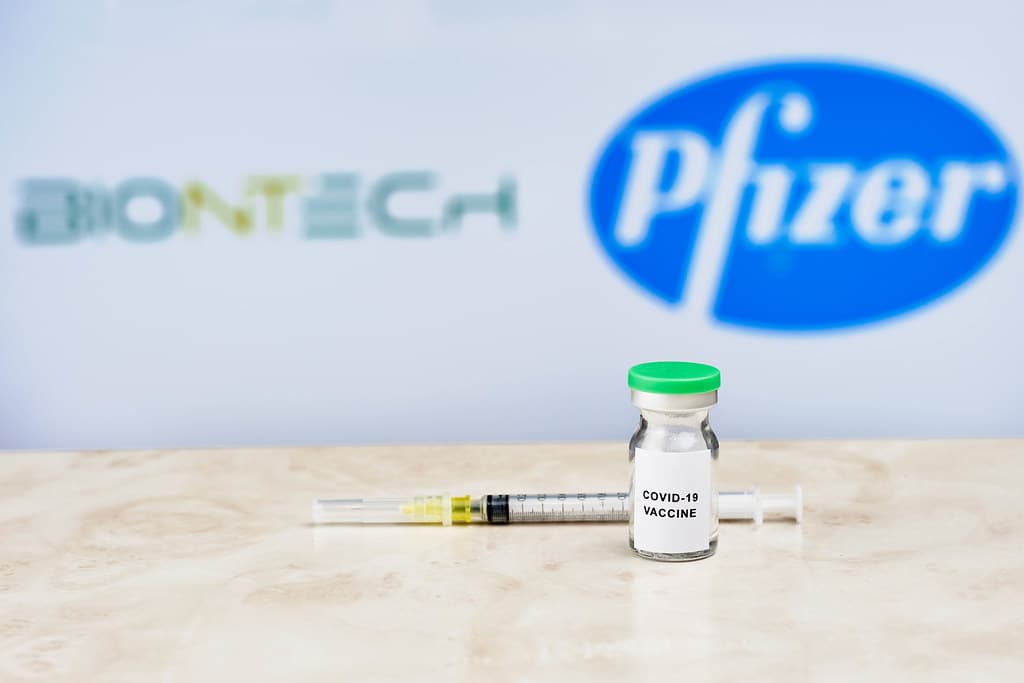
Brook Jackson: falsified data, unqualified staff. Reported to FDA, fired. FDA inspected 9/153 sites - none hers.
“Falsified data. FDA inspected 9 of 153 sites. NONE were hers.”
What they said vs. what the evidence shows
“Government concluded no impact on findings.”
— Pfizer · Feb 2022
SourceFrom “crazy” to confirmed
The Claim Is Made
This is the moment they called it crazy.
A clinical trial manager named Brook Jackson watched what she believed were serious problems unfold during Pfizer's pivotal Covid-19 vaccine trial. She documented what she saw: falsified data, unqualified staff administering injections, and patients who should have been removed from the study remaining enrolled. Rather than stay silent, Jackson reported her concerns to the Food and Drug Administration in September 2020.
What happened next is the subject of intense scrutiny. Jackson was fired from her position at the trial site in Texas shortly after making her report. More significantly, when the FDA conducted inspections of Pfizer's trial sites, they visited 9 out of 153 locations—and notably, none of them was the site where Jackson had worked and raised her concerns.
At the time, regulatory authorities and Pfizer maintained that the trial data was sound and that the vaccine's emergency use authorization was warranted. The company and federal officials dismissed concerns about trial integrity as isolated complaints that didn't reflect systemic problems. The narrative presented to the public was one of a well-run, transparent process with appropriate oversight.
But Jackson's documentation told a different story. She had internal emails, photos of trial conditions, and records of protocol deviations. She was able to show instances where data appeared to have been altered, where staff lacked proper training, and where patients remained in the study despite meeting exclusion criteria. Most damning was the pattern: the FDA's inspection strategy seemed to avoid the very site raising the loudest alarm bells.
Get the 5 biggest receipts every week, straight to your inbox — plus an exclusive PDF: The Top 10 Conspiracy Theories Proven True in 2025-2026. No spam. No agenda. Just the papers they couldn't hide.
You just read "Pfizer trial: falsified data, unblinded patients - FDA never…". We send ones like this every week.
No one's said anything yet. Be the first to drop your take.
Source: Pfizer trial: falsified data, unblinded patients - FDA never inspected whistlebl
The lack of FDA inspection at Jackson's site is particularly significant because it raises questions about how the agency's oversight was conducted. If a whistleblower makes credible allegations at a specific location, one might reasonably expect that location to be prioritized for inspection, not avoided. The FDA's decision to inspect only 5.9 percent of trial sites, and to exclude the site with documented complaints, suggests either a failure in how reports were processed or an inspection strategy that didn't prioritize investigating specific allegations.
Jackson's case highlights a systemic vulnerability in how drug trials are monitored. Whistleblowers depend on regulatory agencies to take their reports seriously and to follow up appropriately. When the FDA conducts selective inspections that somehow miss the site with the most detailed complaints on record, it undermines public confidence in the oversight process itself.
This matters beyond the specifics of one trial or one vaccine. It matters because clinical trials are how we determine whether drugs are safe and effective. They are the foundation upon which regulatory decisions rest. If the process for investigating concerns about trial integrity is inadequate, then the entire system of pharmaceutical oversight becomes questionable.
The documentation Jackson provided has forced a reckoning with how the trial was actually conducted versus how it was officially represented. While authorities have tried to minimize the significance of her findings, the existence of the complaints and the FDA's apparent failure to investigate them thoroughly cannot be erased.
For public trust in pharmaceutical regulation to survive, agencies must demonstrate they will rigorously investigate allegations from qualified whistleblowers, not sidestep them. Jackson's experience suggests that didn't happen here.
Beat the odds
This had a 0.5% chance of leaking — someone talked anyway.
Conspirators
~300Network
Secret kept
4.5 years
Time to 95% exposure
500+ years