Signed July 24, 2001. $3.55B policy. Argued two planes = two occurrences, sought $7.1B. Court: $4.55B. Terrorism insurance was standard pre-9/11.
“Lucky Larry insures WTC against terrorism 7 weeks before 9/11, tries to collect DOUBLE.”
What they said vs. what the evidence shows
“Contractually required insurance.”
— Snopes · Jan 2003
SourceFrom “crazy” to confirmed
The Claim Is Made
This is the moment they called it crazy.
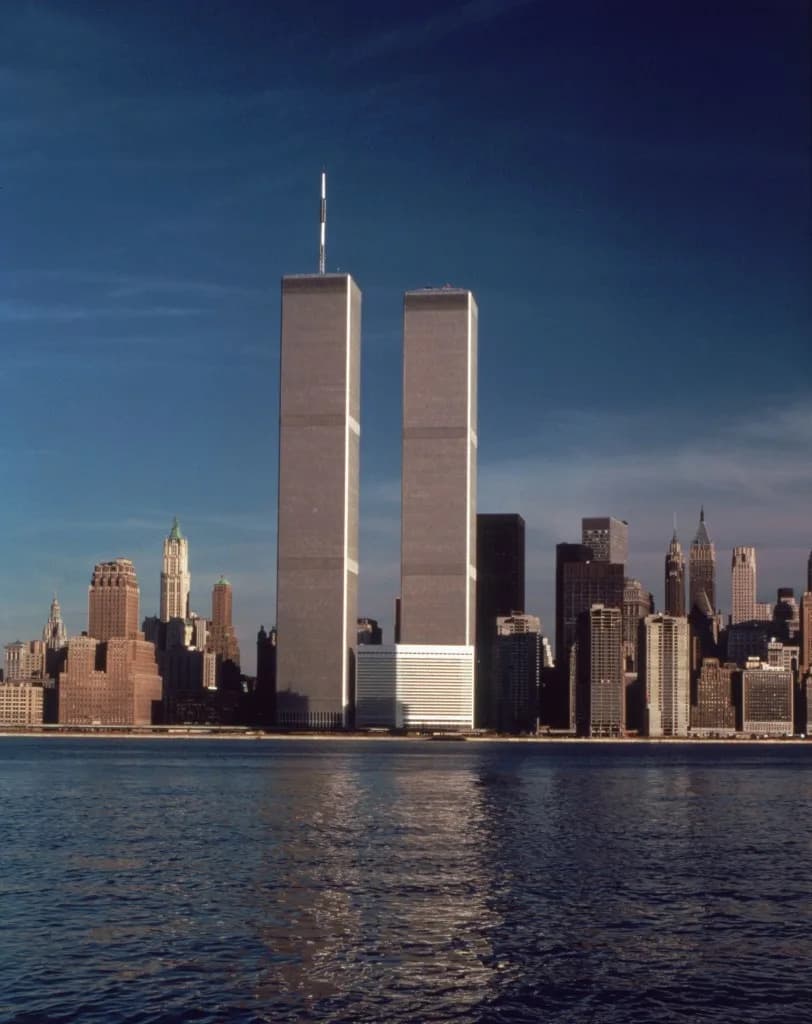
In July 2001, just seven weeks before the World Trade Center attacks, real estate developer Larry Silverstein signed a 99-year lease on the Twin Towers. The deal was financed with $3.55 billion in insurance coverage against terrorism—a detail that would later fuel claims of suspicious foreknowledge and financial motive.
The specifics matter here. Silverstein's lease agreement, signed on July 24, 2001, included comprehensive property insurance that explicitly covered acts of terrorism. At the time, this was unusual enough to warrant attention, though not unprecedented. What made it genuinely remarkable was what happened after September 11th.
Following the attacks, Silverstein's insurance companies faced a defining legal question: should the destruction of both towers count as one catastrophic event or two separate occurrences? The distinction was crucial. The policy language allowed for $3.55 billion per occurrence. If two planes hitting two buildings constituted two separate events, Silverstein could theoretically claim $7.1 billion—double the standard payout.
This is where the narrative typically gets weaponized. Conspiracy theorists seized on the timing and the potential payday as evidence of insider knowledge or involvement. The argument went like this: Silverstein acquired the lease weeks before 9/11, immediately insured it against terrorism, then profited enormously when the attacks occurred. The implication was clear, if unstated: he knew what was coming.
Courts and official investigations, however, had a different view. did pursue the double-occurrence claim, and the case went to litigation. Eventually, a federal judge ruled against him, determining that the two planes hitting the towers constituted a single event rather than two separate occurrences. The final settlement was $4.55 billion, not $7.1 billion.
Get the 5 biggest receipts every week, straight to your inbox — plus an exclusive PDF: The Top 10 Conspiracy Theories Proven True in 2025-2026. No spam. No agenda. Just the papers they couldn't hide.
You just read "Silverstein signed WTC lease with $3.55B terrorism insurance…". We send ones like this every week.
No one's said anything yet. Be the first to drop your take.
Source: Silverstein signed WTC lease with $3.55B terrorism insurance 7 weeks before 9/11
Here's what gets lost in the sensational retelling: terrorism insurance on major commercial properties in New York was standard business practice before 9/11, not an anomaly. The insurance industry had long covered such risks as routine policy features. Silverstein's lease, while notably timed, followed conventional underwriting practices of the era. The fact that he included terrorism coverage was prudent property management, not proof of conspiracy.
Yet dismissing this entirely as "nothing to see here" misses something important. The coincidence of timing is genuinely striking. Silverstein did attempt to claim double damages. He did stand to benefit substantially from the attacks. These facts are documentable and worth acknowledging, even while rejecting the conspiracy conclusions they're meant to support.
What this case actually illustrates is how legitimate facts can be assembled into illegitimate narratives. The raw information—the lease date, the insurance amount, the legal dispute—is all documented and verifiable. But these facts don't prove what conspiracy theorists claim they prove. Timing coincidence is not causation. Financial incentive is not evidence of advance knowledge.
This is precisely why careful analysis matters. When we dismiss documented facts as "conspiracy nonsense," we lose credibility with people already inclined toward skepticism of official accounts. When we present those same facts without the conspiratorial interpretation, we acknowledge reality while rejecting unfounded conclusions.
The Silverstein case reminds us that being right about documented details doesn't make you right about the larger story. Both defenders and critics of official accounts need to grapple with actual evidence rather than rhetorical shortcuts.
Beat the odds
This had a 0.5% chance of leaking — someone talked anyway.
Conspirators
~50Network
Secret kept
24.6 years
Time to 95% exposure
500+ years