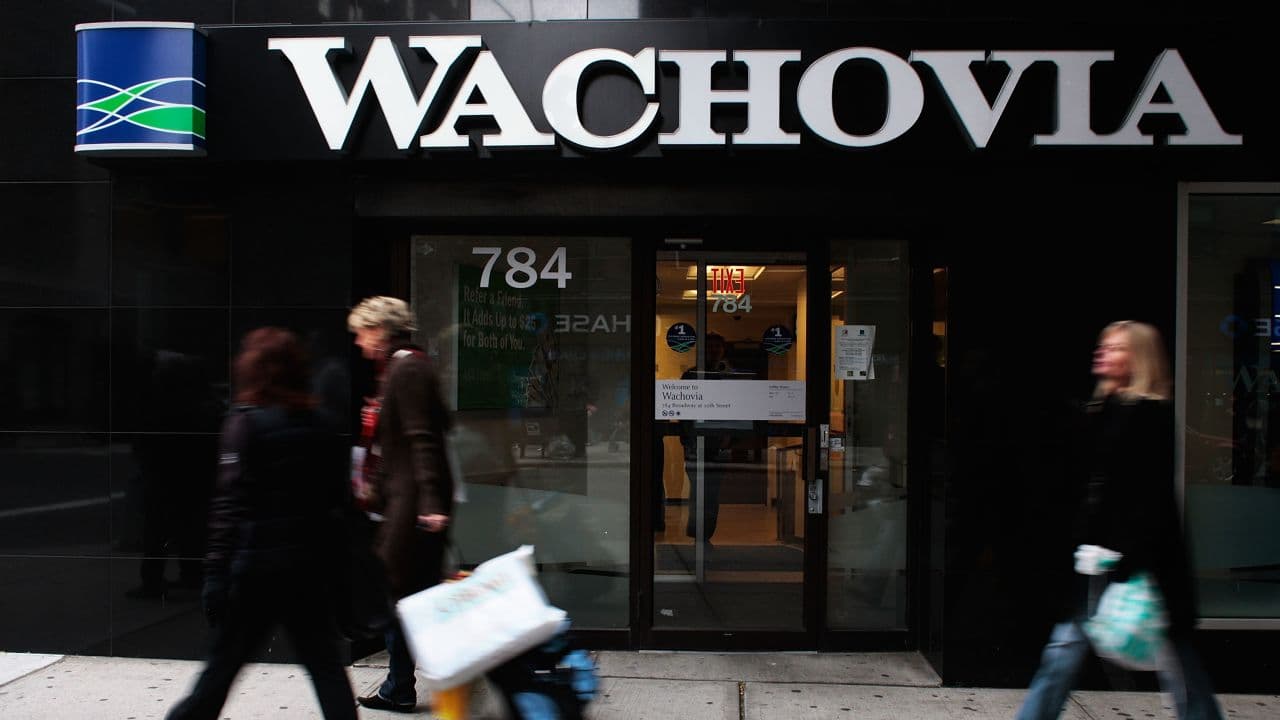
Wachovia, then the fourth-largest U.S. bank, failed to apply anti-money laundering controls to $378.4 billion in transactions from Mexican currency exchange houses between 2004-2007. At least $110 million in confirmed drug proceeds were laundered, including money used to buy drug-running airplanes. Despite the largest money laundering case ever brought against a U.S. bank, Wachovia paid just $160 million -- less than 2% of its 2009 profit -- and no executives faced charges.
“Wachovia is allowing hundreds of billions of dollars in suspicious transactions from Mexican exchange houses to flow through its accounts with no proper anti-money laundering oversight.”
From “crazy” to confirmed
The Claim Is Made
This is the moment they called it crazy.
When you deposit money at one of America's largest banks, you expect basic safeguards. You expect someone to notice if billions of dollars flow through in ways that don't make sense. Wachovia Bank had systems to catch exactly this kind of thing—and for years, they chose not to use them.
Between 2004 and 2007, Mexican currency exchange houses sent $378.4 billion through Wachovia's accounts. That's not a typo. The bank processed nearly four hundred billion dollars from entities with minimal documentation, no clear business purpose, and every hallmark of money laundering operations. At least $110 million of this was confirmed drug proceeds—money used to purchase aircraft that ran cocaine shipments, money that funded cartels responsible for tens of thousands of deaths.
For years, this wasn't exactly hidden. Banking regulators and federal law enforcement had concerns. But the financial industry's standard defense kicked in: complexity, volume, the inherent difficulty of monitoring transactions. Besides, Wachovia was a respectable institution, one of the four largest banks in the United States. Suggesting the bank knowingly facilitated cartel money seemed like the kind of conspiracy theory that sensational media outlets pushed, not something serious investigators would pursue.
Then the Department of Justice filed charges. In March 2010, Wachovia entered into a deferred prosecution agreement—essentially admitting fault without admitting guilt. The bank's own anti-money laundering officer had warned that the Mexico operations posed "significant risk." The warnings were ignored. When the bank finally implemented proper monitoring, suspicious activity reports skyrocketed. The data made clear this wasn't about gaps in regulation; it was about choices not to regulate.
Get the 5 biggest receipts every week, straight to your inbox — plus an exclusive PDF: The Top 10 Conspiracy Theories Proven True in 2025-2026. No spam. No agenda. Just the papers they couldn't hide.
You just read "Wachovia Bank failed to monitor $378+ billion from Mexican d…". We send ones like this every week.
No one's said anything yet. Be the first to drop your take.
Confirmed: They Were Right
The truth comes out. Officially documented.
Confirmed: They Were Right
The truth comes out. Officially documented.
The settlement reflected a stunning calculus. Wachovia paid $160 million. In 2009, the bank's profit was $8.86 billion. The fine represented less than 2% of annual earnings—a rounding error for moving hundreds of billions in cartel cash. No executive faced criminal charges. No one lost their job. No one went to prison.
The documents tell the story plainly. Wachovia knew. The bank had systems that flagged suspicious transactions. Those systems were understaffed and deprioritized. Requests to scrutinize the Mexico corridor were repeatedly deferred. When pressed by regulators, the bank made cosmetic changes while the money continued flowing.
What makes this case matter isn't merely that a bank broke the law—financial institutions do this with some regularity. What matters is the pattern it reveals about how accountability works in American finance. A middle-class person evading taxes faces criminal prosecution. A bank facilitating the largest criminal networks on the continent pays a fine smaller than many Americans' homes are worth and continues business as usual.
This case destroyed a useful fiction: that the system is designed to catch and punish financial crime equally. It revealed instead a system where scale inverts consequences. Move millions illegally and face prison time. Move hundreds of billions for cartels and negotiate a settlement.
The claim wasn't conspiracy theory. It was documented fact, buried in DOJ filings and bank statements, waiting for anyone willing to read them.
Beat the odds
This had a 0% chance of leaking — someone talked anyway.
Conspirators
~50Network
Secret kept
0.5 years
Time to 95% exposure
500+ years