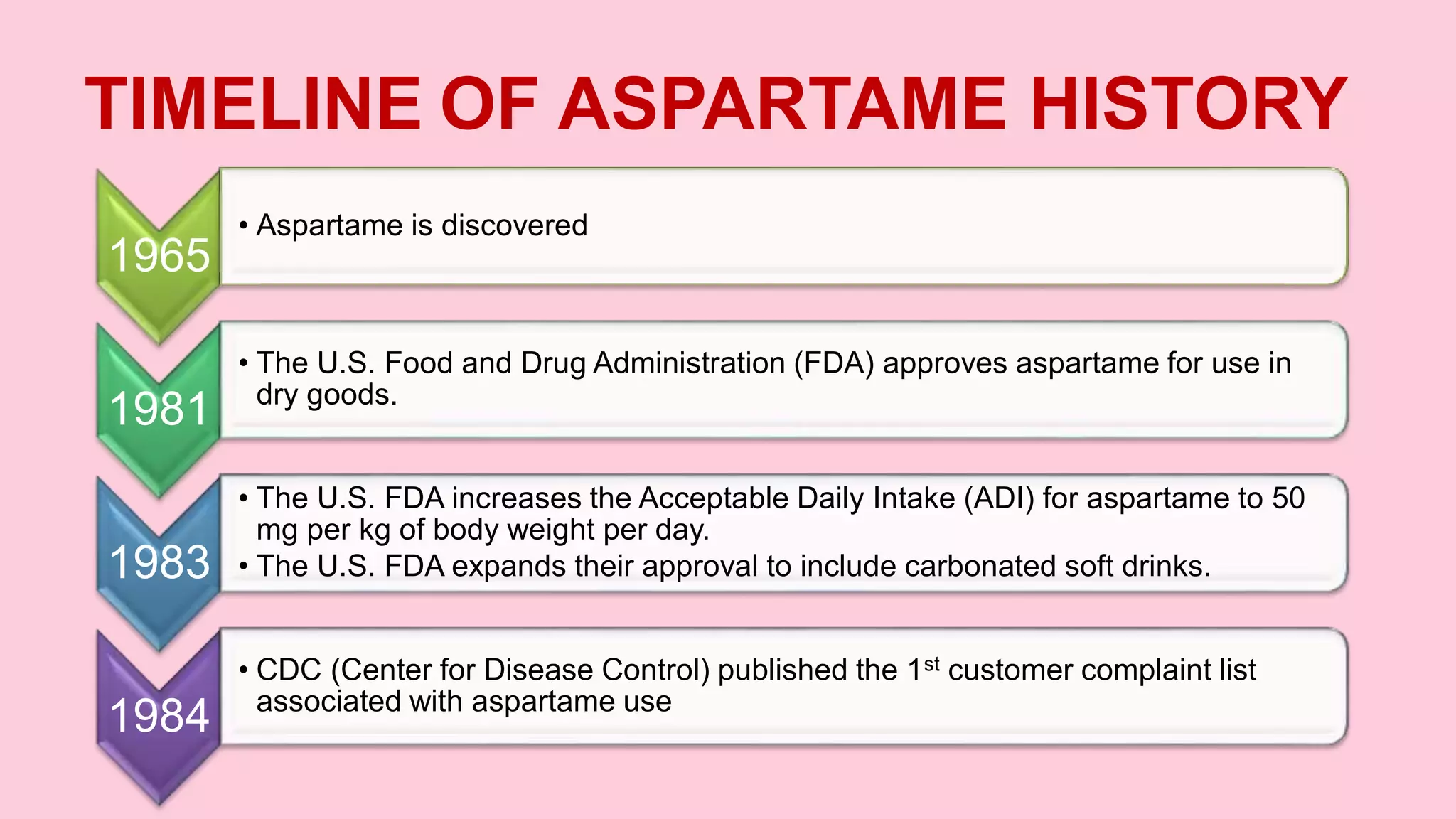
Aspartame had a troubled FDA approval. A 1977 FDA task force found 'serious deficiencies' in safety studies by G.D. Searle. Commissioner Arthur Hull Hayes Jr. approved it in 1981, then left the FDA and joined Searle's PR firm. In 2023, the WHO's IARC classified aspartame as 'possibly carcinogenic' (Group 2B). Industry-funded studies consistently find it safe while independent studies more often identify concerns — a familiar pattern of funding bias.
“Aspartame was approved through political pressure, not science. The FDA's own investigators found problems, the commissioner went to work for the manufacturer, and independent studies keep finding concerns.”
From “crazy” to confirmed
The Claim Is Made
This is the moment they called it crazy.
The path to approval for aspartame—the artificial sweetener found in countless diet sodas and sugar-free products—was paved with warning signs that regulators either missed or ignored. What happened next only deepened the questions about whether the process was truly independent.
In 1977, an FDA task force conducted a comprehensive review of the safety studies submitted by G.D. Searle, the pharmaceutical company seeking approval for aspartame. The task force's conclusion was blunt: the studies had "serious deficiencies." Searle's own research, which formed the foundation of the safety case, contained irregularities that should have raised red flags about the integrity of the data itself. The company had not answered these questions satisfactorily, yet approval still seemed possible.
Enter Arthur Hull Hayes Jr., appointed FDA commissioner in 1981. Within months of taking office, Hayes made the decision to approve aspartame for use in dry goods, clearing the way for its introduction into the American food supply. The approval was controversial—consumer advocates and some scientists argued the safety questions were unresolved. But it went through.
What happened next is what transforms this from a mere regulatory dispute into a matter of genuine public interest. Hayes left the FDA in 1982 and almost immediately joined Searle's public relations firm. This wasn't a coincidence that onlookers simply noted and moved on from; it crystallized suspicions that the approval process had been compromised by conflicts of interest or at minimum, the appearance of such conflicts.
For decades, the aspartame controversy simmered. Industry-funded studies consistently showed the sweetener was safe, while independent research more often identified potential health concerns. This pattern—where the funding source of a study appears to predict its conclusions—is hardly unique to aspartame, but it is revealing. It suggests that money shapes what scientists look for and what they find.
Get the 5 biggest receipts every week, straight to your inbox — plus an exclusive PDF: The Top 10 Conspiracy Theories Proven True in 2025-2026. No spam. No agenda. Just the papers they couldn't hide.
You just read "Aspartame's FDA approval was mired in controversy — the comm…". We send ones like this every week.
No one's said anything yet. Be the first to drop your take.
Then in 2023, the World Health Organization's International Agency for Research on Cancer took a fresh look. The IARC classified aspartame as "possibly carcinogenic to humans"—a Group 2B classification. This wasn't a declaration that aspartame definitively causes cancer, but it was significant: it meant there was enough evidence of potential harm to warrant the classification. Notably, this came not from activists or fringe researchers, but from the same organization that had previously studied tobacco and asbestos.
The question that lingers is not whether aspartame is secretly deadly—the evidence remains mixed and contested. The real question is whether a substance approved under questionable circumstances, by a regulator who then profited from its approval, deserves the faith that millions place in it daily. It's a question about institutional credibility.
Public trust in regulatory agencies depends on the appearance of independence as much as actual independence. When a commissioner approves a product and then joins the manufacturer's PR firm, even perfectly legitimate behavior looks corrupted. The aspartame case reminds us that regulatory systems are only as good as their transparency and the ethical conduct of those who operate them. Whether you believe aspartame is safe or not, understanding how it was approved matters.
Beat the odds
This had a 3.5% chance of leaking — someone talked anyway.
Conspirators
~200Network
Secret kept
44.8 years
Time to 95% exposure
500+ years