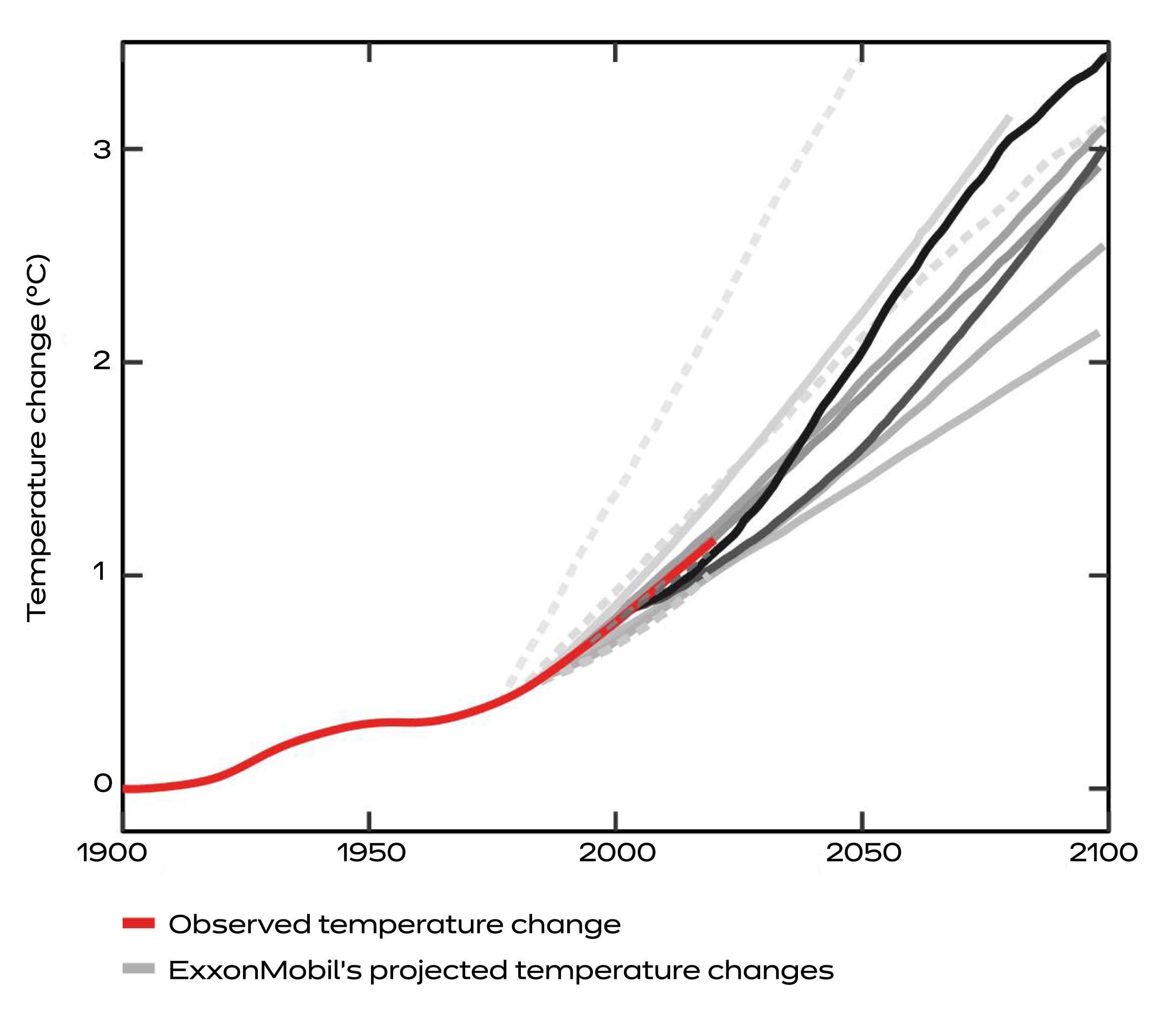
Internal Exxon research from 1977-2003 correctly forecasted global warming effects. The company then spent millions funding climate denial organizations while knowing the science was sound.
“The science of climate change remains too uncertain to mandate reductions in greenhouse gas emissions”
From “crazy” to confirmed
The Claim Is Made
This is the moment they called it crazy.
In the late 1970s, while most of the world remained largely indifferent to climate science, ExxonMobil's own researchers were producing remarkably accurate predictions about global warming. Their internal models forecast temperature increases and sea-level rise with striking precision. Yet within years, the company would become one of the largest financial backers of organizations dedicated to casting doubt on those very findings.
The claim emerged from a careful examination of Exxon's internal documents spanning from 1977 to 2003. During this period, the company's scientists conducted legitimate climate research and developed forecasting models that aligned closely with mainstream climate science. They understood the mechanics of greenhouse gas accumulation, predicted warming trends, and even warned company leadership about the potential consequences. This wasn't fringe science conducted in isolation—it was serious work by competent researchers operating within one of the world's largest energy corporations.
For decades, Exxon's public position was quite different. The company disputed the scientific consensus on climate change, funding think tanks and advocacy groups that questioned whether human activity was warming the planet. When pressed, company spokespeople suggested the science was uncertain and that more research was needed. They presented themselves as skeptics of what they characterized as alarmist claims. The official narrative held that Exxon, like many energy companies, simply disagreed with the emerging climate science.
The evidence that contradicted this narrative came largely through investigative journalism and academic research examining 's corporate archives. Researchers discovered internal documents, including technical memoranda and presentations to company executives, showing that Exxon's own climate scientists had developed models that correctly projected global warming. Some internal communications from the 1980s show company researchers expressing concern about the accuracy of their own dire predictions. The company possessed knowledge of climate risks that was scientifically sound and demonstrably superior to the public doubt they helped manufacture.
Get the 5 biggest receipts every week, straight to your inbox — plus an exclusive PDF: The Top 10 Conspiracy Theories Proven True in 2025-2026. No spam. No agenda. Just the papers they couldn't hide.
You just read "Exxon Scientists Accurately Predicted Climate Change Then Co…". We send ones like this every week.
No one's said anything yet. Be the first to drop your take.
What makes this case particularly significant is the scale of the disconnect. It wasn't a matter of Exxon cautiously funding alternative viewpoints while internally remaining uncertain. The documentary evidence suggests the company knowingly promoted doubt about science it had reason to believe was accurate. The millions spent on climate denial campaigns represented a conscious effort to shape public perception in a direction contrary to internal knowledge.
This case matters for several reasons beyond the obvious environmental implications. It raises fundamental questions about corporate responsibility when companies possess knowledge that could affect public policy and individual welfare. It demonstrates how institutional incentives can override scientific integrity—Exxon had financial motivation to downplay climate risks regardless of what their researchers discovered. It also illustrates how difficult it can be to establish the truth when well-funded actors are invested in obscuring it.
Perhaps most importantly, the Exxon case reveals something essential about how consensus narratives form and persist. For years, the public debate was shaped by the fiction that climate science remained genuinely contested. We now know that one of the world's largest oil companies possessed evidence suggesting otherwise. The gap between what powerful institutions know and what they tell the public is not merely an academic curiosity—it's a matter that affects how societies make decisions about their future.
Beat the odds
This had a 3.9% chance of leaking — someone talked anyway.
Conspirators
~200Network
Secret kept
49.4 years
Time to 95% exposure
500+ years