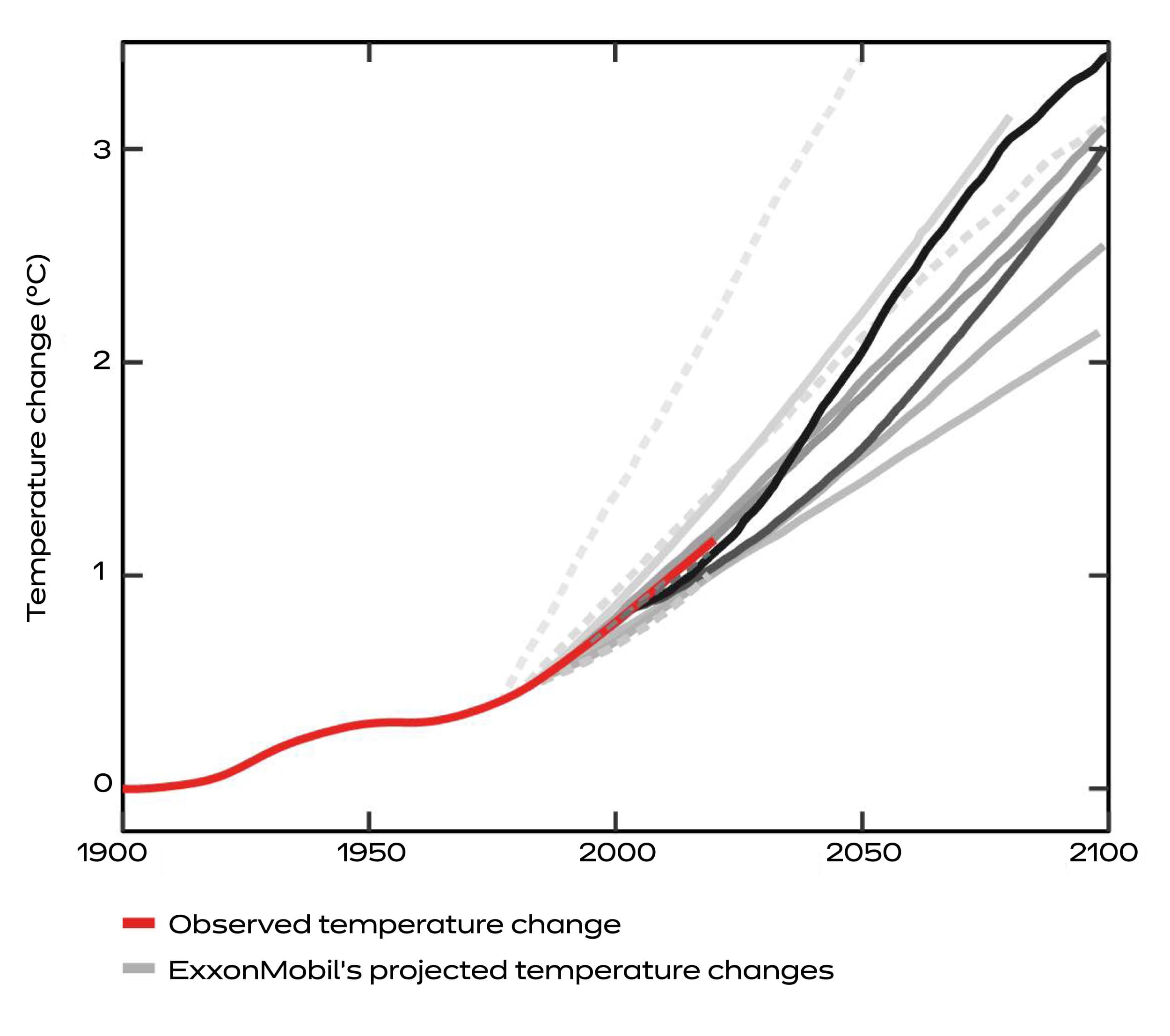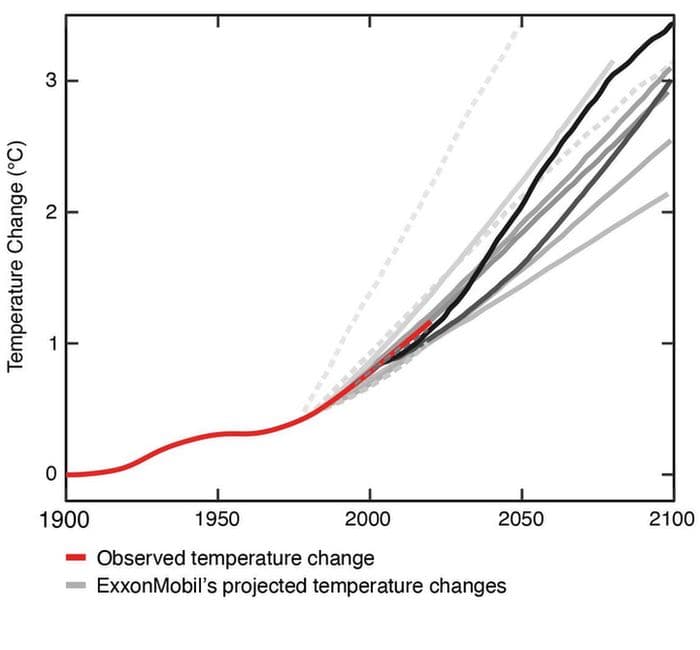
A Harvard-led analysis published in Science found that between 1977 and 2003, Exxon scientists' global warming projections were 'shocking' in their accuracy: 63-83% of projections matched actual temperatures, with the best scoring 99%. For comparison, James Hansen's famous 1988 NASA testimony scored 38-66%. Exxon correctly predicted warming of ~0.2C per decade, that human-caused warming would be detectable by 2000 (plus or minus 5 years), and dismissed the possibility of a coming ice age. Despite this, Exxon publicly took out ads claiming climate science was 'poorly understood.'
“Exxon's own scientists predicted global warming with remarkable precision decades ago. They knew exactly what was coming and chose to spend millions sowing doubt instead of acting.”
From “crazy” to confirmed
The Claim Is Made
This is the moment they called it crazy.
When James Hansen testified before Congress in 1988 about the dangers of climate change, his projections became the standard by which climate science accuracy would be measured for decades. Hansen's models showed a range of warming scenarios, some of which proved less accurate than others. But Hansen wasn't alone in the 1980s with climate projections. Unknown to the public, another set of calculations had been running in parallel for more than a decade—inside Exxon's research laboratories.
A 2023 Harvard-led analysis published in Science examined Exxon's internal climate models from 1977 through 2003 and found something that should trouble anyone concerned about corporate accountability and public trust. The company's scientists had produced projections that were, in a word used by the researchers themselves, "shocking" in their accuracy. Between 63 and 83 percent of Exxon's temperature predictions matched what actually occurred. Their best estimates hit 99 percent accuracy.
To put this in perspective, Hansen's 1988 NASA models—the ones cited in textbooks and policy discussions—scored between 38 and 66 percent accurate by the same measurement. Exxon's scientists had correctly predicted warming of approximately 0.2 degrees Celsius per decade. They had determined that human-caused warming would become detectable around the turn of the millennium. They had dismissed the possibility of a coming ice age, which was still a subject of public debate at the time.
This wasn't guesswork or luck. Exxon's internal modeling was sophisticated, grounded in solid physics, and managed by scientists who understood the mechanisms of greenhouse gas warming. The company knew what was coming. The projections sat in company files, reviewed by management, available to executives making decisions about the future.
Get the 5 biggest receipts every week, straight to your inbox — plus an exclusive PDF: The Top 10 Conspiracy Theories Proven True in 2025-2026. No spam. No agenda. Just the papers they couldn't hide.
You just read "Exxon's internal climate models from the 1970s were more acc…". We send ones like this every week.
No one's said anything yet. Be the first to drop your take.
Confirmed: They Were Right
The truth comes out. Officially documented.
Confirmed: They Were Right
The truth comes out. Officially documented.
What happened next is where this story becomes essential to understanding how public doubt about climate science took root. While Exxon's own researchers documented the reality of human-caused warming with remarkable precision, the company's public position was fundamentally different. Exxon spent decades—and substantial resources—casting doubt on climate science. The company funded campaigns suggesting that climate science was "poorly understood" and sponsored advertisements questioning the very consensus its own scientists had helped establish.
This is not a case of science being wrong and then corrected. This is a case of what was known internally diverging sharply from what was communicated externally. For more than two decades, while Exxon's models tracked warming with near-perfect accuracy, the company publicly treated the science as uncertain and contested.
The implications reach beyond Exxon itself. If one of the world's largest fossil fuel companies possessed accurate climate data and chose not to share it—or actively contradicted it—then the public's skepticism about climate science in the 1990s and 2000s cannot be attributed to genuine scientific uncertainty. It was manufactured uncertainty, built on a foundation of suppressed knowledge.
This matters because trust in institutions depends on transparency and honesty. When corporations possess crucial information about risks to public welfare and choose instead to obscure that information, the social contract fractures. Years of delayed climate action cannot be separated from years of deliberate contradiction between what was known and what was said. The question is not whether climate science is accurate—Exxon's own numbers settled that decades ago. The question is what we do when we discover that powerful actors knew the truth all along.
Beat the odds
This had a 0.6% chance of leaking — someone talked anyway.
Conspirators
~200Network
Secret kept
7.3 years
Time to 95% exposure
500+ years